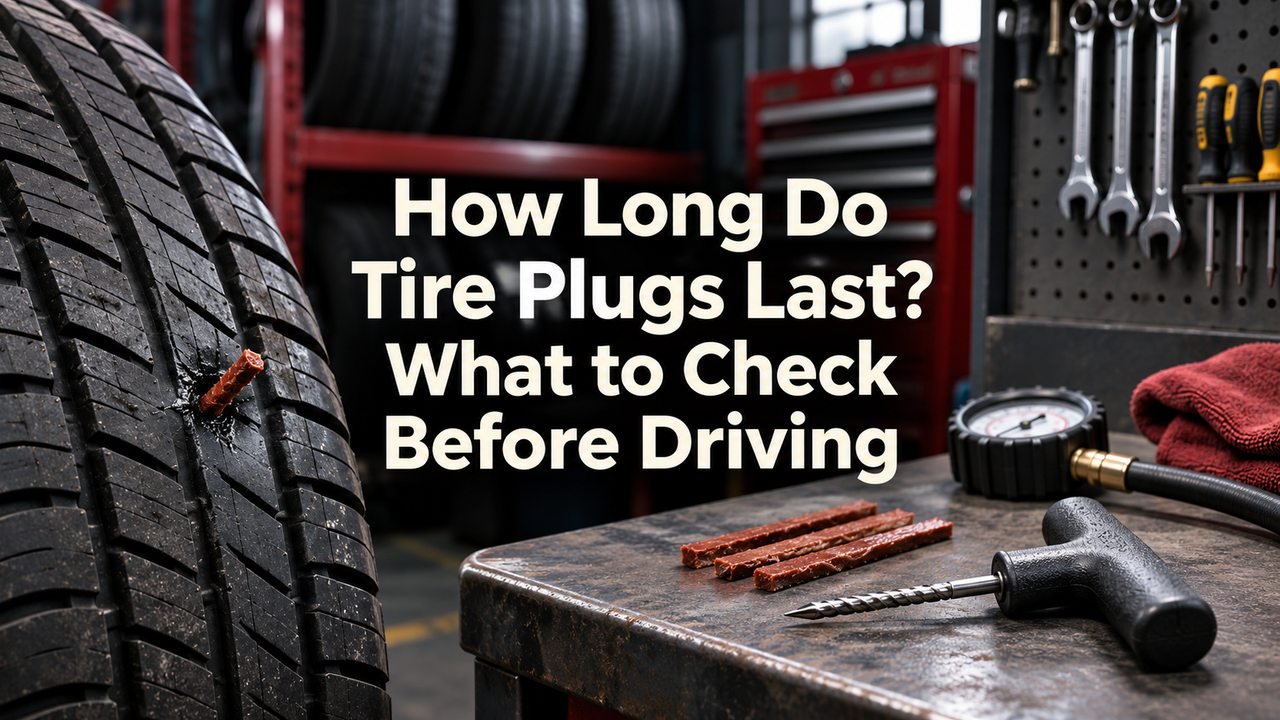
How Long Do Tire Plugs Last? What to Check Before Driving
How long do tire plugs last? An outside-in tire plug has no reliable lifespan in days or miles. It can hold air and still be an unsafe repair. A proper plug-and-patch repair can last for the tire’s remaining service life if the tire qualifies for repair and stays in good condition.
If you put in a rope plug or you’re unsure what a shop installed, call a tire shop before your next trip. Ask whether the tire was taken off the wheel, checked inside, and repaired with both a rubber stem and an inner patch. If the tire is flat, loses air fast, or has a bulge, stop driving and use a suitable spare if you can fit it safely, or call roadside assistance.
I’d start with one question: What kind of repair went into the tire? Drivers often call both an outside rope plug and a shop’s plug-and-patch a “plug.” Knowing which one you have tells you more than how long the tire has held air.
How Long Do Tire Plugs Last in Practice?
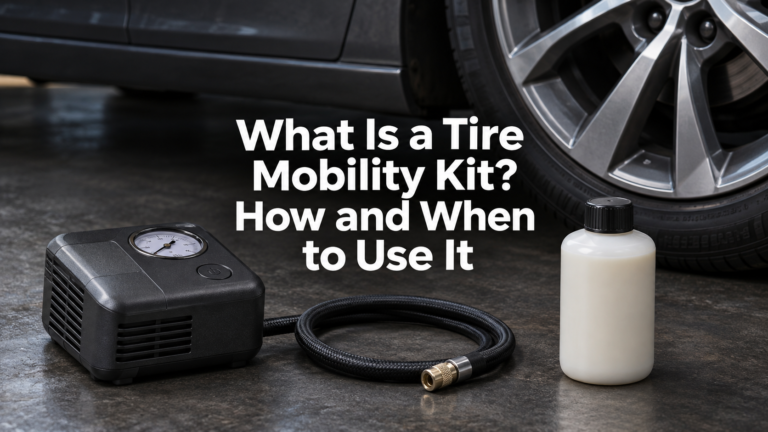
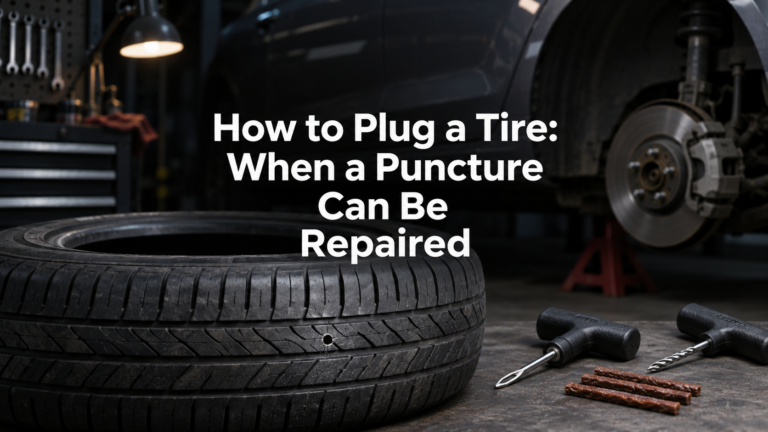
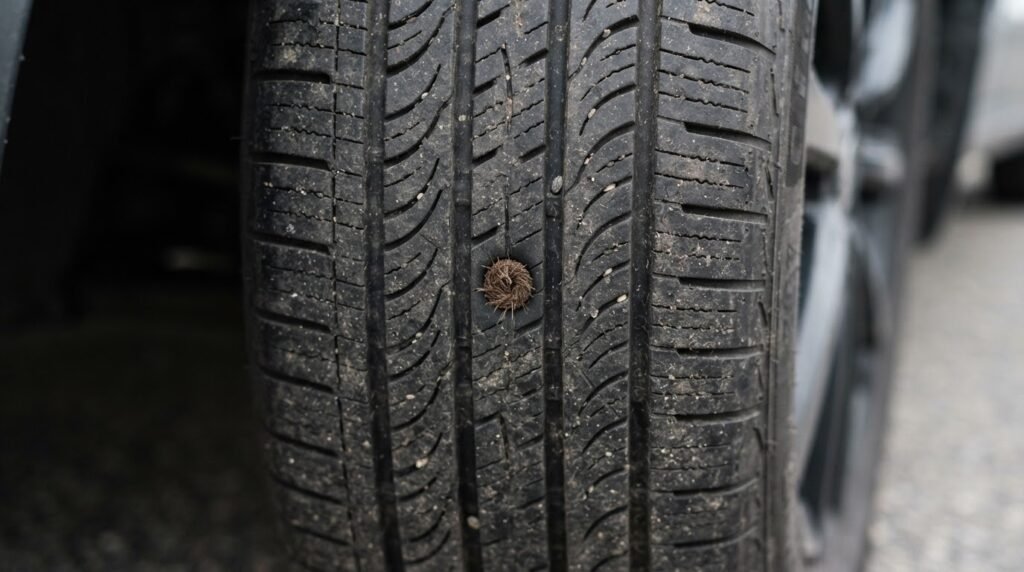
A rope plug is a strip pushed into a hole from outside the tire. It may stop the leak for a while. There’s no set time or distance you can count on, even if the tire holds pressure overnight. See AAA’s guide to tire plugs and patches.
What makes a plug-and-patch last?
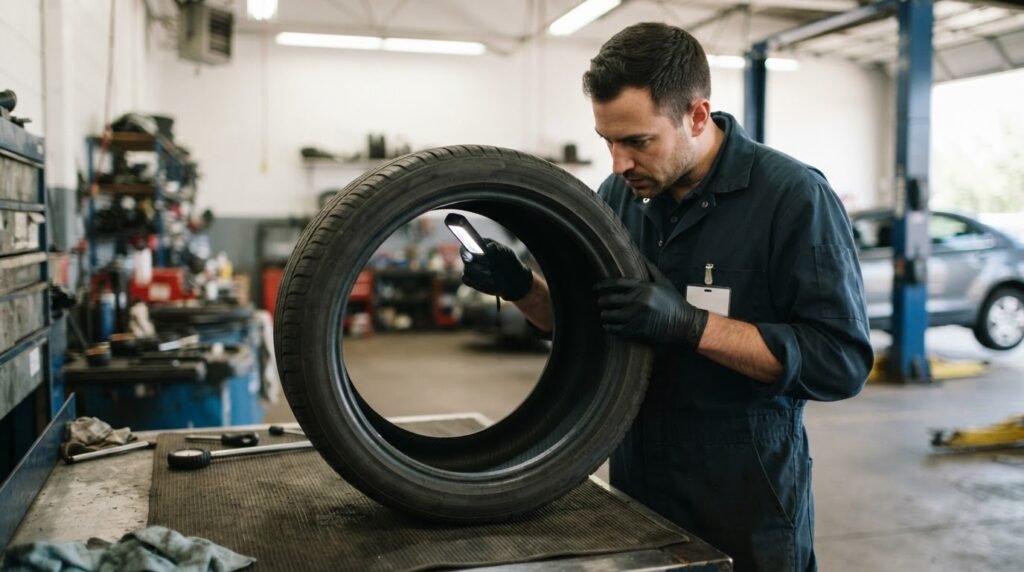
A tire shop takes the tire off the wheel so the tech can check for damage inside. In a proper repair, a rubber stem fills the hole and a patch seals the inner liner, the layer that holds air. A shop may use a single piece that does both jobs.
That repair is meant to stay in place for the rest of the tire’s usable life. The tire still needs normal checks for pressure, wear, age, and damage. If it starts to leak, have the shop find the source. The leak could be at the repair, the valve, or somewhere else.
| Type of repair | What it does | What you can count on |
|---|---|---|
| Outside rope plug | Fills the hole from the outside without an inner patch | No dependable time or mileage. Have the tire assessed promptly. |
| Inside patch alone | Seals the inner liner but leaves the puncture path unfilled | An incomplete puncture repair. Ask a shop to assess the tire. |
| Professional plug-and-patch | Fills the hole and seals the inner liner after an inspection | Can last for the tire’s remaining service life when the repair meets the tire maker’s rules. |
What to Do if Your Tire Already Has a Plug
If the tire goes flat, loses pressure quickly, shows a bulge, or has exposed cords, pull over as soon as it’s safe. Use a suitable spare if you can change it safely, or call roadside assistance. If you drove on the tire while it was flat, tell the shop. The damage may be hidden inside.
Check the repair receipt or call the shop. Ask if the tire was removed from the wheel and if the tech used both a stem and an inner patch. If you used a rope plug kit, tell the shop that up front.
Use a tire gauge when the vehicle has been parked for at least three hours. Check against the cold pressure on the driver’s door placard or in the owner’s manual. The front and rear targets may differ. The sidewall number is the tire’s maximum inflation pressure. See NHTSA’s cold tire pressure guidance.
Tell the shop where the hole is, what was used to seal it, and whether you drove on the tire while it was low or flat. Ask whether to use a spare or arrange a tow. If the plug was the only repair, be ready for the shop to recommend a new tire.
If the same tire keeps going low after a repair, book a leak check. A fresh nail, a worn valve, or a leak where the tire meets the wheel can also let air out. Adding air can hide the leak for a while.
When a Puncture Can Be Repaired
For passenger and light truck tires, a repair may be an option when the hole is no more than 1/4 inch (6 mm) wide and stays within the approved tread area. The tread is the part that rolls on the road. The shoulder is the outer edge where the tread curves into the sidewall. A hole that angles into the shoulder also falls outside the repair area. See the U.S. Tire Manufacturers Association’s puncture repair rules.
| What you find | What it means | Next step |
|---|---|---|
| A small nail hole in the main tread | The tire may qualify if the hole is within the size limit and the inside is sound. | Let a tech measure the hole and inspect the tire off the wheel. |
| A hole in the sidewall or a puncture that enters the shoulder | The damage is outside the approved repair area. | Plan to replace the tire. |
| A hole wider than 1/4 inch (6 mm) | It exceeds the standard size limit for this type of repair. | Plan to replace the tire. |
| An old outside plug without an inner patch | USTMA calls for taking a tire with an existing improper repair out of service. | Tell the shop what was installed and expect replacement if it confirms an improper repair. |
| A new hole close to an old repair | Two repairs cannot overlap, and some tire makers set tighter limits. | Ask the shop to check both spots and look up the tire maker’s rules. |
Run-flat tires can have their own repair rules. Give the shop the exact tire model from the sidewall and tell them how far you drove after the pressure dropped. The shop can check the tire maker’s policy for that model.
Example: Two tires that still hold air
Say a tech found a small nail hole in the main tread, checked the inside, and fitted a plug-and-patch. If the tire still meets the maker’s rules and stays in good shape, you can keep it in service and check its pressure as usual.
Now say the same size hole has a rope plug fitted from outside. Even if the gauge reads the same the next morning, that reading tells you only how much air is in the tire at that moment. Call a shop before you rely on it for your next trip.
Keep the repair receipt. If it just says “flat repair,” ask the shop to note which tire was fixed and whether it used a stem and patch. That helps if the same tire leaks again or gets a second puncture.
Key Takeaways
- An outside rope plug has no reliable time or mileage limit.
- A proper stem-and-patch repair can last for the tire’s remaining service life when the tire qualifies.
- A tire that holds air can still have hidden damage or an incomplete repair.
- Tell the shop about any old plug, pressure loss, or driving on a flat.
Frequently Asked Questions
How many miles can you drive on a tire plug?
There is no safe mileage figure you can count on for an outside-only plug. Call a tire shop for advice before you drive. If the tire is flat or loses air fast, use a suitable spare if you can fit it safely, or call roadside assistance.
Can a tire plug last the life of the tire?
A proper plug-and-patch repair can last for the tire’s remaining service life. An outside rope plug alone has no reliable lifespan and does not meet industry repair guidance.
Can a tire shop patch a tire that already has a rope plug?
Tell the shop if the tire has an outside rope plug. USTMA guidance calls for taking a tire with an existing improper repair out of service. If the shop confirms that the rope plug was the only repair, expect it to recommend replacing the tire.
Can you drive on the highway with a plugged tire?
Arrange an inspection before taking a tire with an outside-only plug on the highway. For a proper plug-and-patch repair, ask the shop if the tire maker places any limits on use after repair.
How can you tell if a tire plug is leaking?
Check the tire with a gauge when it is cold. If the same tire keeps losing air or the low-pressure light comes back, have a shop check the repair, the valve, and the rest of the tire for leaks.
Can you plug a tire near the sidewall?
A puncture in the sidewall, in the shoulder, or angled into the shoulder falls outside the approved repair area. Have a tire tech check any hole close to the edge of the tread.
Check What Kind of Repair You Have
Look at the receipt or call the shop today. If a tech checked the tire off the wheel and fitted a stem and patch, keep up your usual cold pressure checks. If you put in a rope plug or can’t confirm the repair, call a tire shop before your next drive and tell them what you know.