How Long Does It Take for a Tire Rotation?
A standard four-tire rotation usually takes 15–30 minutes once the shop starts work. Your total visit can take longer if you wait for a service bay or add another service.
If you need to be somewhere afterward, ask the shop for its current check-in-to-pickup estimate. That number is more useful than the time it takes to move the wheels.
If you’re wondering how long it takes for a tire rotation, I’d start by asking whether the shop can take your car straight into a bay. I’ll show you what happens during the job, what can slow it down, and what to check before you leave.
How long does a tire rotation take at a shop?
Bridgestone estimates 15–30 minutes for a professional four-tire rotation. Treat that as a service estimate. Your visit also includes check-in, any wait for a bay, and checkout.
For example, suppose the shop starts 20 minutes after you check in. If the rotation takes 25 minutes and checkout takes 5 minutes, your total visit is 50 minutes. Ask for a pickup estimate before you decide whether to wait or get a ride.
| Situation | What affects the time | What to ask |
|---|---|---|
| Rotation only | The work usually takes 15–30 minutes after it starts. | Will my car go into a bay at my appointment time? |
| Walk-in visit | Cars ahead of yours can make the wait longer than the job. | What time do you expect the car to be ready? |
| Rotation plus balancing | Balancing adds a separate check and may require adjusting wheel weights. | Does the pickup estimate include balancing? |
| Stuck lug nut or missing wheel-lock key | The shop may need more time or your approval before it can proceed. | Will you call me before doing extra work? |
What does a shop do during a tire rotation?
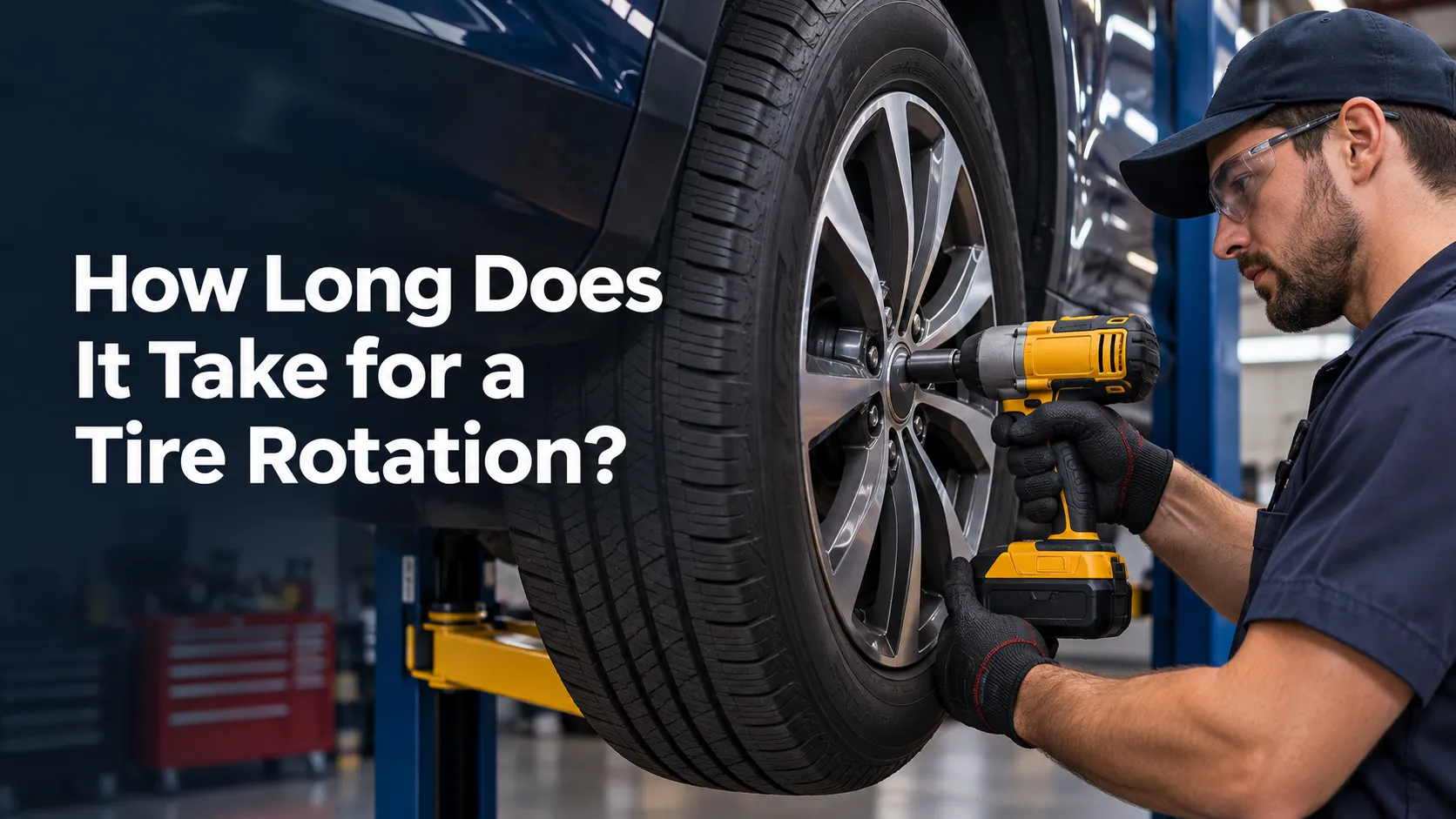
A tire rotation moves the tires and wheels to new spots on the car. The tires stay mounted on their wheels during a standard rotation. Moving them can help the tread wear more evenly because the tires can wear at different rates in different spots. Michelin explains how rotation fits into routine tire care.
If you spot a sidewall bulge or exposed cords, stop driving as soon as you can safely pull over. Arrange roadside help and have a tire technician inspect the tire. A rotation will not fix the damage.
The shop checks the tire sizes, the tread design, and the rotation pattern your vehicle maker allows. Tires with a direction arrow must still roll in that direction after the move.
The technician removes each wheel and moves it to the correct spot. Ask for the tread depth and whether one edge is wearing faster than the rest. That can help you decide whether to ask for a closer look.
The technician tightens the lug nuts or bolts to the vehicle maker’s torque spec. Torque is how tightly the fastener is turned. If the front and rear call for different pressures, each tire needs the target for its new spot.
TPMS stands for tire pressure monitoring system. Some cars need a relearn so the dash shows each sensor at the correct wheel position. Ask whether your car needs this step and whether it was done.
What can make a tire rotation take longer?
A busy shop can delay the start even when your car is easy to service. Once the work starts, a seized fastener, a missing wheel-lock key, or a tire pressure sensor that needs a relearn can add time. A shop may also pause to show you tire damage or ask whether you want a separate service.
If your wheels have locking lug nuts, put the wheel-lock key where the shop can find it before you check in. Tell the service advisor where you left it.
| What you notice | What it may mean | Next step |
|---|---|---|
| The front and rear tires show different sizes. | Your car may have a staggered setup, which limits where the wheels can go. | Ask which moves the owner’s manual allows before booking. |
| One tire edge wears much faster than the other. | Pressure, alignment, or worn parts may be involved. | Ask the shop to record the wear and explain what it recommends checking. |
| The dash shows the wrong wheel location after the visit. | The car may still have the sensors linked to their old spots. | Check the actual tire pressures and ask the shop about a TPMS relearn. |
| The car shakes after the rotation. | A wheel, tire, or mounting issue may need attention. | Pull over safely if the shaking is strong or sudden. Contact the shop and arrange an inspection. |
Some cars use different tire sizes front and rear. You may be able to swap wheels side to side, or the vehicle maker may rule out rotation for that setup. Check the owner’s manual before moving any wheels. See NHTSA’s guidance on tire rotation and fit.
How to plan your appointment
When you call, say whether you want a rotation only or want to add balancing, an oil change, or an inspection. Ask for the time to pick up the car with all the work included. If you have a firm deadline, share it before check-in so the shop can tell you whether waiting there makes sense.
Before you leave, ask what the shop found and when your vehicle is due for its next rotation. If the shop checked your tires after you drove in, you can check the cold pressure at home. Cold pressure means pressure measured before driving or after the tires have had time to cool. Use the number on the driver’s door placard or in the manual. The maximum pressure printed on the tire sidewall is a tire limit. Your vehicle’s placard gives the target. See our guide to checking tire pressure in cold weather.
Key Takeaways
- Allow about 15–30 minutes for a routine rotation once work starts.
- Ask for the full pickup estimate if you plan to wait at the shop.
- Bring the wheel-lock key and tell the shop if the front and rear tires differ in size.
- Ask about uneven wear and any TPMS relearn before you leave.
Frequently Asked Questions
Can I wait at the shop during a tire rotation?
Usually, yes. Ask whether the shop can start at your appointment time and when it expects your car to be ready.
Why did my tire rotation take an hour?
You may have waited for a bay, or the shop may have spent extra time on stuck lug nuts, a pressure sensor relearn, or another service. Ask when work started and which jobs the shop completed.
Does a tire rotation include balancing?
It depends on the shop and the service package. Rotation moves the wheels to new positions. Balancing checks weight distribution and may involve adding or moving wheel weights.
How often should I rotate my tires?
Follow your vehicle owner’s manual. NHTSA gives a general range of 5,000 to 8,000 miles when the vehicle maker recommends rotation. If you notice uneven wear, have it checked sooner.
Can a shop rotate tires that are different sizes front and rear?
It depends on the vehicle and tire design. A front-to-rear swap may be ruled out, and a side-to-side swap may also have limits. Check the owner’s manual for the allowed pattern.
Do I need an alignment every time I rotate my tires?
Routine rotation does not automatically call for an alignment. Ask for an inspection if the car pulls on a level road or the shop finds uneven wear.
What to do next
Book the rotation if your car is due, and ask for the full pickup estimate when you call. Bring your wheel-lock key if you have one. Before you head home, ask the shop to point out any wear that needs a closer look.