How Long Does a Tire Plug Last? Rope Plug vs. Patch
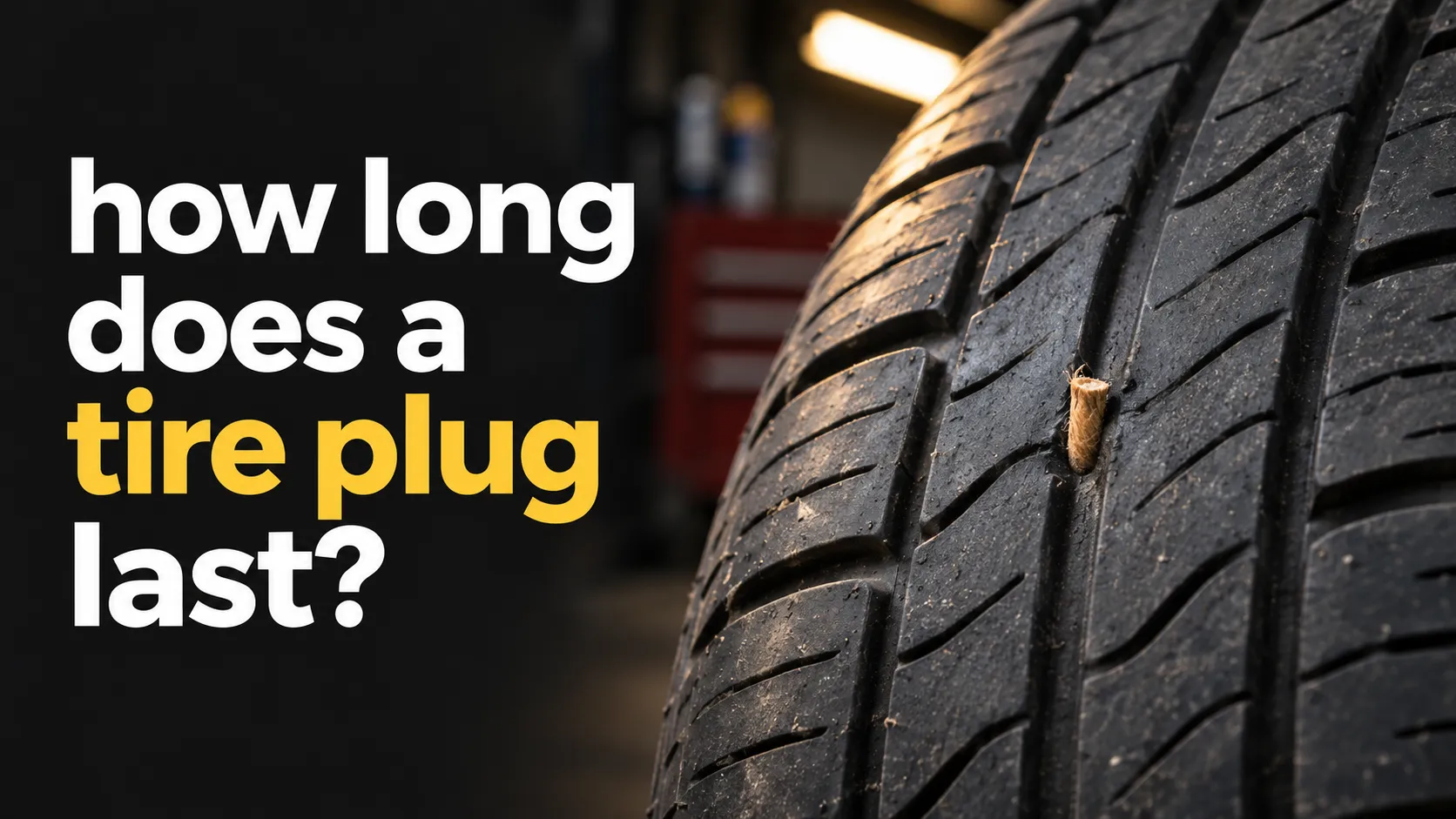
A tire plug inserted from the outside has no reliable lifespan in days or miles. If a tire shop removes the tire, checks it, and uses both a plug and an inside patch on an eligible puncture, the repair can last for the rest of the tire’s usable life.
If you used a rope plug at the roadside, arrange a tire inspection as soon as possible. Tell the shop what you used and whether you drove on the tire while it was low. If the tire is flat, loses air fast, or has a bulge, use a suitable spare if you can install it safely, or call roadside assistance.
How long does a tire plug last? I’d start by asking what kind of repair you have. A roadside plug and a shop’s plug-and-patch repair can look much the same from the street. What the shop did inside the tire makes a big difference.
I’ll show you how to tell the two apart, what makes a nail hole a possible repair, and what to say when you call a tire shop. If you’re parked with a low tire right now, start with the warning below.
If the tire is flat, losing air fast, or has a bulge, exposed cords, or a deep cut, stop driving as soon as you can safely pull over. If you’re stuck next to moving traffic, call for help instead of trying to work on the tire there.
How Long Does a Tire Plug Last by Repair Type?
An outside plug may seem to hold air for a long time. It can also start leaking again before you expect it. A pressure reading tells you how much air is in the tire at that moment. It can’t show whether the tire was hurt inside while it was low.
A proper shop repair can stay in service for the rest of the tire’s usable life when the tire meets the repair rules and the work is done correctly. The tire still needs normal pressure checks and routine care. Tread wear, age, and new damage can all end its service life.
| Repair type | What it does | What to do next |
|---|---|---|
| Outside rope or string plug | Fills the hole from the outside while the tire stays on the wheel. | Arrange a shop inspection promptly. There is no reliable mileage limit you can count on. |
| Inside patch alone | Covers the hole at the inner liner but leaves the path through the tread unfilled. | Ask a tire shop to assess the tire. The standard repair calls for both a stem and an inside patch. |
| Shop plug-and-patch repair | Fills the hole and seals the inner liner after the tire comes off the wheel for inspection. | Keep up with normal pressure checks. Have any new air loss checked. |
| Emergency sealant | May slow air loss from certain small holes, subject to the kit’s limits. | Follow the kit and vehicle instructions. Tell the shop you used sealant. |
The U.S. Tire Manufacturers Association’s tire repair guide calls for taking the tire off the wheel, inspecting it, filling the hole with a rubber stem, and sealing the lining with a patch. The stem and patch may come as one piece or as separate parts.
How a Plug-and-Patch Tire Repair Works
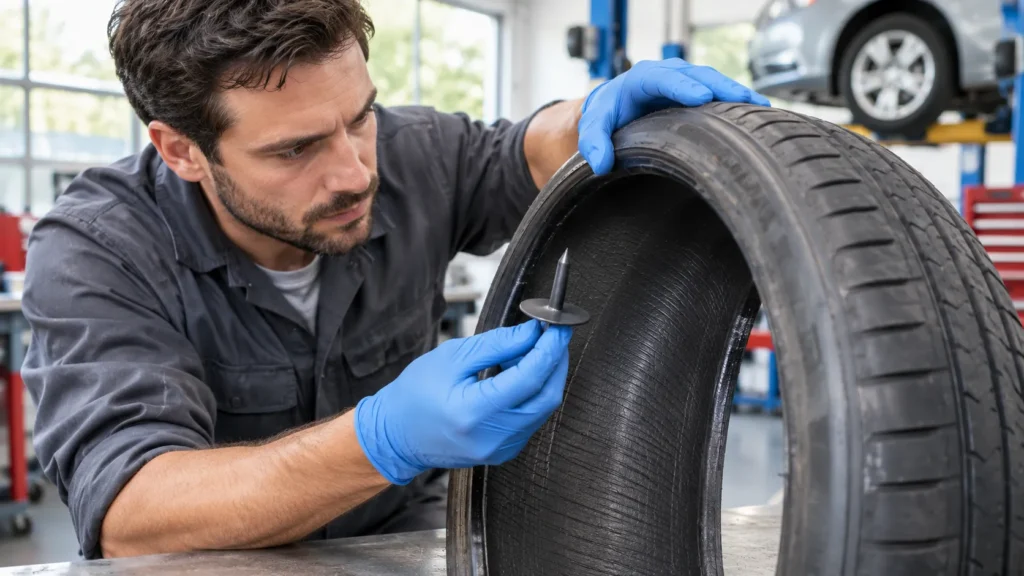
The stem fills the hole and the patch seals the lining
A nail makes a path through the tread. The stem fills that path, which helps keep water out of the tire’s layers. The patch seals the inner liner, the layer that helps hold air inside. Together, the two parts deal with both ends of the puncture.
A shop may call a one-piece stem and patch a combination repair. When someone tells you a tire was “plugged,” ask what the shop put inside. The word plug can mean the stem in a full repair or the strip in a roadside kit.
The inside check can change the answer
When a tire loses air, its sidewalls bend more as it rolls. Driving on it in that state can damage the inside. From a few feet away, you may see only a small nail head. Once the tire is off the wheel, a tech can check the inner liner and look for signs that the tire ran low.
That check matters even if you added air and the tire looks round again. Air can bring the tire back to shape. It can’t undo damage from running low. Tell the shop how far you drove after the warning came on, or say you don’t know when the leak began.
When Can a Punctured Tire Be Repaired?
For most passenger car and light truck tires, a hole can be considered for repair if it’s within the repairable tread area and no larger than 1/4 inch across. Think of that size as a limit for the tech to check. A thin screw can enter at an angle, and the path inside may reach farther toward the edge than the head suggests.
The shoulder is where the tread curves toward the sidewall. A hole near that edge can reach an area the shop can’t repair. A sidewall puncture calls for replacement. The tech also checks for damage inside, worn tread, and prior repairs that would overlap a new one.
| What you notice | What it may mean | Your next step |
|---|---|---|
| Small nail near the middle of the tread | The tire may qualify for a repair after an inside check. | Leave the nail in place and let the shop assess the puncture. |
| Screw near the outer tread edge | The hole may reach the shoulder or the edge of the belts. | Let a tech check the location and angle. Be prepared for replacement. |
| Hole in the sidewall or a bulge | The tire may have damage that calls for replacement. | Stop using that tire. Arrange a spare or roadside help. |
| Tire went flat while you drove | Hidden damage may rule out repair, even if the nail hole is small. | Keep the tire out of use and give the tech the full history. |
| Air loss after a shop repair | The leak may come from the repair, a new hole, the valve, or the wheel. | Have the shop check for the source of the leak. |
Michelin’s tire repair criteria also explain how where the hole is, how large it is, and the state of the tire affect your options. If you have run-flat tires, ask about the rules for your exact tire model. The maker may set extra limits.
Tell the shop about any plug already in the tire. USTMA calls for taking a tire out of service when it has an existing improper repair. A shop may recommend replacement after an outside-only plug, even if the hole would have been a repair candidate before.
What to Do After You Find a Nail or Use a Plug
Park away from traffic. Look for a flat tire, a bulge, a cut, or exposed cords. If you see a nail or screw, leave it in place. Pulling it out can make the leak worse. If you spot a warning sign, use a suitable spare or call for help.
Use a gauge and note the reading. Compare a cold reading with the pressure on the vehicle’s tire label, usually inside the driver’s door, or in the owner’s manual. Front and rear targets may differ. If you just drove, tell the shop the reading was taken warm.
Say which tire is low, when you noticed it, and whether you drove on it while it was low. Mention any rope plug, sealant, or old repair you know about. If the tire won’t hold pressure or you’re unsure it’s safe to drive, ask about roadside help or a tow.
A simple question works well. “Will you take the tire off the wheel and look inside?” If the tire qualifies for repair, ask whether the shop will fill the hole and patch the liner. If the shop says to replace it, ask what damage or repair rule led to that call.
For a cold reading, NHTSA’s tire care guidance says to check after the car has been parked for at least three hours. Use the target from the vehicle’s tire label. The maximum pressure on the sidewall serves a different purpose.
Three Common Puncture Scenarios
A screw in the tread after a grocery run
Say you find a screw near the center of the tread after you park. The tire still looks round. I’d leave the screw in, check the pressure from a safe spot, and call a shop. If the tech finds a small, straight hole inside the repair area and the rest of the tire checks out, a full repair may save the tire.
A rope plug is holding air before a road trip
Say you used a rope plug last weekend and the gauge still shows the right pressure. I’d book an inspection before the trip. One good reading can’t show what happened inside the tire or how long the plug will hold. Leave enough time to buy a replacement if the shop finds the tire can’t be repaired.
A nearly flat tire after a short drive
Say you notice the car feels odd, pull over, and find a tire that’s almost flat. You can see a small nail in the tread. The shop still needs to know that you drove on the tire while it was very low. I’d use a suitable spare or call for help. The size of the nail alone can’t tell you how much damage the tire took.
Why Is the Tire Still Losing Air?
Air can escape from more than one spot. A shop can check the old repair, look for a new puncture, and test the valve stem and bead. The bead is the edge of the tire that seals against the wheel. A leak there can make a sound repair look like it failed.
A cold snap can lower readings across all four tires. If one tire keeps losing more air than the others under the same conditions, flag that for the shop. If your tire pressure warning light comes on again, check the tires with a gauge. A light that goes out after you add air shows the pressure has changed. The leak may still be there.
Write down each cold pressure reading with the date and wheel position. If the tire on the right rear keeps dropping while the other three stay close to their targets, that short log gives the shop a place to start.
Common Mistakes That Make a Puncture Harder to Deal With
- Judging the hole by the nail head. A small head can hide an angled path or a wider tear. Let the tech check the full path once the tire is off the wheel.
- Topping up the same tire again and again. Refill after refill can hide a slow leak. Write down the pressure loss and book a leak check.
- Adding a second plug to stop a leak. The air could be coming from the valve, the wheel, or a spot next to the old repair. Have the shop find the source.
- Leaving out the flat-driving history. Even if you drove only a short way, say what happened. That gives the tech a reason to look closely for damage inside.
- Checking only the repaired spot. Look at the rest of the tire, too. Low tread, a bulge, or a deep cut elsewhere can change the decision.
Tips and Notes Before You Decide to Repair or Replace
Ask the shop to check tread depth while it inspects the tire. If the tread is already close to replacement, that can change what makes sense to spend. Check age on its own as well. Our guide on how to read a tire date code shows where to find the week and year the tire was made.
If the shop recommends a replacement, ask how closely the new tire needs to match the others. This can matter on an all-wheel-drive vehicle, where the owner’s manual may set a limit on differences in tread depth or tire size. Have the shop check your vehicle’s guidance before you buy.
Keep the work order after the visit. It can help the next shop see which tire was repaired and what work was done. If you later move that tire during a rotation, make a note of its new spot so you can track any future leak.
Key Takeaways
- An outside-only tire plug has no reliable lifespan in days or miles. Get the tire checked promptly.
- A sound plug-and-patch repair can last for the tire’s remaining usable life.
- A small hole in the repairable tread area may qualify. The tech has to remove the tire and check inside.
- A flat tire, fast leak, bulge, or sidewall damage calls for a suitable spare or roadside help.
- Tell the shop about any prior plug, sealant, or driving on low pressure.
Frequently Asked Questions
How long does a tire plug last?
An outside-only tire plug has no reliable lifespan in days or miles. A proper plug-and-patch repair on an eligible tire can last for the rest of the tire’s usable life.
Can I drive on the highway with a rope plug?
Have the tire checked before planning highway travel. If it is flat, losing air fast, or visibly damaged, use a suitable spare within its limits or call roadside assistance.
Can a tire shop patch a tire that I already plugged?
Tell the shop you used a plug. USTMA calls for taking a tire out of service when it has an existing improper repair, so the shop may recommend replacement.
Can you plug a hole near the tire sidewall?
Repairs are limited to the repairable tread area. A hole in the shoulder or sidewall requires replacement. Have a tech assess a hole close to the edge.
Why does my tire still lose air after a repair?
The leak may come from the old repair, a new puncture, a valve stem, or the seal between the tire and wheel. Have a shop locate the leak.
How big can a nail hole be for a tire to qualify for repair?
USTMA limits passenger and light truck tire puncture repairs to holes no larger than 1/4 inch across. The hole also has to be in the repairable tread area, and the tire has to pass inspection.
What I’d Do Next
If you’re counting on an outside plug, call a tire shop and tell them what you used. If the tire is flat, drops pressure fast, or has visible damage, use a suitable spare or arrange roadside help. For a fresh nail hole, ask for an inside inspection. If the tire qualifies, a plug-and-patch repair can let you use the tread life you still have.