How to Clean Tire Sidewalls and Remove Brown Buildup
Rinse the tire sidewall, scrub gently with mild soap and a soft brush, then rinse and dry it. If a brown haze returns after washing, it may be tire blooming, a surface discoloration caused by protective compounds in the rubber.
A sidewall can look clean while it’s wet and still dry with a brown film. Let the rubber dry before deciding whether it needs another wash. Start with soap and water, then check what remains before reaching for a stronger cleaner.
What you need to clean tire sidewalls
- Mild soap and clean water
- A soft nylon brush or sponge
- A bucket and a hose for rinsing
- A clean microfiber cloth for drying
Keep the tire brush separate from the one you use on paint or wheels. Continental recommends mild soap and light scrubbing, especially around raised lettering and white sidewalls. Continental’s tire cleaning guidance
How to clean tire sidewalls in five steps
- Start with a cool tire. Park in the shade if possible and work on one tire at a time so the soap stays wet until you rinse it.
- Rinse off loose grit. Wet the entire outer sidewall, including the area near the rim and the raised lettering.
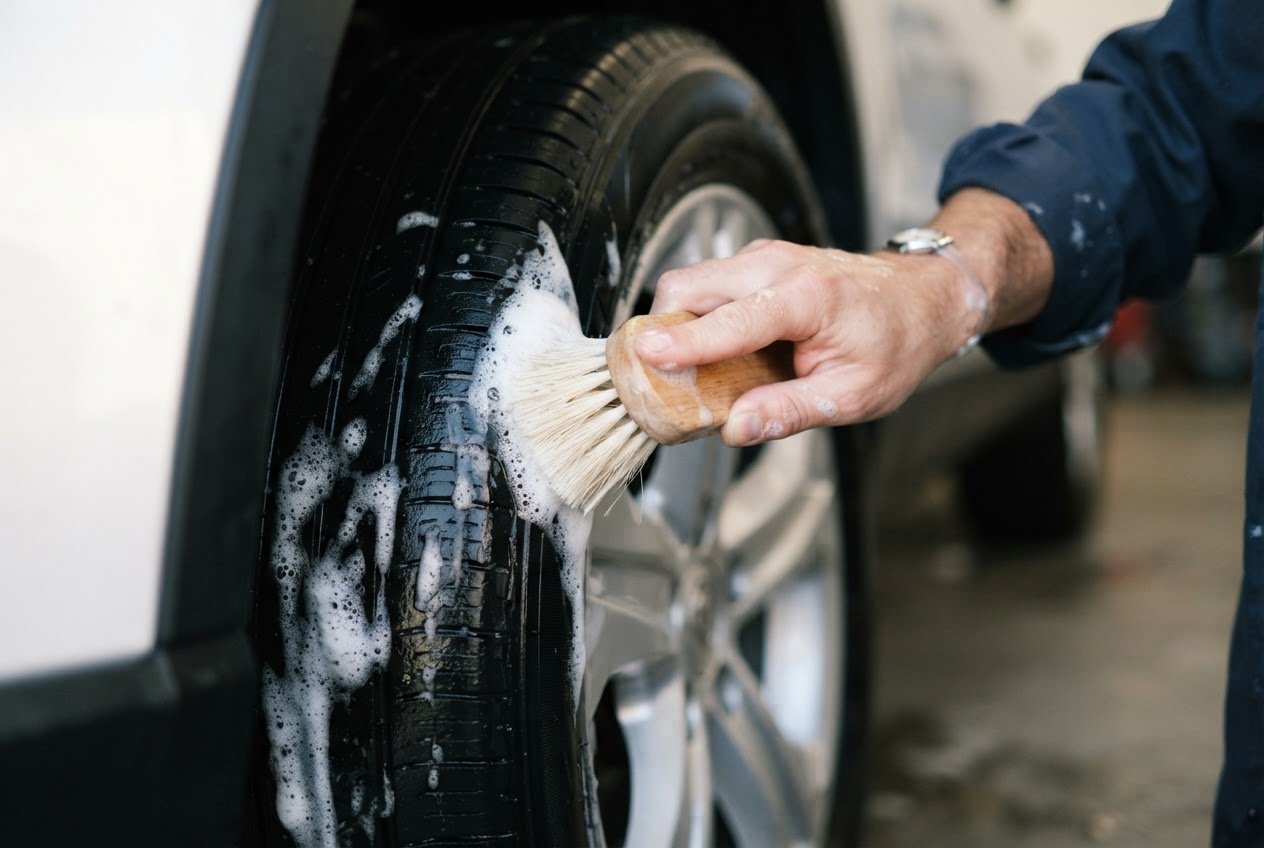
- Scrub gently with soapy water. Use a soft brush or sponge. Make a light pass around the whole sidewall and work around the letters with short strokes.
- Rinse thoroughly. Flush away suds around the lettering and rim. If the dry sidewall still feels tacky from old dressing, follow your tire maker’s guidance for a non-petroleum tire cleaner and rinse as directed on its label.
- Dry and inspect. Wipe the sidewall with a clean cloth and let it finish air-drying. Check for cuts, cracks, and bulges before applying anything else.
Why do tire sidewalls turn brown again?
Road grime and old dressing can leave a brown or dark film. A dry, even haze that comes back after washing may be blooming. Tire makers add compounds that protect the rubber as it ages. As some of those compounds reach the surface, they can leave visible discoloration. Washing can remove surface residue, and the color can return over time. Hankook’s explanation of tire blooming (PDF)
| What you see after drying | What to do |
|---|---|
| Grit or streaks near the lettering | Rinse and make one more gentle pass with soapy water. |
| A fairly even brown haze on intact rubber | Blooming is one possible cause. Stop scrubbing and check again at your next wash. |
| A cut, cracking, or a raised bulge | Have a tire professional assess the damage. If you see a bulge, leave the vehicle parked and arrange roadside assistance. |
Use Michelin’s sidewall inspection guide to see examples of discoloration and structural damage.
What should you avoid using on tire sidewalls?
Skip petroleum-based cleaners and stiff wire brushes. Michelin recommends plain soap and water or a non-petroleum product for tire cleaning. If you want a darker finish once the tire is dry, check the tire maker’s guidance before applying anything and see our guide to choosing and applying tire shine. Michelin’s tire care FAQs
Common questions
Can I use a pressure washer to clean tire sidewalls?
A regular hose is enough for this method. Use it to rinse loose dirt and soap, then let the brush do the work on stubborn residue.
How do I clean white lettering on tires?
Start with mild soap and a soft brush. Use small, gentle strokes around the edges of each letter, then rinse and dry the area before deciding whether it needs another pass.
Do I need tire shine after cleaning?
No. Once the soap is rinsed off and the sidewall is dry, cleaning is complete. Tire shine changes the appearance of the rubber.