Industrial Air Compressor Sizing Guide for Tire Shops
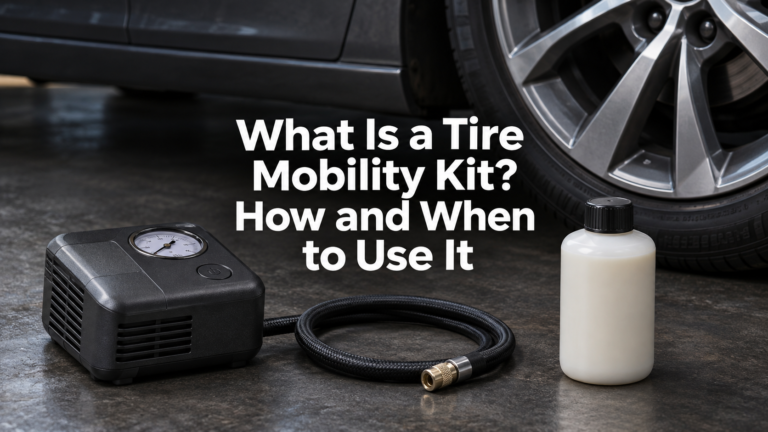
An industrial air compressor makes sense for a tire shop that runs air tools all day or serves several bays at once. If you only top off your car tires, a portable tire inflator is usually enough. For shop use, match the compressor’s airflow at the required pressure to the tools that run together.
Start with your busiest part of the day. List the tools that run at the same time and check how much air each needs. If you only add a few pounds of air to car tires now and then, check the specs of a portable inflator first.
I’d start with the jobs you do each week. A tire top-off, a few short bursts from an impact wrench, and two busy service bays put very different loads on a compressor. Here’s how to tell what you need and use shop air to top off a tire safely.
What Is an Industrial Air Compressor?
An industrial air compressor takes in outside air and squeezes it. The pressurized air can run tools, supply tire service machines, and fill tires through an inflator. A shop system may also have a storage tank, a filter, a dryer, and pipes that feed each bay.
Piston vs. rotary screw compressors
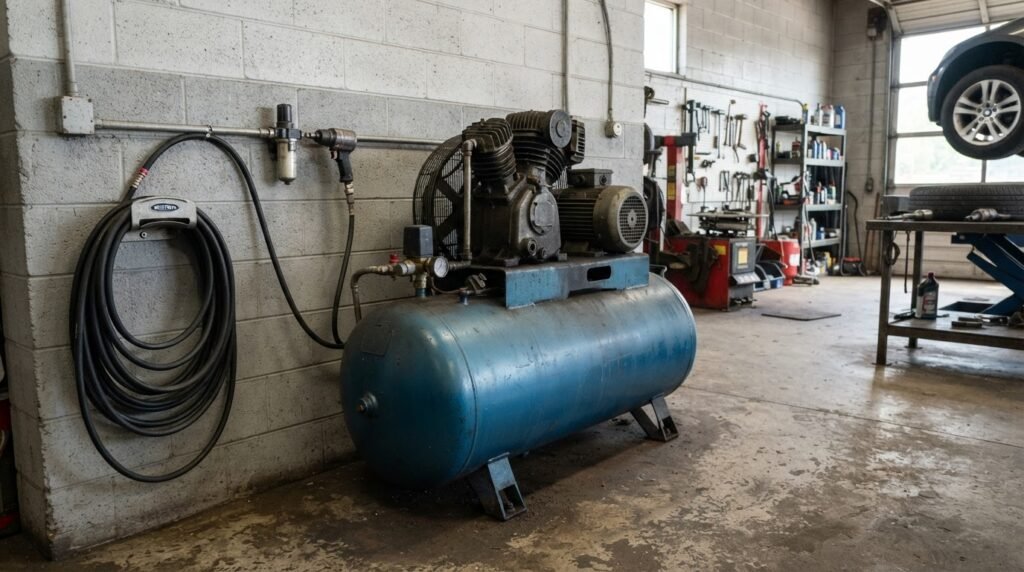
A piston compressor squeezes air with one or more pistons. It can suit a small shop where tools run in short bursts and the pump has time to rest. Check the exact model’s duty cycle, which tells you how long it can run within a stated period under set conditions.
A rotary screw compressor uses two turning rotors to squeeze air. It can suit a shop with steady demand through much of the day. Check how the model handles both your busiest hours and quiet stretches.
| Typical use | Equipment to consider | What to check first |
|---|---|---|
| Top off one car’s tires at home | Portable tire inflator | Power source, hose reach, pressure range, and run time |
| Fill tires and use air tools in short bursts | Tanked piston compressor | Delivered airflow at tool pressure and the pump’s duty cycle |
| Run several busy shop bays | Shop system sized for the shared load, which may use a rotary screw compressor | Peak airflow, pressure at each bay, and hours of steady use |
How to Size an Industrial Air Compressor for a Tire Shop
Pressure is measured in pounds per square inch, or PSI. Airflow is often measured in cubic feet per minute, or CFM. A tool needs enough of both while it runs. A high reading on the tank gauge tells you the tank has pressure. It cannot tell you how much air will reach a tool in use. See the Atlas Copco guide to compressor sizing.
Include each impact wrench, tire changer, and other air tool on the system. Look up its air use and inlet pressure in the manual. Check whether the listed air use is an average or the amount used while the tool runs.
Use your busiest work period as a guide. For example, if two tools each use 5 CFM at 90 PSI while running, they need 10 CFM together at that pressure at their inlets. The supply system also needs to account for pressure lost along the way and any other loads that run at the same time.
Read the compressor’s data sheet for delivered CFM at the pressure the supply system needs. Check the duty cycle against how long your shop draws air. A tank can cover a short burst, but the pump has to keep up with the work over time.
On an existing system, check the pressure near the tool inlet while the tool runs, using a gauge and fittings rated for the system. If pressure drops, check the filter, hose, and couplers for restrictions before you buy a larger compressor. A system installer can size the piping for a new shop.
Check compatibility before buying
- Power and installation
- Use the nameplate and install manual to check voltage, electrical phase, and circuit needs. Confirm that the site has the clearance and ventilation the maker calls for.
- Hoses, regulators, and fittings
- Check that each part can handle the pressure it may see where it is installed. Use the tool manual to check hose size, fitting type, and inlet pressure.
- Air quality
- Check the air quality each tool or machine requires. Use those specs to choose a filter, water separator, or dryer.
- Portable inflator reach
- Check that the hose and power cord reach all four valves. For a plug-in unit, confirm the vehicle outlet can supply the current the inflator requires.
How to Top Off Car Tires With Shop Air
For a full walkthrough of the hose, chuck, and gauge, see our guide on how to fill a tire with an air compressor.
Use these steps only for a routine top-off on a tire already mounted on the vehicle. If a tire has a sidewall bulge, is visibly flat, or was driven flat, stop and get help from a tire shop or roadside service. A sidewall bulge can signal damage inside the tire. See Michelin’s guidance on sidewall bulges.
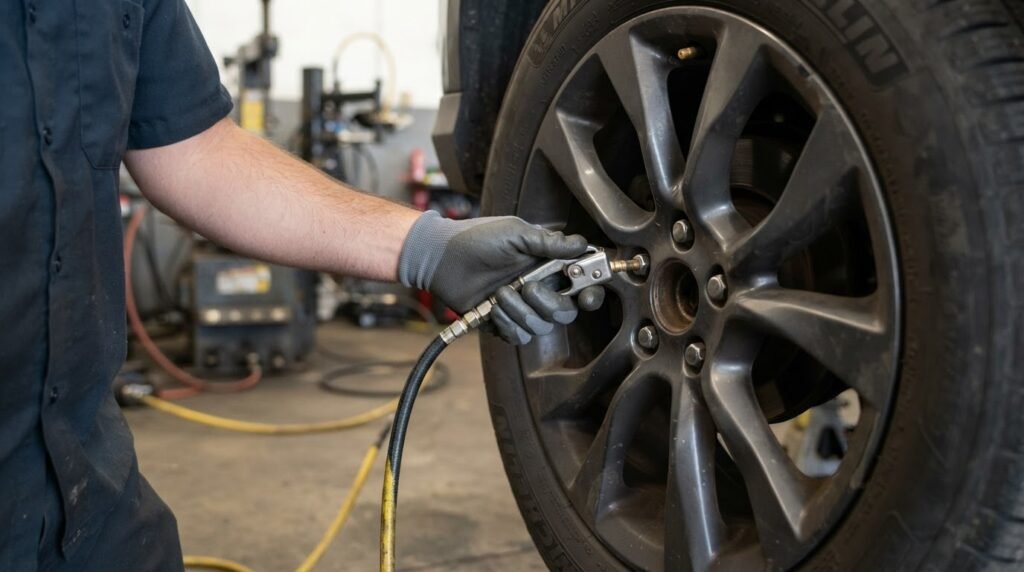
Look for the tire and loading label, usually inside the driver’s door opening. You can also check the owner’s manual. Note the front and rear targets, since they may differ. The maximum pressure molded into a tire’s sidewall is a tire limit. Use the vehicle maker’s cold pressure as your target. See NHTSA’s tire pressure guidance.
For a cold reading, check after the vehicle has been parked for at least three hours. Take off the valve cap and press the gauge straight onto the stem. Compare the reading with the target for that wheel.
Make sure the regulated supply is within the tire inflator’s inlet rating. Fit the chuck squarely on the valve stem and add a little air. Release the trigger and recheck the tire with your gauge. Repeat as needed. If a cold tire is above its target, let out a small amount and check again.
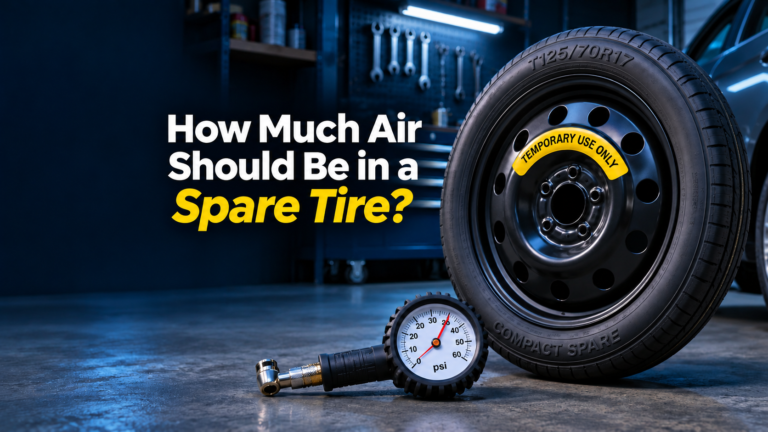
Replace the valve cap once the tire is at its target. Check the other tires one by one. If the vehicle has a spare, look up its spare tire pressure as well. If the same tire keeps losing air, have a tire shop check it for a leak.
A tire can read higher after a drive. Wait for it to cool before letting air out to reach the cold target. If a warm tire is below the placard value and otherwise safe to top off, add air up to that value and check it again when cold.
Common Air Compressor Problems and What to Check
| What you notice | Possible cause | What to do next |
|---|---|---|
| The tool slows down when a second bay starts work | Shared airflow demand is too high, or the air line restricts flow | Check pressure at the tool while both bays draw air and compare the load with the compressor rating |
| Air hisses at the tire valve during a fill | The chuck may be tilted or may have a worn seal | Reseat it squarely. If it still leaks, check the chuck and valve stem |
| The pump runs longer than usual with the same workload | An air leak, a clogged intake filter, or a service issue | Check for leaks and follow the maker’s service instructions |
| Water spits out at the air outlet | Condensate has built up, or the separator or dryer needs service | Follow the manual’s drain procedure and check the air treatment equipment |
| One tire keeps losing air after top-offs | A leak at the tread, valve, or seal between the tire and wheel | Have a tire shop find the leak and inspect the tire |
Keep a tire gauge at each bay. Read the tire with the airflow stopped before you put the valve cap back on.
Shop Compressor Safety
Follow the maker’s instructions to shut off power and release stored air before service. Keep the tank’s pressure gauge and safety valve in working order. Drain the tank as directed so water does not build up. For workplace air tanks, see OSHA’s air receiver standard.
If a tank leaks, looks cracked, or shows heavy rust, take it out of service and have it checked by a qualified technician. Keep hands and face clear of air outlets, and never aim a stream of compressed air at yourself or another person.
Key Takeaways
- A portable inflator usually covers routine tire top-offs at home.
- Size a shop compressor by delivered CFM at the required PSI, which tools overlap, and how long they run.
- Check pressure at the tool while it runs if a bay keeps losing power.
- Use the vehicle’s cold tire pressure and recheck with a tire gauge after you add air.
Frequently Asked Questions
Can I use an industrial air compressor to fill car tires?
Yes. For a routine top-off, use a regulated air supply, a tire inflator rated for the supply pressure, and a tire gauge. Add air in short bursts until the cold tire reaches the pressure listed by the vehicle maker.
What PSI should I use to fill my tires?
Use the cold tire pressure on the vehicle’s tire placard or in the owner’s manual. Check the front and rear values, since they can differ.
How much CFM does a tire shop need?
It depends on the tools and how many run at once. Use the tool manuals to add up the airflow for work that overlaps. Check that the compressor and air lines can deliver that flow at the pressure the tools need.
Does a bigger tank increase compressor CFM?
A bigger tank stores more air and can help cover a short burst. The pump’s delivered CFM at the required pressure determines how much air it can supply over time.
Should a tire shop choose a piston or rotary screw compressor?
A piston unit can suit short jobs spread through the day. A rotary screw unit can suit steady air use across busy bays. Compare each model’s delivered airflow and duty cycle with the way your shop works.
Why does the gauge show enough tank pressure while my impact wrench feels weak?
Pressure can drop between the tank and the tool when air starts to flow. Check the pressure near the running tool. A small hose, a restrictive fitting, a clogged filter, or too much shared demand can cause a drop.
Start With the Work You Do Most
If you top off tires at home, check your door placard and choose an inflator that reaches every wheel. If you run a shop, write down which tools run together on a busy day and pull their air specs. Use that list to compare compressors and size the lines that feed each bay.