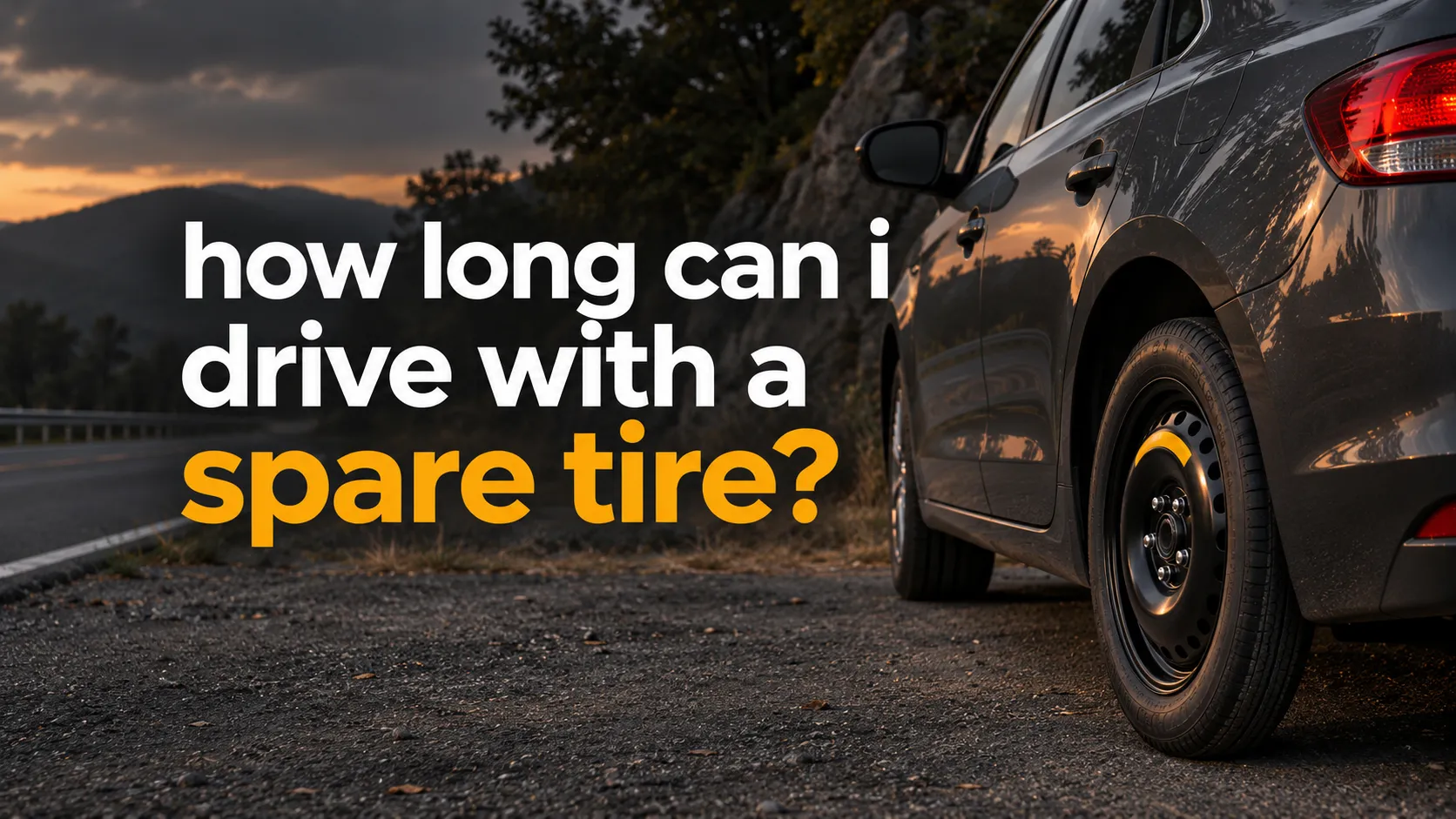
How Long Can I Drive With a Spare Tire? Speed & Distance
Drive on a temporary spare tire only as far as you need to reach a safe place for tire service. Check your owner’s manual and the spare’s label for speed and distance limits. A matching, road-ready full-size spare may be used like a regular tire if your vehicle maker allows it.
Many compact spares have a 50 mph top speed. Follow the limit for your car and spare, and drive slower when conditions call for it. If your manual lists a mileage cap, stay within it. If the spare is low, damaged, or can’t get you to a shop within its limits, call roadside assistance.
“How long can I drive with a spare tire?” is usually a question you ask while trying to get somewhere. I’d start by checking what kind of spare you have. A small donut and a full-size spare can have very different rules. Even a spare that looks full-size may carry a temporary-use label.
If you’re beside fast traffic or the car is on soft or sloped ground, call for help if you can’t change the tire safely. If the spare goes flat, loses air fast, or makes the car shake while driving, slow down smoothly and pull over when safe.
How Long Can You Drive on a Spare Tire?
Think in terms of distance, speed, and spare type. A temporary spare is there to get you out of a breakdown. A short drive to a tire shop is the goal. A commute, a weekend of errands, and a long trip all add miles, even if each drive feels short.
You may have heard the “50 miles at 50 mph” rule. Treat those as two separate numbers. The first is a distance. The second is a speed. For example, the 2025 Hyundai Palisade owner’s manual sets a 50 mph maximum for its compact spare and says to repair or replace the original tire as soon as possible. A 50 mph label by itself gives you no mileage allowance.
If your manual gives you a shorter distance or a lower speed, follow it. If it gives no mileage figure, keep the trip as short as you can and head for service. You also need a route where driving within the spare’s limits is safe.
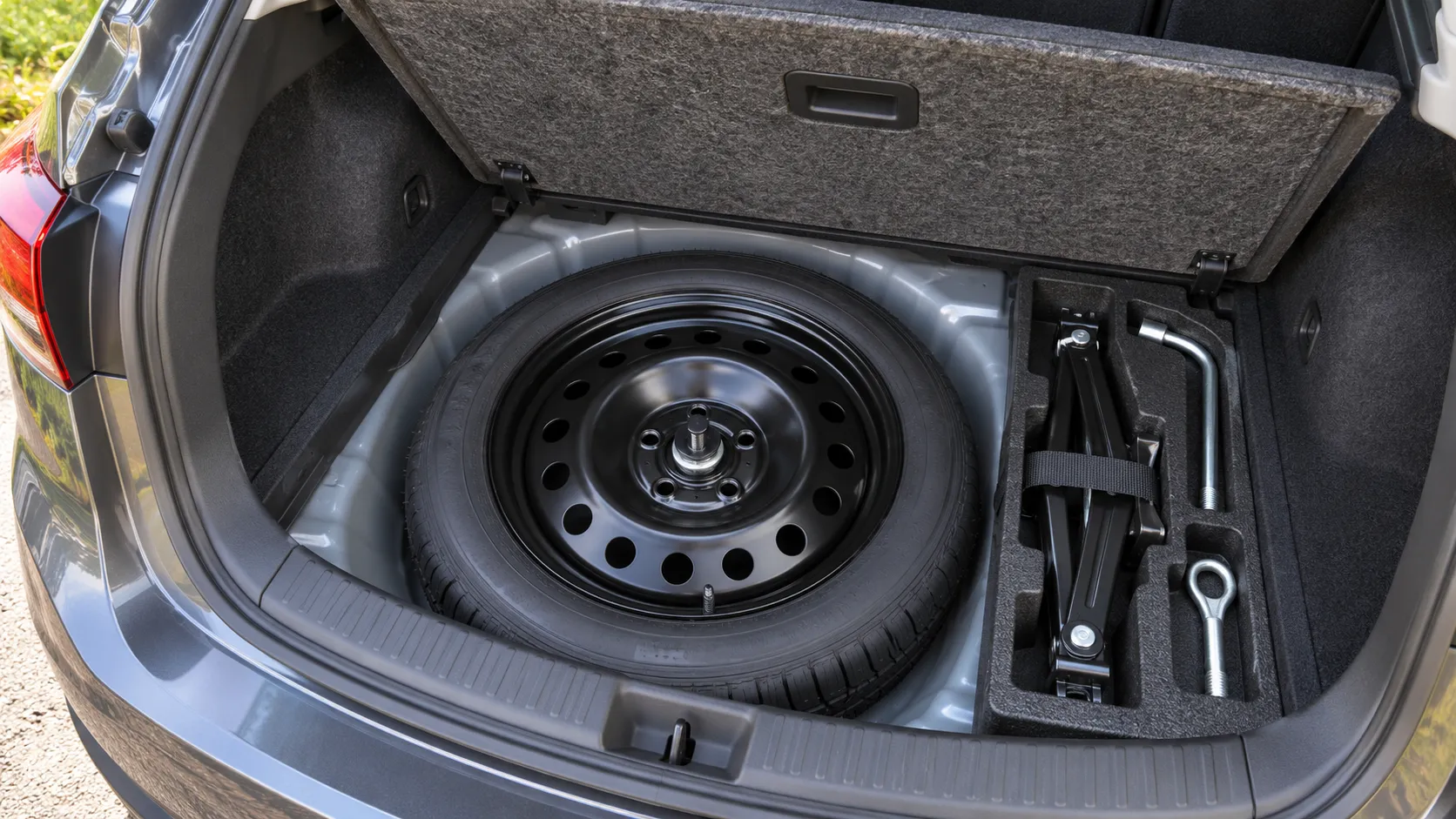
Find Out Which Type of Spare You Have
| Spare type | How to spot it | How long to use it |
|---|---|---|
| Compact spare, also called a donut | Usually narrow. It may have a size code that starts with T or a temporary-use marking. | Use it for a short trip to service. Follow the speed, distance, and pressure instructions for your vehicle. |
| Full-size spare with restrictions | May look like a regular tire. The wheel or tire may carry a temporary-use label, or the manual may list limits for a spare that differs from the road wheels. | Follow the manual’s rules and replace it with the correct road wheel and tire promptly. |
| Matching full-size spare | Matches the required wheel and tire setup. It has the right pressure and is in good condition. | May serve as a regular tire if the vehicle maker allows it and any tread-match rules are met. |
Michelin’s guide to driving on a spare tire explains why a compact spare has tighter limits and why a matching fifth wheel and tire is a different case. If the spare came from another vehicle or the previous owner swapped it out, have its fit checked before you rely on it.
Why a donut changes how the car feels
A compact spare can change how the car steers, brakes, and grips the road. Its size and design can differ from those of the other tires. Give yourself extra room to slow down and take turns gently. Wet roads, snow, and fast traffic can make a short trip harder even when you’re below the posted limit on the spare.
Why a full-size spare can still carry limits
A spare can look close to the same size and still differ in size, tread depth, or approved use. Some all-wheel-drive and four-wheel-drive vehicles have rules for how closely the tires must match. Some vehicles also limit where you can mount a temporary spare or what you can do while it’s fitted.
Look up the spare tire section for your exact vehicle and model year. If it lists rules about wheel position, towing a trailer, tire chains, or all-wheel drive, follow them. If you can’t follow the mounting instructions safely where you are, call for help.
What to Check Before Driving on a Spare
Look for a temporary-use label on the tire or wheel. Then check the owner’s manual for the speed limit, any distance limit, the spare’s pressure, and any rules on where it can go. If the manual is missing from the glove box, look for the digital version for your model and year when you’re safely parked.
Use a gauge and compare the reading with the vehicle maker’s target for that spare. A compact spare may need much more air pressure than the other tires. For example, Hyundai lists 60 psi for the compact spare in the Palisade manual linked above. Use your own vehicle’s spec. If you see a bulge, exposed cords, or a deep cut, get help.
Call ahead to make sure the shop is open. Ask if it can inspect the flat or has a suitable replacement in stock. Pick a route that lets you stay within the spare’s limits and drive safely with traffic. A route that avoids a fast freeway may be the better choice. If there’s no safe route, arrange roadside help.
Have the shop check whether the flat can be fixed. Tell the tech if you drove on it after it lost air. Once the right road tire is back on, make sure the spare and tools go back into the car. If the spare is low or damaged, deal with that before the next trip.
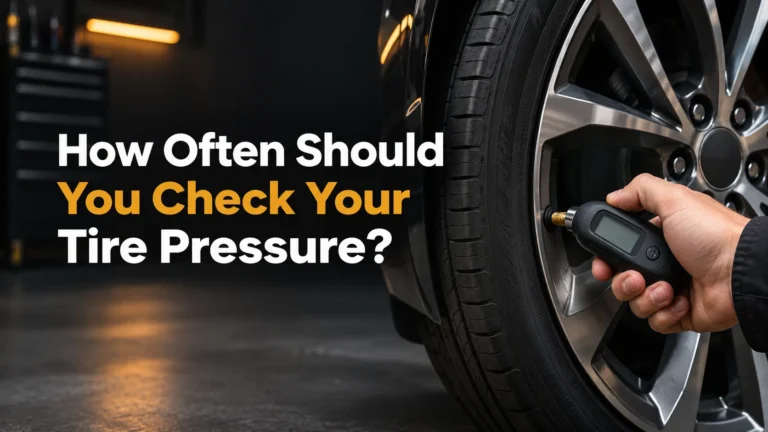
Check the spare while it’s cold as part of your monthly tire check. Include it before a road trip, too. A tire that sits in the trunk can still lose air over time. NHTSA’s tire safety guide covers cold pressure checks and spare tire care.
Can I Drive on a Spare Tire in These Situations?
| Situation | What to do |
|---|---|
| The nearest open tire shop is close and you can take local roads. | If the spare is roadworthy and you can stay within all its limits, drive there directly. |
| The freeway is the only route and traffic moves too fast for your spare. | Call roadside assistance. A short route still has to be safe at the speed you can drive. |
| The shop is closed and the car is safely parked. | Leave the car parked until you can arrange service. Save the temporary spare for the trip you need to make. |
| You’re towing a trailer or carrying a heavy load. | Check the manual before moving. Your spare may have load or towing restrictions. Call for help if the setup falls outside them. |
| The spare is losing air or the car starts to shake. | Pull over when safe and call for help. Continuing can make a tire or wheel problem worse. |
Example: The shop is eight miles away
Say you have a properly inflated donut with a 50 mph limit. Your manual allows the trip, the weather is clear, and the shop is eight miles away on local roads. I’d call the shop and go straight there. I’d skip the extra stops so the tire spends as little time on the road as possible.
Example: You have a flat on a road trip
Say the next shop is far away and the only route has fast traffic. You also have luggage and passengers in the car. I’d check the manual and call roadside assistance if the trip goes beyond the spare’s limits or there’s no safe way to stay below its speed cap. The fact that the spare fits gives you only part of the answer.
Common Mistakes With Spare Tires
- Using the same pressure as the regular tires. Check the vehicle’s specification for the spare. The spare and the road tires may have very different targets.
- Reading the speed limit as a mileage limit. MPH means miles per hour. Check the manual for any separate distance limit.
- Assuming an unused spare is ready to drive. Check its pressure and look for damage. If it has been stored for years, check its age against the tire or vehicle maker’s guidance.
- Keeping a temporary spare on for errands. Use it for the trip you need to get the flat fixed or replaced. If the car can stay safely parked, leave it there until you can get service.
Save the spare tire page from your owner’s manual on your phone before a road trip. You can check the pressure, speed limit, and wheel-position rules even where cell service is poor.
Key Takeaways
- Use a temporary spare for the shortest safe trip to tire service.
- Check the spare’s speed, distance, and pressure instructions for your vehicle.
- A full-size spare may still have restrictions. Check the label and owner’s manual.
- Call for help if the spare is damaged, loses air, or can’t get you to service safely.
Frequently Asked Questions
How long can I drive with a spare tire?
Use a temporary spare for the shortest safe trip to tire service. Follow the speed and distance limits for your vehicle and spare. A matching full-size spare may serve as a regular tire if the vehicle maker allows it.
Can I drive 50 miles on a donut spare?
Check your owner’s manual and spare label. A 50 mph speed limit does not mean you can drive 50 miles. Follow any distance limit and get to service as soon as you safely can.
Can I drive on the highway with a temporary spare?
Take a route where you can drive safely within the spare’s limits. If freeway traffic makes that unsafe, use another route or call roadside assistance.
Can I leave a donut spare on overnight?
If the car is safely parked and you can wait for service, leave it parked. Check the spare’s pressure and condition before you drive again.
How much air should a spare tire have?
Use the cold pressure listed for your spare in the owner’s manual or on the vehicle’s label. A compact spare may have a higher pressure target than the regular tires.
Can I use a spare tire on an all-wheel-drive car?
Check your owner’s manual for the approved spare, the wheel position, and any driving limits. If you don’t have the right spare or can’t meet those rules, call for roadside help.
Get the Flat Fixed as Soon as You Can
My first move would be to check the spare’s label and the manual, then call the nearest open tire shop. If the spare is sound and you have a safe route within its limits, go straight there. If the spare, route, or road conditions make the trip unsafe, arrange roadside help.

One Comment