
How Long Does It Take to Patch a Tire?
How long does it take to patch a tire? A shop may need 30 to 60 minutes for a straightforward tire repair once work begins. Your total visit can take longer if you have to wait for a service bay, the leak is hard to find, or the tire needs to be replaced.
Plan for 30 to 60 minutes of repair time, plus the shop’s wait. Before you head over, ask when a technician can start and whether you should wait or drop off the car. The shop has to take the tire off the wheel and check the inside before it can approve a puncture repair.
I’d ask for a pickup estimate before I made plans around a tire patch. A shop can give you a rough time over the phone, but the most useful estimate comes after a technician finds the leak and checks the tire. A nail in the tread, a leaky valve, and a cut in the sidewall can all trigger the same low-pressure light. Each leads to a different job.
If the tire is flat, losing air fast, or has a bulge, torn sidewall, or exposed cords, pull over as soon as you can do so safely. Use a suitable spare if your vehicle has one and you can install it safely. Otherwise, call for roadside help. Avoid driving on a flat tire to save time. That can damage the tire inside and turn a small puncture into a replacement.
How Long Does It Take to Patch a Tire at a Shop?
Meineke gives an estimate of 30 to 60 minutes for the repair itself. That is a useful starting point for one tire with a simple puncture. The total time depends on how soon the shop can get to the car and what the technician finds. Meineke’s tire patch time estimate.
Think of your visit as two parts. First comes the wait for a technician and an open bay. Then comes the work on the car. The technician needs to find the leak, remove the tire from the wheel, and check whether a repair is safe. If the tire qualifies, the shop can repair it, put it back on the wheel, and check for leaks before you leave.
When a shop says “about an hour,” ask what that time covers. It may be the time the shop needs once work starts. It may also be a pickup estimate that includes the wait. If you have a school pickup, a work shift, or another appointment, the pickup estimate is the one to plan around.
| Your situation | What affects the time | What to ask the shop |
|---|---|---|
| One simple tread puncture and an open service bay | The repair itself may take 30 to 60 minutes if the tire passes inspection. | Can a technician start when I arrive? |
| Walk-in visit at a busy shop | The cars ahead of you add to the total visit. | When can you first look at my tire? |
| Slow leak with no nail in sight | Finding the source may take more time. The leak could be in the tread, valve, or seal at the wheel. | Can you call me after you find the leak? |
| Flat tire that you drove on | The shop needs to check the inside for damage before it can quote a repair. | Can you inspect it today, and what happens if I need a new tire? |
| Puncture in the shoulder or sidewall | The job becomes a replacement. The right tire may have to come from another location. | Do you have a matching tire in stock, and when could you install it? |
What Happens During a Tire Patch?
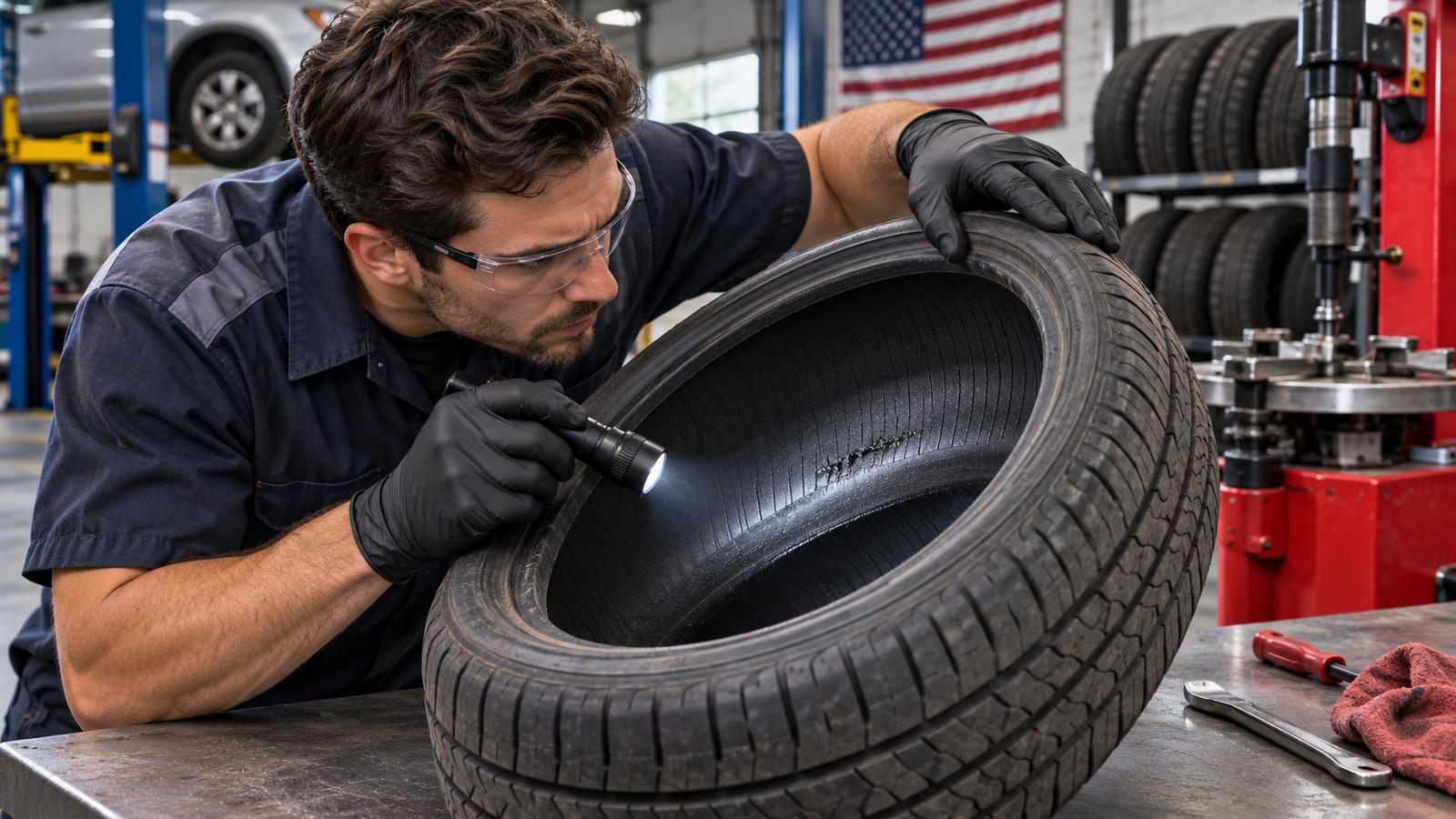
When drivers say “patch,” they often mean a full puncture repair. For a passenger car or light truck tire, that includes filling the path of the puncture and sealing the inside. The soft inner layer that holds air is called the inner liner. A patch seals that layer. A stem fills the hole through the tread.
The U.S. Tire Manufacturers Association, or USTMA, says the tire must come off the wheel for a full check. The repair must fill the puncture and seal the liner. A shop may use a single repair unit that combines both parts. USTMA tire puncture repair guidelines.
First, the technician finds where air escapes
A screw head in the tread is a clue. The screw may have gone all the way through, or it may be stuck in a groove without causing the leak. The shop checks the tire, the valve, and other likely leak points as needed. If there is a leak at the valve, a tread patch won’t solve it.
Next, the technician removes the tire and checks inside
Taking the tire off the wheel gives the technician a view of the liner and inner sidewalls. That matters if you drove with low air. A tire can look sound from the outside and still have damage inside. The technician also checks the path of the hole. A nail can enter the tread at an angle and reach the shoulder.
Finally, the shop repairs and checks the tire
If the tire qualifies, the technician prepares the damaged area and follows the repair material’s directions. Then the shop puts the tire back on the wheel, sets the pressure, and checks the work. Ask whether balancing is part of your shop’s service and whether it is included in the time and price you were quoted.
What Can Turn a Quick Patch Into a Longer Visit?
The shop can’t start right away
Even a simple repair can take up much of your morning if the shop is busy. Ask for a slot and find out whether it reserves a bay or just lets the shop know when you’ll arrive. If you’re on a tight schedule, ask for the latest pickup estimate before deciding to wait in the lobby.
The leak only shows up under certain conditions
One tire might take several days to lose enough air to trigger the warning light. When you call the shop, share what you know. For example, tell them which tire was low, what your gauge read, and how long it took for the pressure to drop again. Those facts can help the technician decide where to start. If you have this problem, read our guide to why one tire keeps losing air.
The tire needs to be replaced
A shop may be able to tell right away that a cut in the sidewall needs a new tire. Other damage can appear only after the tire comes off the wheel. Once replacement is on the table, the biggest time question may be whether the shop has a tire that fits your car. If it has to order one, ask for the arrival date and the next open install slot. Those can be two different times.
The technician needs more details about the tire
Let the shop know if the tire is a run-flat, has been repaired before, or has sealant inside. Some tire makers set extra limits on repairs for certain models. If you used a sealant kit, give the shop the product name if you have it. If you drove while the tire was flat, give your best estimate of the distance. That helps the shop judge the tire and plan the work.
When Can a Shop Patch a Tire?
USTMA’s general guidance for passenger and light truck tires calls for a puncture no larger than ¼ inch (6 mm) in the repairable tread area. That size limit is one part of the decision. A small hole may still be too close to the edge, lead into the shoulder, or overlap an old repair.
The shoulder is the outer edge where the tread curves toward the sidewall. If the hole reaches that area or the sidewall, expect replacement. The shop also needs to check for damage from driving on low air, as well as the tire’s overall condition. Michelin’s U.S. guide calls for an off-wheel check and advises replacing a tire that was driven flat. Michelin’s guide to repairable tire damage.
| What the shop finds | Likely next step | What it means for your visit |
|---|---|---|
| Small hole within the repairable tread area and no other damage | Repair if the tire maker’s rules allow it. | Ask for a pickup time once the technician confirms the repair. |
| Hole that reaches the shoulder or sidewall | Replace the tire. | Ask whether the correct replacement is in stock. |
| Damage inside from driving flat | Replace the tire. | Ask about stock and safe transport if the car needs to stay at the shop. |
| New hole that would overlap a prior repair | Rule out that puncture repair. | Allow time to choose and install a replacement. |
| Leak at the valve or at the edge of the wheel | Service the source of the leak and check the tire for damage. | Get a new quote once the shop confirms what is leaking. |
How to Plan Your Tire Repair Visit
Note which tire is low and whether you can see a screw, cut, or bulge. If you find a nail or screw, leave it for the technician. Pulling it out may make air escape faster.
Share the vehicle, the affected tire, and when the warning came on. Mention any sealant, old repair you know about, or time spent driving on low air. Tell the shop if you expect to come in on a spare or need a tow.
Try asking, “When can someone inspect the tire, and when might the car be ready if it can be repaired?” If you can’t wait, ask whether you can leave the car and get a text or call after the check.
If the shop finds a bad valve or rules out a patch, ask what it found and when it can finish the new job. Before you approve a replacement, have the shop confirm the tire fits your vehicle and is available for that time slot.
If you need the car back by a set time, say so when you call. Ask the shop to contact you after the inspection if the job changes. That gives you time to arrange a ride if the repair becomes a replacement.
Three Examples of How the Timing Can Change
A screw in the middle of the tread
Say you spot a screw in the tread before work, and a shop can start when you arrive. If the tire passes the inside check, its estimate may be close to the repair time. I’d still leave a little room for check-in and checkout. If you need to be somewhere at a set time, ask when the shop expects to hand back the keys.
A quick repair with a long wait
Say the shop has a 90-minute wait for a bay and expects the repair to take 30 to 60 minutes once it starts. In that example, you’re looking at about two to two and a half hours before allowing for check-in or checkout. If that timing doesn’t work, ask about a later slot or leave the car if you can get a ride.
A flat that looks like a simple nail puncture
Say you find a nail and get the car towed in, but you had already driven a short way while the tire was flat. The technician finds damage inside and recommends a new tire. How fast the shop can get the right tire now matters more than the usual patch time. Ask for the earliest install time and whether the shop can keep the car until then.
Common Mistakes That Cost Time
- Counting repair time from the moment you arrive. Ask whether the estimate starts at check-in or when the car enters the bay.
- Assuming a visible nail explains the whole leak. Give the shop time to confirm where the air is escaping. There may be a second leak or damage you can’t see.
- Leaving out a prior plug or sealant. Tell the technician what went into the tire. That history helps the shop inspect the right areas and plan the service.
- Driving on a flat to avoid a wait for a tow. Flat driving can cause further damage. Use a suitable spare if you can do so safely, or call for help.
- Arranging a pickup before the shop checks stock. If you need a new tire, confirm when it will arrive and when the shop can put it on.
Can You Drive Right After a Tire Patch?
Ask the shop when it releases the car and follow its instructions. The technician needs to finish the repair and check the tire before you leave. Any wait tied to the repair material belongs in the shop’s estimate. You can ask about that when the shop calls to say the car is ready.
After the visit, check cold pressure against the sticker inside the driver’s door or the owner’s manual. If the warning comes back or the same tire keeps going low, contact the shop and tell them how soon it happened. Keep the work order so the technician can see what was repaired.
Key Takeaways
- Allow about 30 to 60 minutes for a straightforward repair once work starts.
- Ask for the total visit time, including the wait for a bay.
- The shop needs to inspect the tire off the wheel before approving a puncture repair.
- A proper repair fills the puncture and seals the inner liner.
- If the tire needs replacement, confirm stock and installation time before making pickup plans.
Frequently Asked Questions
Can a tire shop patch a tire in 30 minutes?
Some straightforward repairs can take about 30 minutes once work starts. The shop still needs to find the leak, inspect the tire off the wheel, complete the repair, and check its work.
How long will I wait for a tire patch without an appointment?
It depends on how many cars are ahead of you and when a service bay opens. Ask for an estimated start time and a separate estimate for when the car will be ready.
Does an outside plug save time compared with a proper repair?
An outside plug may take less time to install, but a plug alone is not an approved puncture repair under USTMA guidance. A proper repair requires an inside inspection, a filled puncture, and a sealed inner liner.
Can a tire shop patch a hole in the sidewall?
No. A puncture that reaches the sidewall or shoulder is outside the repairable tread area. Ask the shop for a replacement estimate.
Do I have to wait before driving on a patched tire?
Follow the shop’s instructions. Ask when the technician has finished the repair and checks and cleared the car for use.
What happens if the shop can’t patch my tire?
Ask why the tire failed inspection and whether a replacement is in stock. The new pickup estimate depends on when the shop can get and install the correct tire.
Ask When the Car Will Be Ready
A straightforward tire patch can take 30 to 60 minutes once the shop starts. If I were planning around a repair, I’d call ahead and ask when a technician could inspect the tire and when I could expect the keys back. If the tire is flat, losing air fast, or visibly damaged, arrange a safe way to get it to the shop. Once the technician sees the inside, you’ll have a clearer answer about both the repair and the time it will take.