How to Plug a Tire: When a Puncture Can Be Repaired
If you’re looking up how to plug a tire on a car, start by checking where the puncture is. A small hole in the tread may be repairable. A tire shop should take the tire off the wheel, inspect it inside, and repair an eligible hole with a rubber stem and an inner patch.
Get to a safe spot and check the tire. If it’s flat, losing air fast, or has a cut or bulge on the side, leave the car parked. Use a compatible spare if you can change it safely, or call for roadside help. A rope plug pushed in from the outside leaves the inside of the tire unchecked.
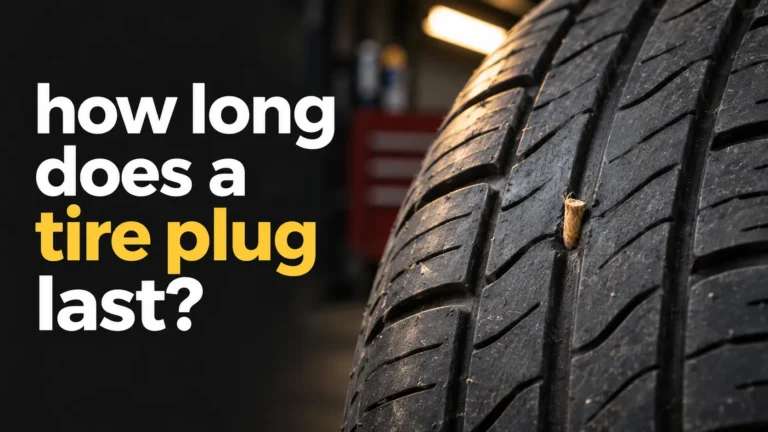
I’d check the spot where the tire is leaking before buying a plug kit. A nail near the middle of the tread and a nail at the outer edge can look much the same, but the spot where the nail went in can determine whether the tire can be saved.
Which tire punctures can be repaired?
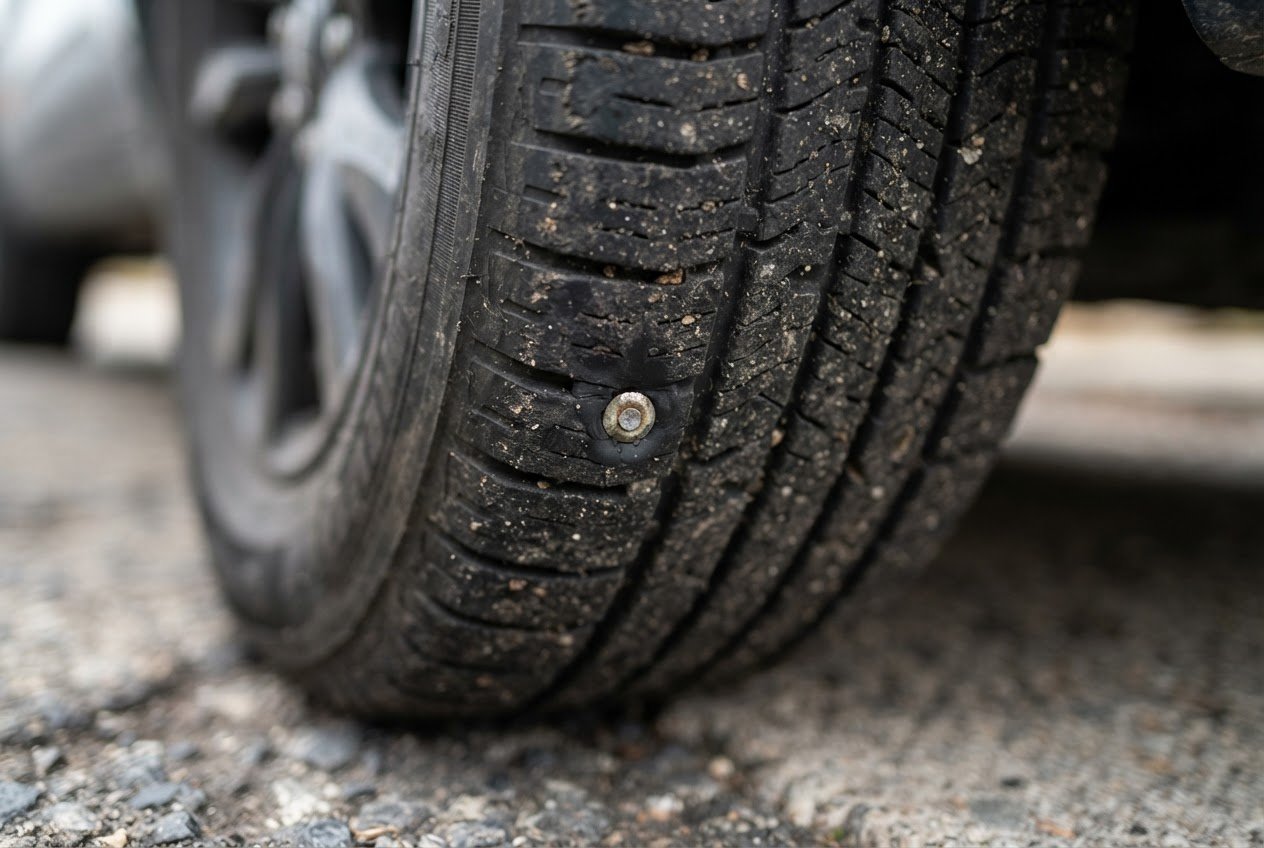
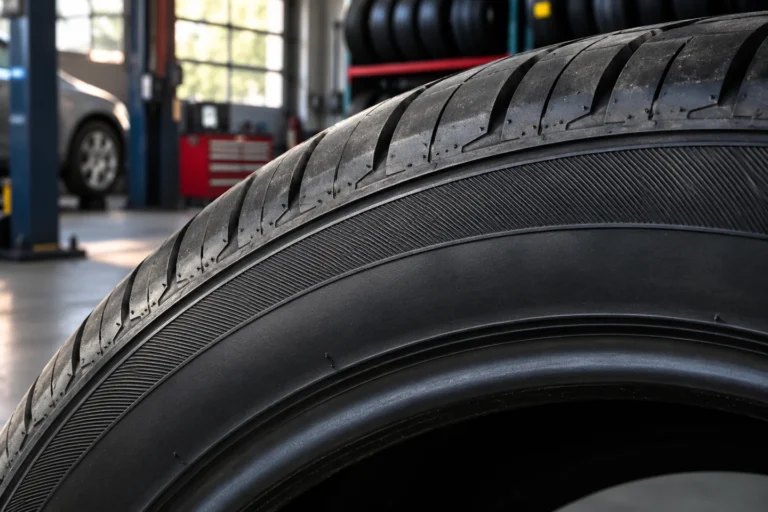
The tread is the part of the tire that grips the road. The shoulder is where the tread curves into the sidewall, the side of the tire. The U.S. Tire Manufacturers Association limits passenger and light truck puncture repairs to the repairable tread area and to holes no larger than 1/4 inch in diameter. Damage that extends into the shoulder is outside that repair area. See USTMA’s tire repair limits and tread diagram.
| What you see | What it may mean | What to do next |
|---|---|---|
| A small nail in the middle of the tread | The tire may be repairable if the hole and the inside of the tire pass inspection. | Leave the nail in place and arrange a tire inspection. |
| A screw at the outer edge of the tread | The puncture may reach the shoulder, even if the screw head sits on the tread. | Have a shop check the path of the hole. Use a spare or roadside help if the tire is unsafe to drive on. |
| A cut, bulge, or exposed cords on the sidewall | The tire has damage a puncture repair can’t fix. | Keep the car parked. Arrange a safe wheel change or a tow. |
| A tire that was driven flat | The sidewall may have damage inside even if the outside looks fine. | Keep the car parked and tell the tire shop you drove on it flat. |
| Low pressure with no nail in sight | The leak could come from the valve, the tire, or the seal where the tire meets the wheel. | Have the leak traced before choosing a repair. |
If the tire is flat, damaged, or losing air fast, stop driving as soon as you can safely pull over. If working on the tire would put you next to moving traffic, call for help from a safe spot. Michelin warns that a plug inserted from the outside can leave hidden damage unchecked. Read Michelin’s guidance on flat tires and plug-only repairs.
How to plug a tire with a proper inside repair
Here’s what to do when you find a puncture and what a tire shop does if the tire can be saved.
Look from a safe spot. If you see a nail or screw, leave it in place and note where it sits. Pulling it out can make the leak faster. Tell the shop if you felt a hard hit, drove on low pressure, or already used a plug or sealant.
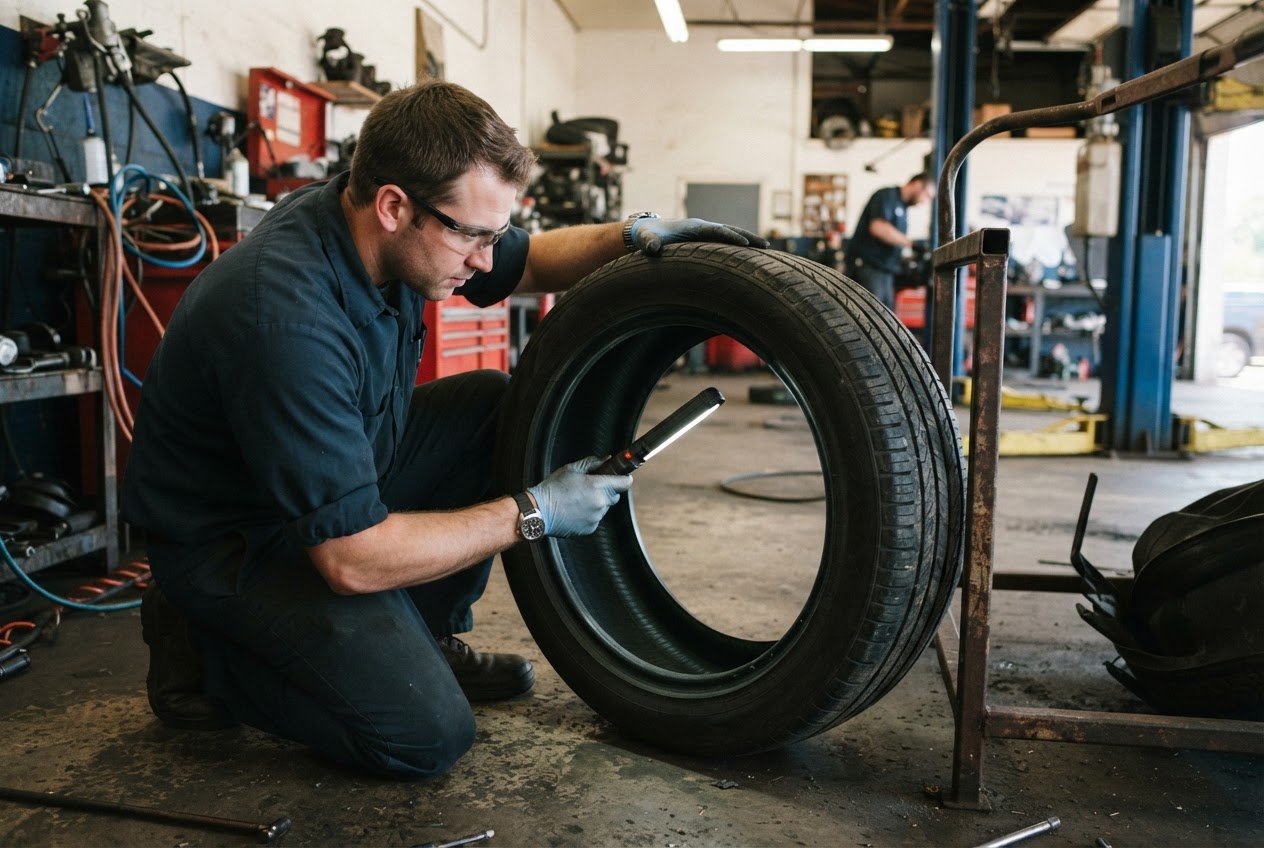
The technician checks the inner liner, the layer that holds air, and the sidewalls for hidden damage. They also check the hole’s size, angle, and location. If the damage falls outside the tire maker’s repair limits, the tire needs replacement.
For an eligible puncture, the shop fills the hole with a rubber stem and seals the inner liner with a patch. The stem and patch can be part of one repair unit.
The shop mounts the tire back on the wheel and checks for leaks. Afterward, check the pressure when the tires are cold. Use the number on the driver’s door sticker or in your owner’s manual. If the pressure keeps dropping, have the tire checked again.
What if the tire still holds air?
For example, you might find a screw in the tread while leaving for work, even though the tire still looks full. The screw can slow the leak while it’s lodged in the rubber. Arrange an inspection before relying on the tire for a trip. If you notice a drop in pressure or a change in how the car feels, pull over safely and arrange help.
Ask the shop whether it takes the tire off the wheel and uses both a stem and an inner patch. That tells you what the quoted repair includes.
Rope plug vs. patch vs. stem-and-patch repair
| Repair type | What it does | What to know |
|---|---|---|
| Outside rope plug | Fills the hole from the tread side. | Leaves the inner liner unchecked. Ask a technician to inspect the tire if one is already installed. |
| Inside patch alone | Covers the hole at the inner liner. | Leaves the path through the tread unfilled. |
| Stem and inner patch | Fills the puncture and seals the inner liner. | Use for eligible tread punctures only, after an inspection with the tire off the wheel. |
Run-flat tires may have separate repair rules. Give the shop the full tire model and tell them how far you drove after losing air. The tire maker’s repair policy and the inside inspection guide the decision.
Key Takeaways
- A small puncture in the repairable tread area may qualify for a shop repair.
- Sidewall and shoulder damage fall outside the puncture repair area.
- A proper repair starts with an inside inspection and uses both a stem and an inner patch.
- If the tire is flat or unsafe to drive on, use a compatible spare if you can change it safely, or call for help.
Frequently Asked Questions
Can I plug a tire without taking it off the wheel?
An outside rope plug can fill a hole, but the tire needs to come off the wheel for an inside inspection and a proper repair. Use a compatible spare or roadside help if the tire is unsafe to drive on.
How big of a hole can a tire shop repair?
USTMA limits passenger and light truck puncture repairs to holes no larger than 1/4 inch in the repairable tread area. The shop also checks the hole’s angle, hidden damage, and the tire maker’s limits.
Can you plug a tire sidewall?
No. A sidewall puncture falls outside the repairable area. Use a compatible spare if you can change it safely, or call for roadside help and arrange a replacement.
Should I pull the nail out of my tire?
Leave it in place until the tire can be serviced. Pulling it out can make air escape faster. Tell the shop where you found it.
Can a shop repair a tire that already has a rope plug?
Ask a technician to inspect it. An earlier improper repair can rule out fixing the tire. Tell the shop where the plug is and when it was installed.
What if my tire still leaks after a repair?
Have the shop check the repaired area, valve, and seal around the wheel. If the tire is losing air fast or looks flat, keep the car parked and arrange help.
Get the puncture checked before buying a plug kit
Note where the puncture is and tell the shop if you drove on the tire while it was low or flat. Ask for an inside inspection. If the hole qualifies, a stem and inner patch can seal it. If the damage is outside the repair limits, plan on a replacement.