How to Install a Tire Pressure Sensor (TPMS) in 6 Steps.
If you’re learning how to install a tire pressure sensor, start by checking the tire pressure and confirming your vehicle uses direct TPMS. A tire shop can fit a compatible in-wheel sensor, check for leaks, and perform the relearn so the vehicle recognizes the replacement.
Check all four tires with a gauge before buying a sensor. If pressure is correct and a scan confirms a failed sensor, match the new part to the vehicle and wheel. If the car uses indirect TPMS, set the correct pressures and follow its calibration steps.
I’d look up the sensor fit and relearn procedure together. A sensor can fit the valve hole and still send a signal your car can’t read. Here’s what you can check yourself and what to expect at the shop.
If you have a flat tire, visible tire damage, or rapid air loss, pull over safely and get roadside help. Leave bead breaking, mounting, and bead seating to a trained tire technician. See NHTSA’s tire safety and TPMS guidance.
Do You Need a New Tire Pressure Sensor?
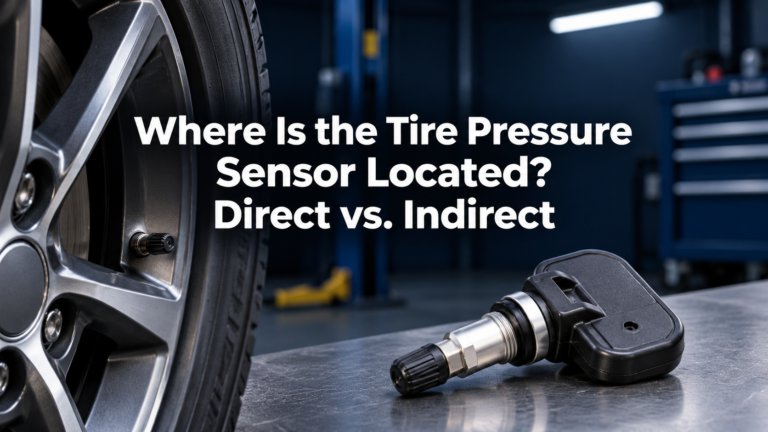
TPMS stands for tire pressure monitoring system. A direct system measures air pressure with sensors in the wheels. An indirect system uses signals such as wheel speed to detect a change that can point to low pressure. Check your owner’s manual or see where tire pressure sensors are located.
Measure the pressure when the tires are cold. Use the PSI on the driver’s door placard or in your owner’s manual. Front and rear values may differ. The maximum pressure on the tire sidewall is a tire limit. Use the vehicle placard for the normal fill pressure.
For example, if one tire loses pressure overnight but its sensor still reports a reading, have the shop look for a leak before replacing the sensor. If all tires have the right pressure and one wheel stops reporting, here’s how to tell which tire pressure sensor may be bad.
Check compatibility before buying
- Vehicle
- Use the VIN with a dealer or factory parts catalog. Check the year, make, model, and trim in the sensor maker’s US fitment guide.
- Wheel
- Check the mounting style and valve fit, especially if your wheels are aftermarket.
- Tools
- Check that the shop’s scan tool supports the sensor and the vehicle’s relearn method.
| Mounting type | What to check | What the shop fits |
|---|---|---|
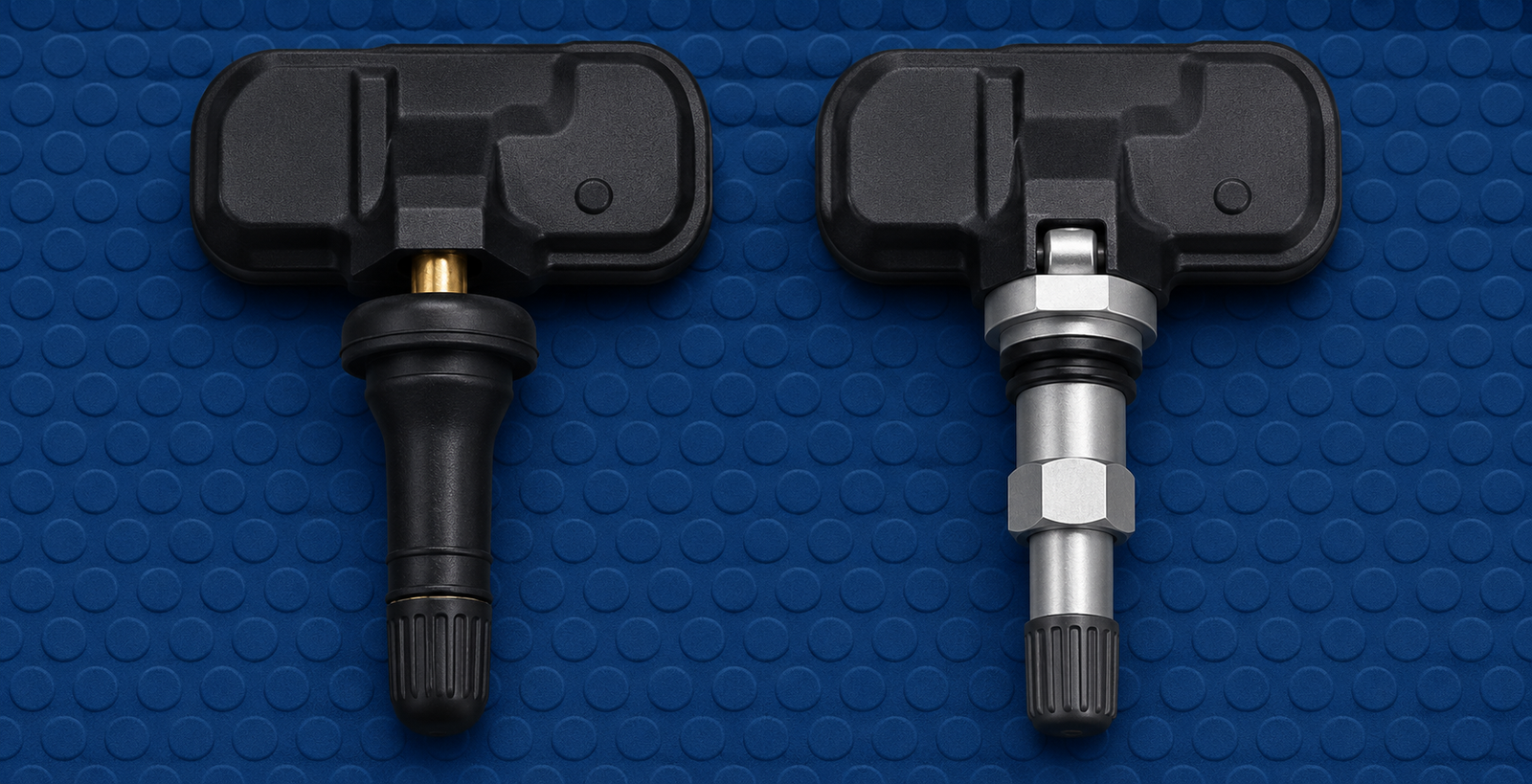
| Rubber snap-in | Approved stem for the sensor and wheel | A new stem and the specified sensor screw, if used |
| Metal clamp-in | Matching seal, nut, stem, and valve core | A new service kit tightened to the listed torque |
| Band-mounted | Approved band and mount for the wheel | The part and mount specified by the manufacturer |
| Indirect TPMS | Calibration instructions for the vehicle | No in-wheel sensor. Set cold PSI before calibration. |
How to Install a Tire Pressure Sensor in 6 Steps
Check every tire with a gauge. If a tire is low, find out why. Ask the shop to scan each sensor and check for fault codes. A flashing TPMS light at startup that then stays on can point to a system fault.
Use your VIN and the sensor maker’s US catalog to confirm fit. Check the part number, signal, and stem style. The installer should program a blank sensor for the exact vehicle and verify it responds before mounting it.
The technician removes the wheel and fully deflates the tire before breaking the bead, the edge that seals against the wheel. The technician follows the equipment instructions to keep the bead and tools clear of the sensor. Once the old part is out, the shop checks the mounting area for damage and corrosion.
For a rubber snap-in valve, use the approved stem and seat it squarely with the proper valve tool. For a clamp-in valve, use the specified seal and hardware. Position the sensor as directed and tighten the retaining nut and any sensor screw to the values for that exact part. Check the units on the torque tool. See Schrader’s sensor installation guide.
The technician remounts and seats the tire without hitting the sensor, then checks the valve core, stem base, and bead for leaks. The shop checks wheel balance and tightens the wheel fasteners to the vehicle maker’s specification. Verify the final PSI when the tires are cold.
Follow the vehicle maker’s instructions. Some cars learn a new sensor on a specified drive. Others require a tool to trigger each sensor in order or register its ID through the diagnostic port. Check that the warning clears and that any pressure readings on the dash match the correct wheel positions.
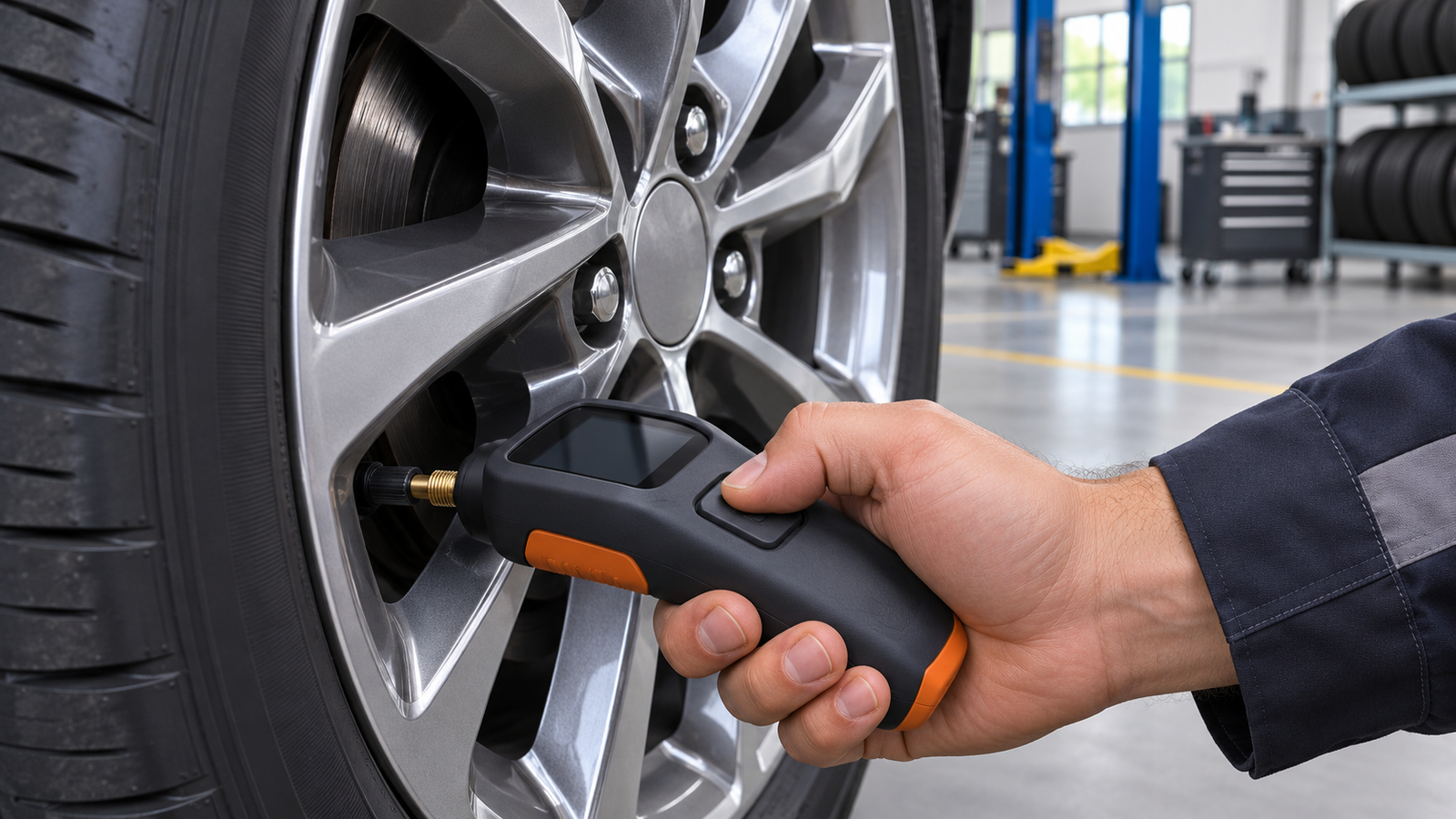
Programming sets up a sensor to send the signal the vehicle expects. A relearn lets the vehicle recognize the sensor’s ID and may update its wheel position. See Schrader’s guide to programming and relearning.
What If the TPMS Light Stays On?
Check cold PSI and confirm the relearn finished. If it did, have the shop scan the replacement and verify its ID and signal. See the guide to resetting the tire pressure light for what to check before attempting a reset.
| Symptom | Possible cause | Next step |
|---|---|---|
| Steady warning and low PSI | Air loss or underinflation | Check for damage and set cold pressure. If it drops again, get a leak check. |
| Light flashes at startup, then stays on | A system fault or incomplete relearn | Scan for fault codes and check whether each sensor responds. |
| Shop tool reads the sensor but the dash shows a blank | ID registration or compatibility issue | Verify part and programming, then run the factory relearn. |
| New stem leaks | Valve core or seal issue | Ask the installer to locate the leak and verify valve fit and torque. |
If you bring your own sensor, give the shop the part number before booking. Ask if the quote covers programming, tire mounting, balancing, and the relearn.
Key Takeaways
- Check cold pressure and confirm the sensor has failed.
- Match the replacement to both the vehicle and wheel.
- Use new valve hardware, check for leaks, and verify the relearn.
Frequently Asked Questions
Can I replace just one TPMS sensor?
Yes. If a scan confirms one sensor has failed and the others work, replace the failed unit and follow your vehicle’s relearn procedure.
Can I install a sensor without removing the tire from the wheel?
Some valve-mounted sensors can be reached by opening one tire bead. A trained technician should fully deflate the tire and use proper tire service equipment.
Does every new TPMS sensor need programming?
A blank programmable sensor needs setup with a compatible tool. A vehicle-specific replacement may come ready to mount. Follow the vehicle’s relearn procedure after installation.
Can I keep the sensor and replace just the valve stem?
Yes, if the sensor works and the stem is serviceable. Have a technician find the leak and fit the service kit specified for the sensor.
Will the TPMS light go away after a drive?
Some vehicles learn new sensors during a prescribed drive. Others need a manual procedure or scan tool. Check the cold tire pressures and look up the procedure for your vehicle.
Can I replace the battery inside a TPMS sensor?
Most factory in-wheel sensors use a sealed battery. If testing confirms a dead battery, replace the sensor assembly.
Conclusion
Start with a pressure check and sensor scan. If the scan confirms a bad sensor, give the shop your VIN and tell them if you have aftermarket wheels. Before you leave, confirm that the wheel holds air and the car recognizes the new sensor.