
How Do I Reset the Tire Pressure Light? 4 Easy Steps
How do I reset the tire pressure light? Check your tires with a gauge, set them to the recommended cold pressures, then follow the reset steps in your owner’s manual. Some cars update on their own, while others need a menu setting, a button, or a sensor relearn.
If the warning stays on, check the air first. If it flashes for about a minute at startup and then stays on, check the tires by hand and arrange a system inspection.
I’d start with a gauge, even if all four tires look fine. The light can point to low air, a system fault, or a calibration that hasn’t finished. The way it lights up and the pressure at each wheel will help you decide what to do next.
If a tire is flat, bulging, or losing air fast, pull over as soon as it’s safe. Use a suitable spare if you can install it safely, or call roadside assistance. Wait until the tires are safe before attempting any calibration drive.
What the Tire Pressure Light Means
TPMS stands for tire pressure monitoring system. A low-pressure light alerts you when a tire needs attention. Some systems use the same light to flag a fault. Watch what the light does at startup and measure all four tires.
| What you see | What it can mean | What to do |
|---|---|---|
| Steady light | A tire may be low. | Check each tire cold and look for damage. |
| Flashes at startup, then stays on | The monitoring system may have a fault. | Check pressures by hand and arrange an inspection. |
| On in the cold, off later | Pressure may fall below the warning point while the tires are cold. | Check the cold PSI before the next drive. |
| Appeared after a wheel swap | A direct system may need to learn the sensors, or the new wheels may lack compatible sensors. | Check pressure and ask the installer to confirm the setup. |
According to NHTSA’s TireWise guidance, about 60 to 90 seconds of flashing followed by a steady light can signal a system fault. A short confirmation blink during calibration can have a different meaning. Check your manual for that pattern.
How Do I Reset the Tire Pressure Light?
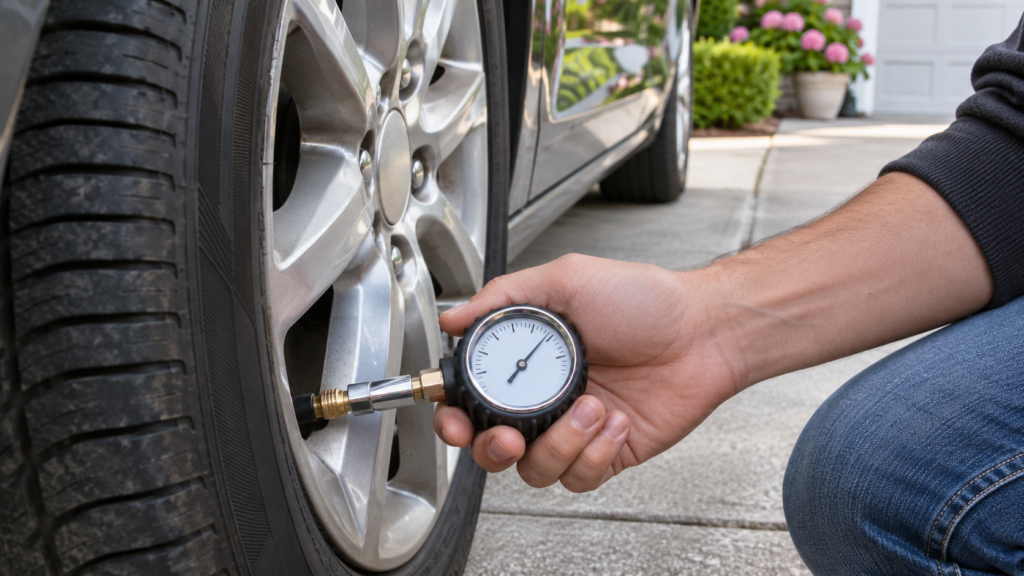
Look inside the driver’s door or on the door jamb. The label gives the recommended PSI, or pounds per square inch. The front and rear values may differ. The pressure marked on the tire’s sidewall serves a different purpose.
For a cold reading, check before driving or after the car has been parked at least three hours. Write down each reading by wheel position. If the tire is safe to inflate, set it to the specified pressure and check it again. If you have a spare, check it at its own listed pressure.
Look up TPMS, tire pressure monitoring, or calibration. Your car may update automatically when you drive. Others require a menu setting or a reset button while parked. If the manual calls for a sensor tool, ask the tire shop or dealer about a relearn.
Follow the driving conditions specified in the manual when safe. If the warning returns, measure each tire cold. If one tire keeps losing air, have it checked for a leak. If the warning flashes and stays on, arrange a TPMS inspection.
Keep a photo of the door label and note each cold reading. If the same tire drops again, that record gives the shop a good place to start.
Which Reset Method Does Your Car Use?
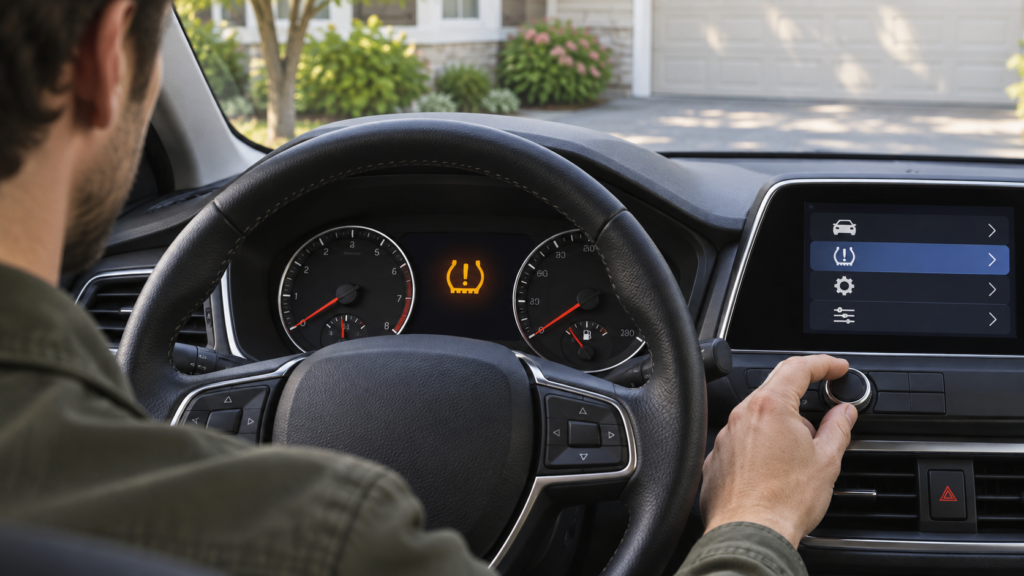
Direct TPMS uses sensors in the wheels to measure pressure. The display can take time to pick up new readings after you add air. If you replace a wheel or sensor, the car may also need to learn the new sensor ID.
Indirect TPMS uses signals such as wheel speed to detect changes linked to low pressure. Some systems need a new baseline after you add air or change tires. Set the correct cold pressures before you start that calibration.
| Method | When you may need it | What to check |
|---|---|---|
| Automatic update | After you correct low pressure. | Check whether the system needs a short drive. |
| Dash menu | When the manual calls for calibration. | Follow the menu path and parking instructions. |
| Reset button | When the car has a dedicated TPMS control. | Check the button location, ignition setting, and confirmation signal. |
| Sensor relearn | After certain wheel swaps, rotations, or sensor replacements. | Confirm whether a tool or a shop visit is needed. |
The 2021 Honda HR-V TPMS guide gives an example of button-based calibration. Ford’s sensor reset example shows a different process. Look up the instructions for your model, year, and trim before you start.
Why the Light Stays On After Adding Air
One tire keeps going low
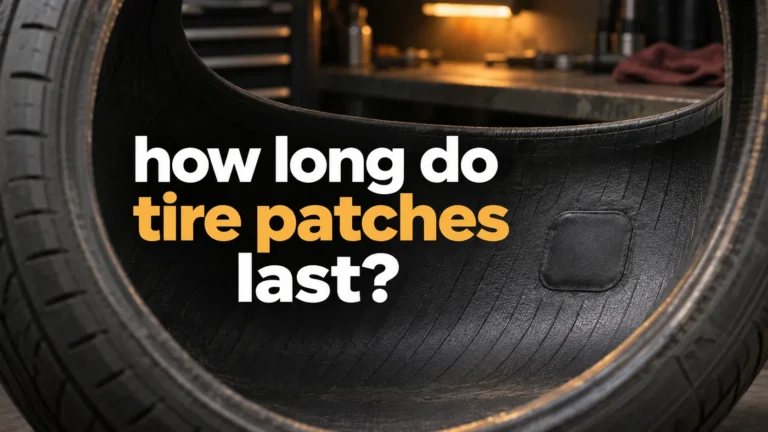
Say you add air on Monday and the same tire reads low on Thursday. I’d ask a shop to check for a puncture, a valve leak, or a leak where the tire meets the wheel. Tell the shop if you drove on the tire while it was very low. If a puncture qualifies for repair, learn what goes into a proper plug-and-patch repair.
You checked the tire after driving
Pressure rises as tires warm up. If you let air out of a warm tire to match the cold target, it may be low when it cools. Check again when the tire is cold. Keep up a regular tire pressure check schedule, even when the light is off.
You’re driving on a spare
Some systems may show a warning with a temporary spare installed. Confirm what your manual says and follow the spare tire speed and distance limits. Check the manual before attempting calibration while a spare is fitted.
If the dashboard shows an old or missing reading, check it against a gauge while the tires are cold. If the readings stay far apart or one never appears, show the readings to a tire shop.
Common Reset Mistakes
- Starting calibration before setting the correct cold PSI.
- Assuming front, rear, and spare tires all use the same pressure.
- Copying the reset steps for a different model or year.
- Repeating a reset when the same tire clearly keeps losing air.
Key Takeaways
- Check cold pressure before starting the reset.
- Use the reset or calibration steps for your vehicle.
- Get a leak check for repeat pressure loss and a system check if the warning flashes then stays on.
Frequently Asked Questions
How do I reset the tire pressure light after adding air?
Set all four tires to the recommended cold pressures. Follow your owner’s manual to let the system update or start its reset or calibration procedure.
Where is the TPMS reset button?
Check your owner’s manual. Some vehicles use a physical button, some have a dash menu, and others update automatically.
How long does the tire pressure light take to turn off?
It varies by vehicle. Your manual may call for a drive at specified speeds or a set period of driving after calibration.
Why is the tire pressure light on when all tires are at the right PSI?
Verify the cold readings and the correct front and rear targets. The system may need time to update, a calibration, or a fault check. Some vehicles also monitor a spare.
What does a flashing tire pressure light mean?
If the light flashes for about a minute at startup and then stays on, the TPMS may have a fault. Check pressure by hand and arrange an inspection.
Do I need to reset TPMS after a tire rotation?
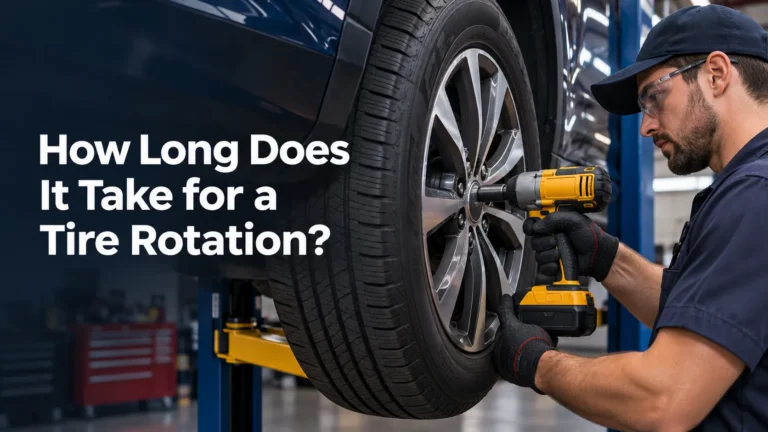
Check your owner’s manual. Some vehicles need calibration or a sensor relearn after a rotation.
Check the Air Before You Clear the Light
I’d check all four tires cold, write down each reading, and follow the owner’s manual. If a tire keeps going low, have the leak checked. If the pressure is right and the light still flashes at startup, have the monitoring system inspected.

One Comment