How to Let Air Out of a Tire Safely in 5 Steps
Here’s how to let the air out of a tire safely. Park and check the pressure when the tire is cold. If it’s above the pressure on the driver’s door sticker, take off the valve cap and briefly press the small pin inside the valve. Check the pressure after each short burst. Stop when the gauge matches the sticker.
Start with a tire pressure gauge and the cold PSI on your vehicle’s tire placard. If you just drove and the tire reads a few PSI high, wait for it to cool before you let air out. A warm tire can read high even when it has the right amount of air.
I’d start with the sticker inside the driver’s door. It tells you the pressure your car needs, and it may list a different number for the front and rear tires. Once you know your target, you can let out a little air at a time and check your progress with a gauge.
If a tire is flat, has a sidewall bulge, or is losing air fast, park safely and get roadside help. For a routine pressure adjustment, leave the valve core installed. Unscrewing the core can release air much faster than you need.
Find the Right Tire Pressure Before You Let Air Out
PSI means pounds per square inch. It’s the unit you’ll see on most US tire gauges. Look for the vehicle’s tire and loading information sticker on the driver’s door edge or door frame. You can also check the owner’s manual.
Use the vehicle maker’s recommended cold PSI for that axle. The maximum pressure stamped on the tire sidewall is a limit for the tire. Your door sticker gives you the target for the vehicle. See NHTSA’s tire pressure guidance.
| What to check | Where to find it | How to use it |
|---|---|---|
| Recommended cold PSI | Driver’s door sticker or owner’s manual | Use the listed pressure for the tire’s axle. |
| Current PSI | Handheld tire pressure gauge | Compare a cold reading with the vehicle’s target. |
| Maximum tire pressure | Tire sidewall | Treat it as the tire’s limit. Use the vehicle placard to set pressure. |
| Tire temperature | Time since your last drive | For a cold check, let the vehicle sit for at least three hours. |
Driving heats the tires and raises pressure. If you lower a warm tire to the cold PSI on the door sticker, it may end up too low once it cools. For a routine check, measure before your first drive of the day. See Michelin’s guide to checking tire pressure.
How to Let the Air Out of a Tire in 5 Steps
Park away from traffic and set the parking brake. Check the driver’s door sticker. Use the front or rear PSI listed for the tire you’re adjusting.
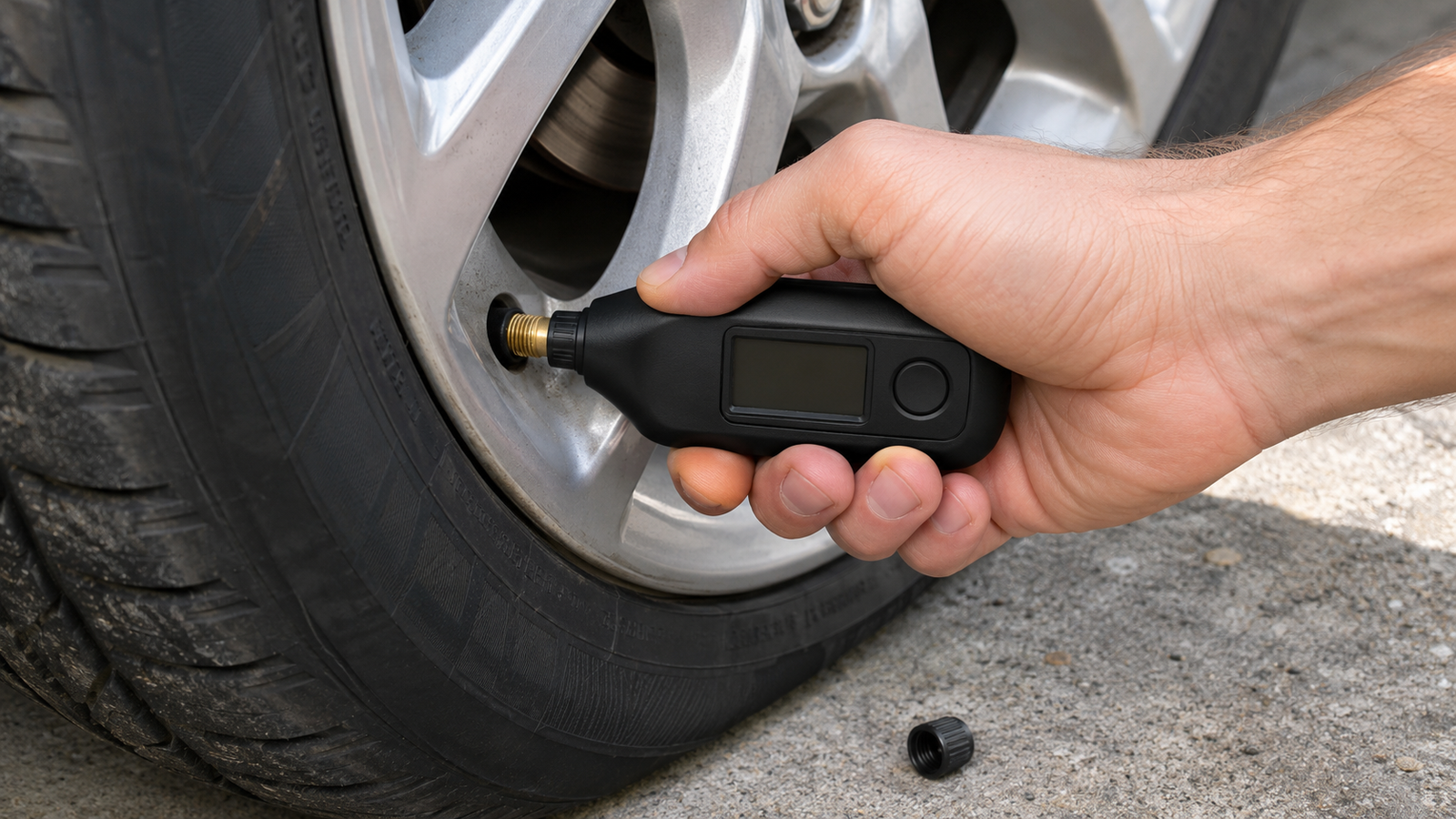
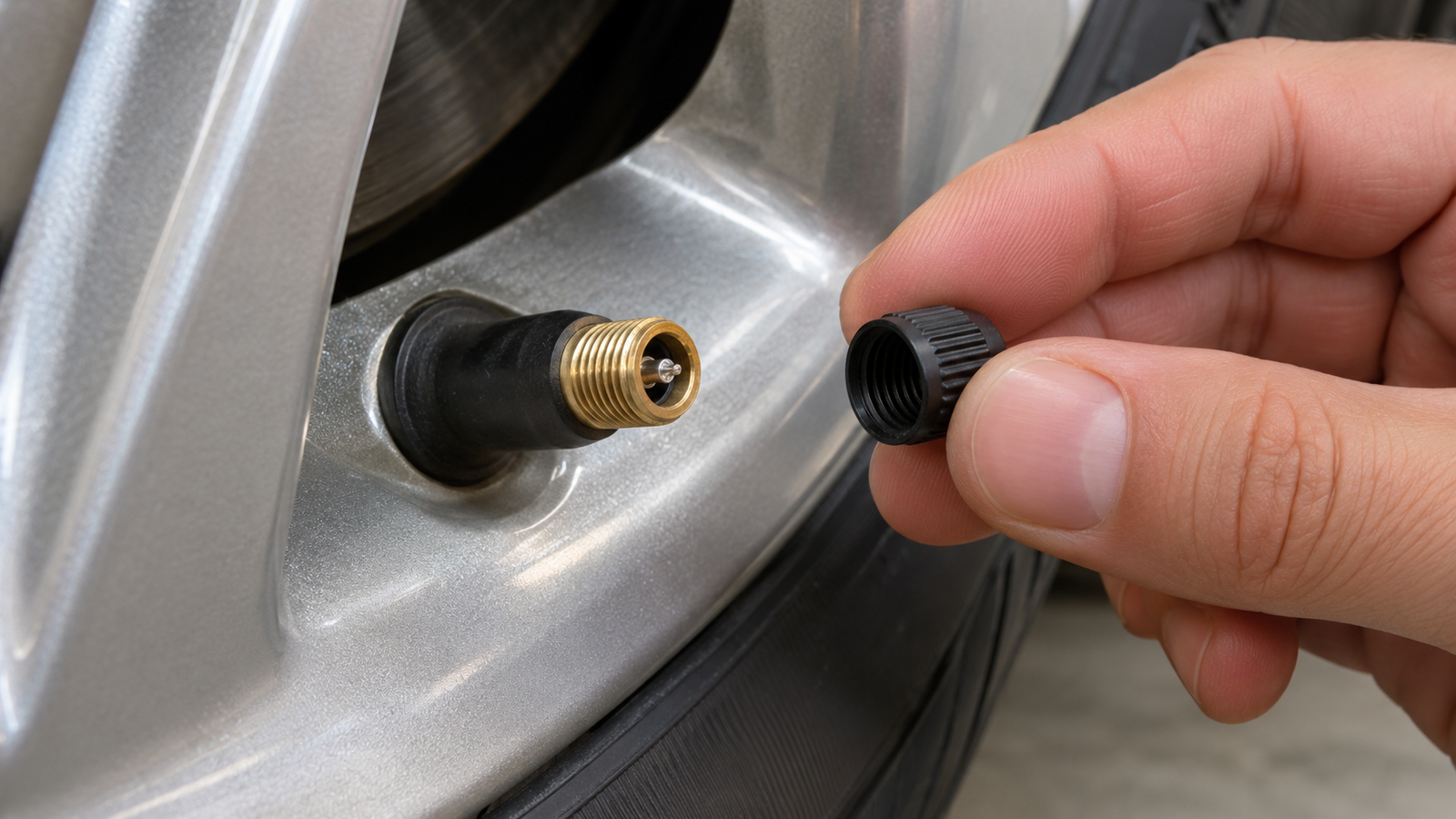
Unscrew the cap from the valve stem, the short tube that sticks out of the wheel. Press the gauge squarely onto the stem. If air keeps hissing while you measure, reseat the gauge and take a fresh reading.
If the cold pressure is high, use the gauge’s bleed button if it has one. Follow the gauge instructions. With a gauge that has a valve-pin tip, take the gauge off the stem and use the tip to briefly press the small pin in the center. You’ll hear a short hiss while the pin is down.
Release the pin or bleed button, then check the pressure again. Use shorter bursts as you get close. If you go below the target, add air in small amounts and recheck. Here’s how to use an air compressor to fill a tire.
When the pressure matches the sticker, put the valve cap back on. Check the rest of the tires while they’re cold. Use the right target for each axle.
Use the same gauge before and after the adjustment. For example, if your front tire reads 38 PSI cold and the sticker lists 35 PSI for the front, release air a little at a time until your gauge reads 35. The gauge tells you when to stop.
What to Do if the Pressure or Valve Gives You Trouble
| What you notice | What it may mean | What to do next |
|---|---|---|
| The reading is a few PSI high after driving. | The tires may be warm. | Wait at least three hours and check again before adjusting. |
| The gauge hisses and gives a different reading each time. | The gauge may be tilted or failing to seal. | Press it straight onto the stem. Try another gauge if readings still vary. |
| The pressure is below the target after you let air out. | You released more air than needed. | Add air and check with a gauge before driving. |
| The valve keeps hissing after you release the pin. | The valve core may be stuck or leaking. | Stop pressing the pin. Have the valve checked. Get roadside help if the tire loses air quickly. |
| One tire loses pressure again after you set it. | The tire, valve, or wheel may have a leak. | Arrange a leak check. See why one tire keeps losing air. |
Common mistakes to avoid
- Letting air out based on a warm reading. Check again once the tires cool.
- Using the same PSI for all four tires by default. Read both axle values on the door sticker.
- Holding the valve pin down for a long burst. Short bursts make it easier to stop at the right pressure.
- Waiting for the dash light to tell you when to stop. The tire pressure monitoring system (TPMS) warns you of low pressure. Use a gauge to set the exact PSI. If the warning stays on after you check the tires, see what to check before resetting the tire pressure light.
Key Takeaways
- Use the vehicle’s door sticker to find the correct cold PSI.
- Release air in short bursts and check the gauge each time.
- Add air if you go below the target. If the tire keeps losing pressure, have it checked for a leak.
Frequently Asked Questions
Can I let air out of a tire without a special tool?
Yes. A tire pressure gauge with a valve-pin tip or bleed button can release air. You still need a gauge reading to know when you’ve reached the correct PSI.
How long should I press the valve pin?
Press it briefly, then check the gauge. The pressure drop varies, so use the reading to decide whether to let out more air.
Should I let air out of a hot tire?
For a routine adjustment, wait until the vehicle has been parked for at least three hours. Recheck the pressure when the tire is cold and release air only if it’s still above the vehicle’s target.
What if I let out too much air?
Use an inflator to add air before driving. Add a little at a time and check with a gauge until the pressure matches the vehicle’s cold PSI for that tire.
What if air keeps coming out after I let go of the pin?
The valve core may be sticking or leaking. Stop pressing the pin and have the valve checked. If the tire is going flat quickly, get roadside help.
Can I use the same PSI for the front and rear tires?
Use the same PSI only if the vehicle lists the same value for both axles. Some vehicles call for different front and rear pressures.
Conclusion
Check the driver’s door sticker and take a cold pressure reading. If the tire is above its target, release air in short bursts and measure after each one. Once the gauge matches the sticker, put the valve cap back on and check the other tires.