

How Long Do Tire Patches Last? When to Replace the Tire
How long do tire patches last? A proper plug-and-patch repair can last for the rest of the tire’s usable life. There’s no set mileage or number of years. The tire must pass an inside inspection before the shop fills the puncture and seals the inner liner.
If a shop says it patched your tire, ask whether it used both a rubber stem and an inside patch. If it did and the tire still holds air, keep up with your usual pressure checks. If the same tire keeps going low, have a shop find the leak.
When someone asks me how long tire patches last, I’d start with the work order. A line that says “flat repair” can leave out the detail that matters most. Did the shop take the tire off the wheel, look inside, and seal the full path of the puncture?
I’ll show you what to ask the shop, what to check after the repair, and when a tire with an old patch is ready to come off the car.
If the tire goes flat, loses air fast, or has a bulge, deep cut, or exposed cords, pull over as soon as you can safely do so. Use a suitable spare if you have a safe place to install it. Call roadside assistance if you can’t change the tire safely.
How Long Do Tire Patches Last in Miles or Years?
A sound repair has no separate service interval. If the tire was fit to repair and the shop did the work right, the repair can stay in place until the tire wears out or needs to come off for another reason. AAA’s guide to tire plugs and patches explains why a combined repair is meant to last for the tire’s remaining life.
Think about two tires with the same small nail hole. One has lots of tread left. The other is close to its wear bars, which are small raised strips in the tread grooves. Even if both tires qualify for repair, the one with less tread will have less useful life left.
The same idea applies to age. A repair fixes a hole. The tire keeps aging and wearing as it did before. There’s no need to replace a sound repair on an annual schedule. Check the whole tire when you decide whether to keep it in service.
What Makes a Tire Patch Last?
The shop fills the hole and seals it from inside
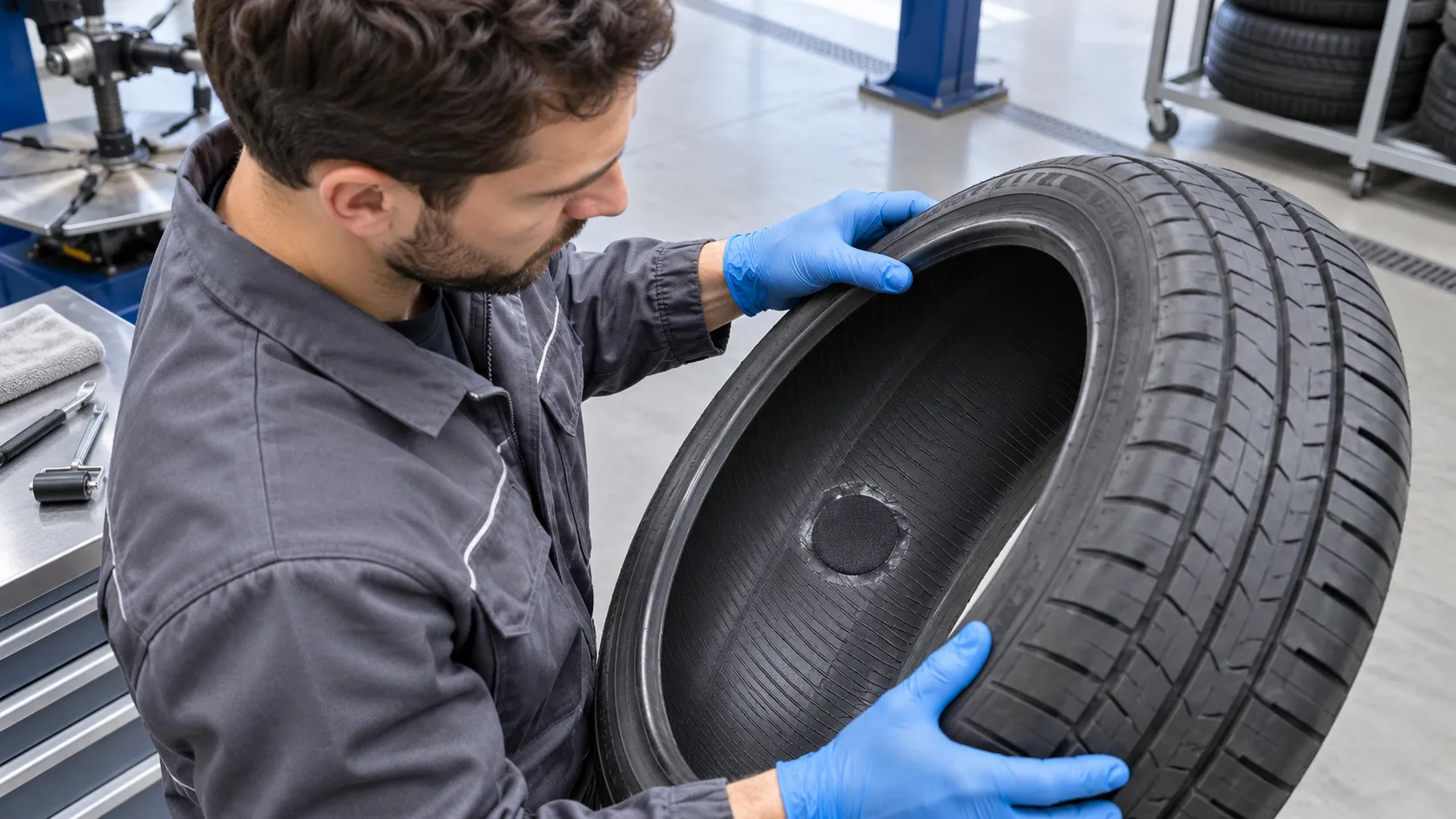
A nail leaves a path through the tread. The shop fills that path with a rubber stem. Then it seals the inner liner, the layer that holds air inside the tire, with a patch. Filling the hole also helps keep moisture from getting into the tire’s layers.
Some shops use a one-piece repair unit with a round patch and a stem. Others use two parts. Both methods can do the job if the tire qualifies and the tech follows the right steps. The U.S. Tire Manufacturers Association’s tire repair guide calls for both parts and an inspection with the tire off the wheel.
| What the shop or kit used | What it seals | What to expect |
|---|---|---|
| One-piece stem and patch | The puncture path and the inner liner | Can last for the rest of the tire’s usable life if the tire qualifies and the repair is sound. |
| Separate rubber stem and inside patch | The puncture path and the inner liner | Can provide the same type of lasting repair when the tech installs both parts correctly. |
| Inside patch alone | The inner liner at the hole | The path through the tread stays open. Ask a shop to assess the tire. |
| Outside rope plug alone | The hole from the outside | There’s no dependable service life. Tell a tire shop a plug is already in place. |
The tech checks for damage you can’t see
A tire can look fine after you add air. If you drove while it was flat or very low, though, the inside may be damaged. Once the tire is off the wheel, the tech can look at the liner and sidewalls and see how far the puncture runs.
This is also why a patch that holds air is only part of the story. Air pressure can tell you the tire is holding air today. The inside inspection tells the shop whether the tire was a safe repair candidate in the first place.
When Is a Tire Safe to Patch?
For passenger cars and light trucks, USTMA limits puncture repairs to the repairable tread area. The hole must measure 1/4 inch across or less. A tech has to check where the hole ends inside the tire as well as where it starts.
The shoulder is where the tread curves toward the sidewall. A screw can enter the tread near the edge and angle into the shoulder. That crosses the repair limit. A hole in the sidewall also calls for replacement.
The tech must also check that the new repair won’t overlap an old one. Low tread, damage from driving flat, or an existing improper repair can take the tire out of service. Michelin’s guide to repairable tire damage shows what a shop checks before it repairs a puncture.
If your car has run-flat tires, give the shop the tire brand and model. The tire maker may have its own repair limits. Tell the shop if you drove after the pressure dropped, even if the car still felt normal.
How to Check a Tire After a Patch
Look at your receipt for “stem and patch,” “plug and patch,” or “combination repair.” If it says “patch” or “flat repair,” ask the shop what it used and whether the tire came off the wheel. Write down which tire the shop worked on.
Check the tire with a gauge after the car has been parked for at least three hours. Compare the reading with the vehicle’s recommended PSI on the driver’s door label or in the owner’s manual. Front and rear targets may differ. The maximum PSI on the tire sidewall is a limit for the tire, while the door label gives the target for your car.
Record the cold pressure of the repaired tire. If the tire pressure light comes back or that tire keeps dropping below its target, get it checked. Make cold-to-cold comparisons so heat from driving doesn’t hide the drop.
Look for low tread, uneven wear, cuts, and bulges when you check pressure. Keep an eye on the tire after it moves to another spot during a rotation. A sound patch may still be in place when the tire needs to be replaced for wear or damage.
NHTSA’s tire safety guide recommends checking the pressure in all tires, including the spare, at least once a month. Your tire pressure monitoring system, or TPMS, helps warn you when pressure is low. A gauge gives you the actual reading.
Why Is My Patched Tire Losing Air Again?
If the air keeps dropping, the old repair is one place to check. The shop should also look for a fresh nail, a worn valve stem, or a leak at the bead. The bead is the edge of the tire that seals against the wheel.
Let the shop know how fast the pressure drops and whether it started right after the repair. That gives the tech more to work with than saying the light came on. If the shop installed the repair recently, bring the receipt and ask it to check the tire again.
| What you notice | What could be going on | What to do |
|---|---|---|
| One tire keeps dropping on cold mornings | A slow leak at the repair, a new hole, the valve, or the wheel | Write down the readings and have a shop check the full tire and wheel. |
| All four read lower after a cold snap | Lower air temperature may have lowered pressure across the set. | Set each cold tire to its door-label target. Watch for one tire that keeps dropping. |
| The tire feels rough or the car shakes after the work | The wheel may need a balance or the tire and wheel may have another issue. | Ask the shop to inspect the tire and wheel. Pull over safely if the shaking is sudden or severe. |
| The tire goes flat soon after you add air | A fast leak or serious damage | Keep the tire out of use. Use a suitable spare or call for roadside help. |
| You find a bulge near the repaired area or on the sidewall | The tire’s structure may be damaged. | Stop driving on that tire and arrange replacement. |
Save a photo of the repair receipt on your phone. If a tire starts losing air months later, you can show the shop which tire was fixed and what kind of repair it got.
Three Examples to Help You Decide
The repair is a year old and the tire still holds air
Say the shop found a small nail hole in the center tread and installed a stem and patch. A year later, the tire holds pressure and shows no odd wear or damage. I’d keep checking the tire as part of normal care. The repair’s age by itself gives you no reason to change the tire.
The tire keeps losing a little air each week
Say your right rear tire drops below its target each week, while the other three stay close to theirs. I’d bring the car back for a leak check. If the valve leaks, the tech can address the valve. If there’s a new hole close to the old repair, the shop will check whether a new repair would overlap it.
The tire holds air but the tread is worn
Say a tire with a two-year-old repair still holds pressure, but the tread is level with the wear bars. It’s time to replace the tire. The old repair did its job. The worn tread is the reason to take the tire off the car.
Common Mistakes With Patched Tires
- Using the repair date to plan replacement. Track the tire’s tread, age, condition, and pressure. Check the tire maker’s age guidance for your model.
- Assuming the old patch is the only possible leak. Ask the shop to check for fresh damage and test the valve and bead.
- Filling the tire every few days and moving on. A leak that keeps coming back needs a check. Adding air can bring the gauge up without fixing the cause.
- Trusting a patch based on the receipt alone. If the wording is vague, ask how the shop filled the hole and sealed the liner.
- Leaving out that you drove on low pressure. Tell the tech when the light came on and how far you drove. That helps them look for damage inside.
Key Takeaways
- A proper stem-and-patch repair can last as long as the tire has usable life left.
- Ask if the shop checked the tire from inside and used both parts of the repair.
- The hole must be in the repairable tread area and no more than 1/4 inch across for a passenger or light truck tire to be considered.
- A repeated pressure drop calls for a leak check. A flat tire, fast leak, or bulge means it’s time to pull over safely and get help.
Frequently Asked Questions
How long do tire patches last?
A properly installed stem-and-patch repair on an eligible tire can last for the rest of the tire’s usable life. There is no set number of years or miles.
Do tire patches need to be replaced after a few years?
A sound repair has no routine replacement schedule. Keep checking the tire for air loss, worn tread, age, and new damage.
Is an inside tire patch enough on its own?
The standard repair uses a stem to fill the puncture and a patch to seal the inner liner. An inside patch alone leaves the puncture path open.
Can a tire be patched twice?
A second repair may be possible if both punctures are in the repairable tread area and the repairs will not overlap. A tire tech must check the condition of the tire and the tire maker’s rules.
Can I drive on the highway after a tire patch?
A tire that passes inspection and gets a proper stem-and-patch repair can generally return to normal use. Ask the shop about any limits for your tire model, especially if you have a run-flat or speed-rated tire.
Why is my patched tire still losing air?
The old repair may leak, or air may escape through a new puncture, the valve stem, or the seal at the wheel. Have a tire shop find the source.
What I’d Do Next
If your repaired tire holds air, check the receipt or ask the shop whether it used both a stem and an inside patch after taking the tire off the wheel. If the tire passed that inspection and the shop made a full repair, keep up with monthly pressure and tread checks. If the tire keeps losing air, have the shop find the source before you count on it for another trip.




One Comment