
Can You Plug a Run Flat Tire?
Can you plug a run flat tire? A plug alone is not a proper repair. A tire shop may be able to repair a small tread puncture if the tire maker allows it and an inside check shows no damage from driving low or flat. If the hole is in the sidewall or shoulder, plan to replace the tire.
Get to a safe place and check the tire maker’s rules for your exact model. Then call a shop that works on run-flat tires. Tell them where the puncture is and how far you drove after the warning. If the tire qualifies, the shop should take it off the wheel and use a repair that fills the hole and seals the inside.
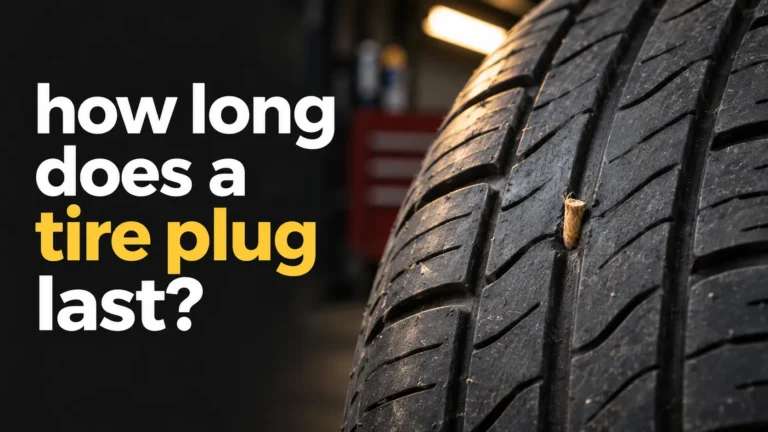
I’d start with two facts: where the air is coming out and what happened after the pressure dropped. A nail in the middle of the tread may leave a small hole. But if the tire carried the car while flat, the inside may have damage you can’t see from the curb.
Here’s how I’d decide whether to ask for a repair, plan for a new tire, or call for a tow. You can make the first call without pulling the nail or taking the wheel off.
If you feel strong shaking, hear flapping, or have trouble steering, ease off the gas and pull over as soon as you can do so safely. If you see a bulge, torn rubber, or exposed cords once parked, call for roadside help. Don’t try to reach a shop on that tire.
Can You Plug a Run Flat Tire With a Repair Kit?
A rope plug kit seals a hole from the outside. It can slow or stop air loss, but you still can’t see what happened inside the tire. That matters with a run-flat because it can carry the car for a limited time after pressure drops. The tire may look better than it is.
The U.S. Tire Manufacturers Association, or USTMA, says a proper puncture repair needs two parts. One fills the hole through the tread. The other seals the inner liner, which is the layer that holds air. A qualified technician must remove the tire from the wheel to check the inside first. A shop might call its repair a patch-plug. That’s different from a rope plug pushed in from the outside. USTMA tire repair guidelines.
USTMA puts the general limit for a passenger tire puncture at ¼ inch (6 mm) in diameter, within the repairable tread area. Treat that as a limit for review. The tire maker can set stricter rules, and the shop can find a reason to rule out a repair even when the hole is smaller.
Why Driving on Low Air Can Change the Answer
Many run-flat tires have stiff sidewalls. These are the rubber walls between the tread and the wheel. When the tire loses air, those walls can help support the weight of the car for a short time. They still bend as the wheel turns, and that extra work can build heat.
The farther you drive, the more work the tire has to do. Speed, load, and the amount of air left also matter. A car that seemed to drive fine may still have a tire with scuffed rubber or other damage inside. Putting air back in won’t undo that damage.
This is why the shop will ask how far you drove after the warning. Give your best estimate and say when you’re unsure. For instance, “The light came on two exits ago, and I pulled over here” gives the shop more to work with than “I drove a little.”
Does every run-flat have the same speed and distance limit?
Check the owner’s manual and the guidance for the exact tire on your car. Bridgestone’s U.S. maintenance guide gives up to 50 miles at a maximum of 50 mph for the run-flat tires it covers, with actual range affected by conditions. Your tire and car may have a different limit. Use the guidance that applies to both, and arrange service as soon as you safely can. Bridgestone and Firestone tire maintenance and safety manual.
If you can’t confirm that the tire is a run-flat, or you can’t confirm the limits, roadside help is the safer choice. The same goes if you don’t know how much of the allowed distance you’ve already used. A shop five miles away can still be too far if the tire is damaged or its remaining range is uncertain.
Where Is the Puncture?
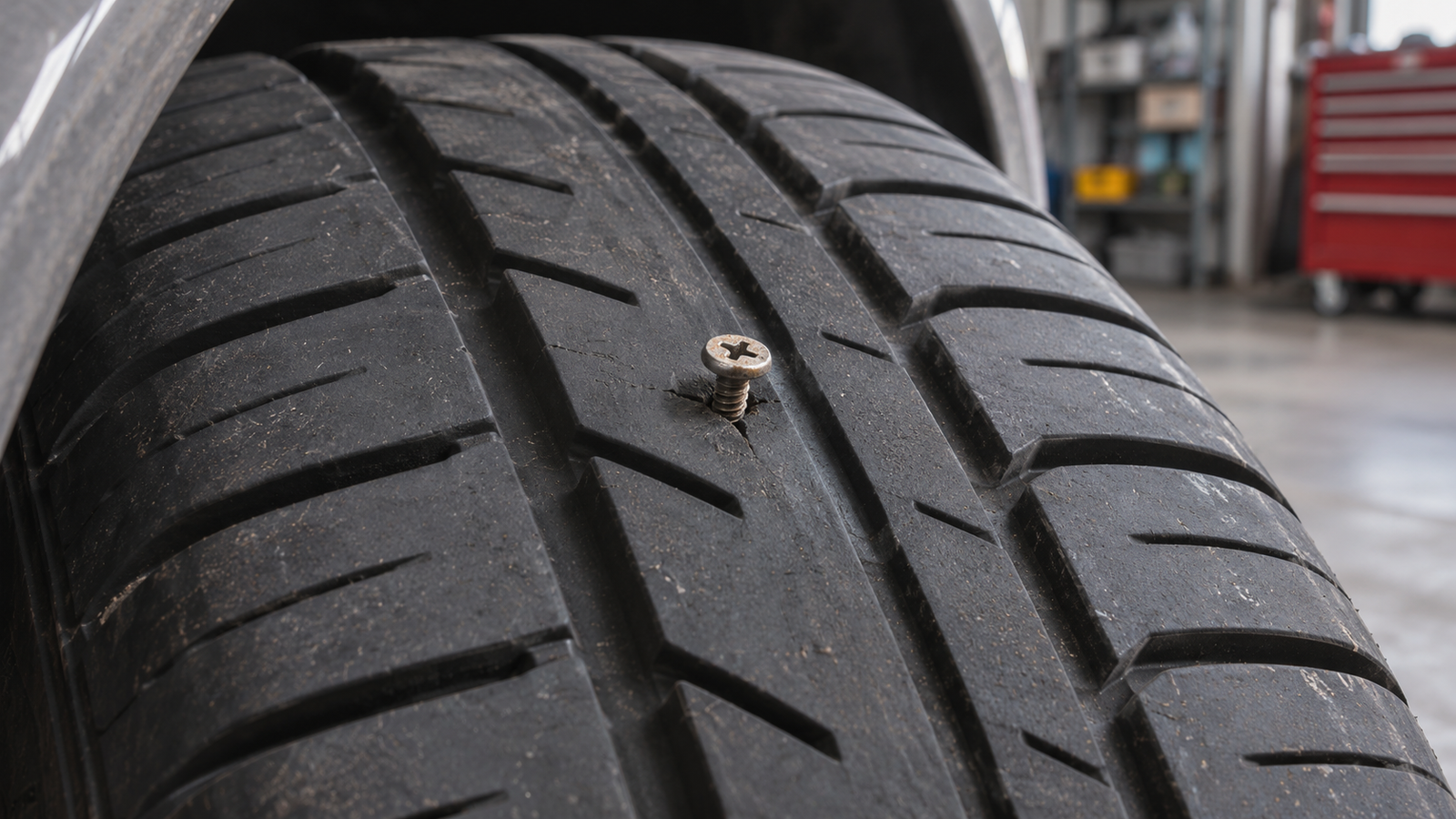
The tread touches the road. The shoulder is the rounded edge where the tread meets the sidewall. From outside, you can often tell if a nail is near the middle or close to the edge. The shop still has to see where the hole goes. A nail can enter the tread at an angle and reach into the shoulder.
| What you see | What it may mean | What to do next |
|---|---|---|
| A small nail near the middle of the tread | The hole may be within the repair area. | Ask for an inside check and tell the shop how far you drove on low air. |
| A screw near the outer edge of the tread | The hole may reach the shoulder. | Have the shop check the angle and location. Expect replacement if it reaches the shoulder. |
| A hole or cut in the sidewall | The damage is outside the repair area. | Arrange replacement. Get roadside help if you can’t move safely. |
| A bulge, exposed cords, or loose tread | The tire may have structural damage. | Stop in a safe spot and call for roadside help. |
| Low pressure with no object in sight | Air could be leaking from the tread, valve, or seal at the wheel. | Ask the shop to find the source before you agree to a puncture repair. |
Leave the nail or screw in place for the shop. Pulling it out can make air escape faster. If you can take a photo safely, it can help you point out the spot later.
What to Do When a Run-Flat Tire Loses Air
Start with the car in a safe spot. What you need most is the tire model, the vehicle manual, and a rough idea of when the warning began. A tire gauge can help if you have one and can reach the valve safely.
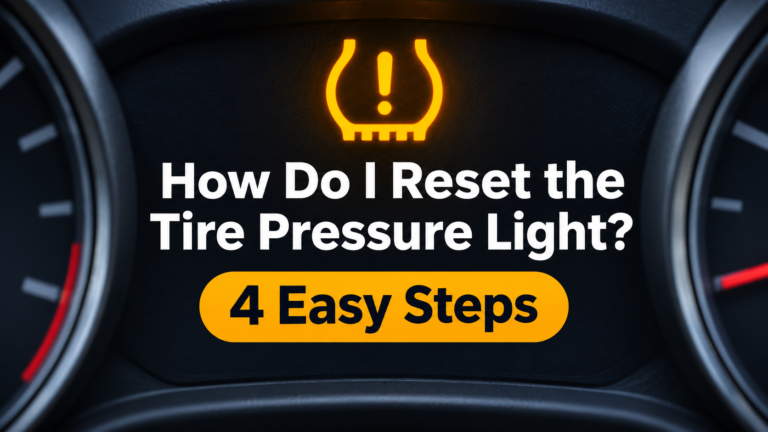
If the tire pressure monitoring system, or TPMS, turns on, ease off the gas and find a safe place to stop. Keep clear of moving cars. If you’re stuck in a spot where you can’t check the tire safely, make the call for roadside help first.
Check the tire that lost air. A used car may have tires that differ from the set it came with. The manual helps you find the car’s rules. The name on the tire helps the shop look up the rules for the tire that’s actually on the wheel.
Note which tire is low, when the light came on, and how far you drove after that. If you can safely take a pressure reading, write down the PSI and whether you measured it after driving. Tell the shop if you added air, used sealant, or felt the car shake or pull.
Give them the tire model and the facts you noted. Ask if they handle run-flats and can remove the tire for an inside check. If the tire has visible damage, the car feels wrong, or you can’t confirm that you’re within the tire’s limits, arrange a tow.
Find out where the leak was and whether the tire has any damage inside. If the shop recommends a repair, ask if the tire maker allows it and whether the repair will both fill the hole and seal the liner. If it recommends a new tire, ask what ruled out the repair.
Jot down the odometer reading as soon as you park. If the light came on at a place you can name, such as an exit or a store, tell the shop. That can help narrow down the miles you drove after the alert.
How a Tire Shop Decides Whether It Can Fix a Run-Flat
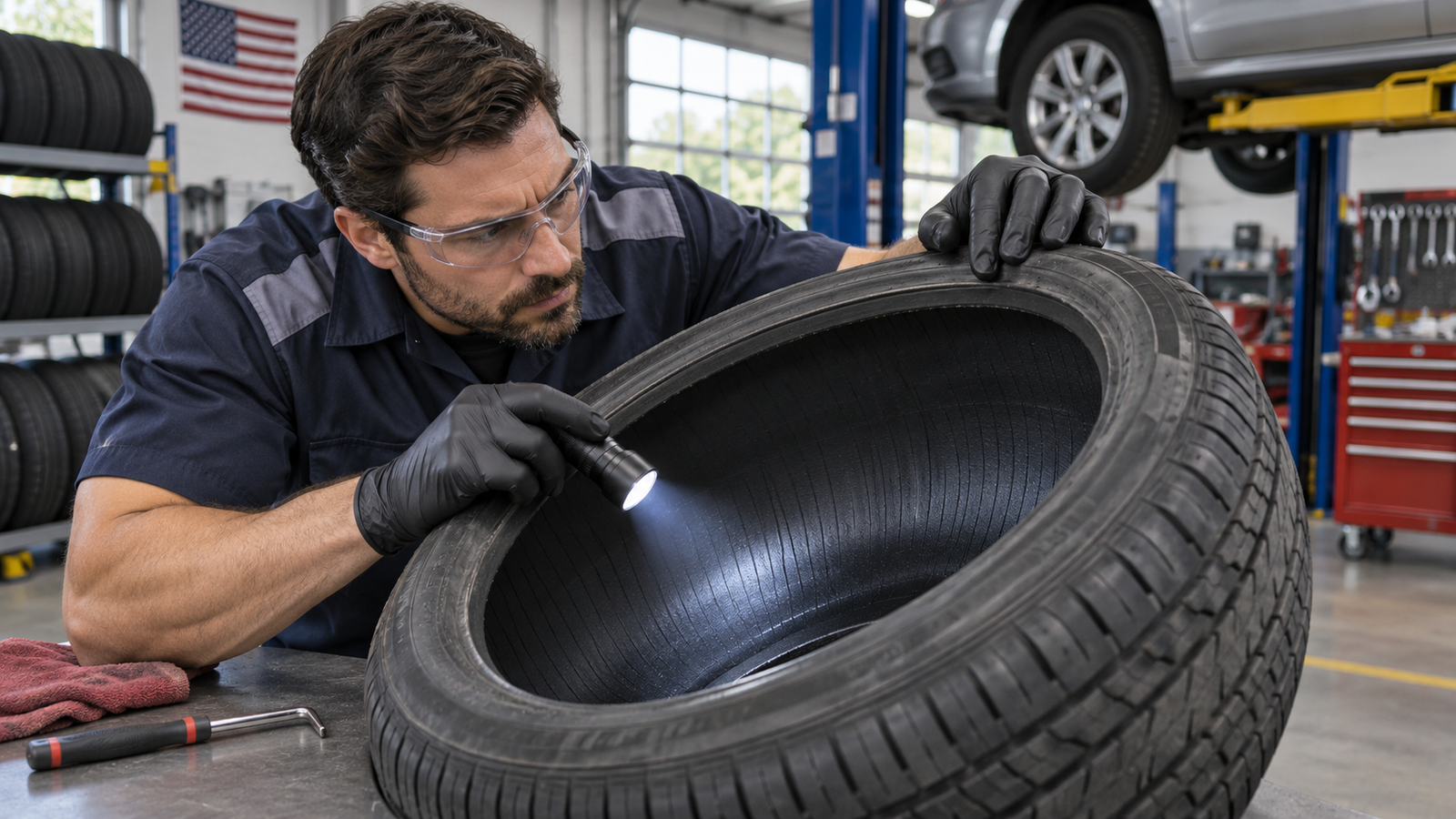
A good first question is, “Does this tire model allow a puncture repair?” The shop may check the tire maker’s guidance and the vehicle maker’s instructions. If those rules allow a repair, the technician can look for signs that rule it out on this tire.
For example, a shop may find damage inside the sidewall after a low-pressure drive. It may also find that the leak comes from a valve or where the tire seals against the wheel. In that case, the shop can address the actual leak and still check whether the low-pressure drive harmed the tire.
| Shop check | Why it matters | Question to ask |
|---|---|---|
| Exact tire model and repair rules | The tire maker may limit or rule out a repair. | Is a puncture repair allowed on this model? |
| Hole size, angle, and location | A small entry hole can still lead into the shoulder. | Does the whole hole stay in the repairable tread area? |
| Inside of the tire | Damage from low air can be hidden from view. | Did you find any signs that it was driven flat? |
| Condition of the tread and any old repairs | Existing damage or an old repair can affect the decision. | Did you see anything else that rules out a repair? |
| Type of repair | The hole and the inner liner both need to be sealed. | Will the repair fill the hole and seal the liner? |
Michelin’s U.S. repair guide calls for a professional inspection with the tire off the wheel and advises replacement when a tire was driven flat. If your tire has a model-specific rule, ask the shop to check that rule before you approve the work. Michelin’s U.S. tire repair guidance.
Three Examples of How the Decision Can Change
You find a screw before you start the car
Say you spot a small screw in the middle of the tread while the car is parked at home. The tire still has air, and you haven’t driven since you found it. I’d leave the screw in place and call the shop. This may be a good case for inspection, especially if the tire maker allows a repair. The shop can tell whether the screw reached the air chamber and whether the hole qualifies.
You drive several miles after the warning
Say the light comes on during your commute and you drive to a parking lot. The tire still looks round, but you don’t know how low the pressure got. I’d give the shop the route and time of the alert, along with any pressure reading. The look of the tire won’t settle the question. The pressure history, the maker’s rules, and the inside check all matter.
The tire keeps going low and you can’t see a nail
Say you top up one tire, then see another warning the next day. I’d ask the shop to trace the leak. It could be a small puncture, a valve issue, or a leak where the tire meets the wheel. If the tire has been low more than once, tell the shop that too. Finding the leak is one part of the job. Checking the tire for damage from running low is the other.
Common Mistakes That Make the Decision Harder
- Using a rope plug before the shop sees the tire. The shop still needs to inspect the original damage and the inside. If you already used a kit, tell the technician what you used.
- Assuming the warning started when the leak did. The leak may have started earlier. Share the time you first saw the light and any earlier pressure checks you have.
- Using the tire’s shape to judge its pressure. A run-flat’s stiff sidewalls can make a low tire look close to normal. Use a gauge when it is safe and get a repeat leak checked.
- Assuming you can use all the miles listed in the manual. The listed distance applies under specific conditions. Stop sooner if the car feels wrong, the tire shows damage, or you’re unsure how far you’ve already driven on low air.
- Clearing the warning and moving on. If the light comes back, record which tire is low and call the shop. A warning that keeps returning gives you a reason to check for a leak.
What to Check After a Repair or Replacement
Ask the shop what it found and keep the work order. If the tire was repaired, the record may help if the same tire loses air again. When the tires are cold, check the serviced tire against the pressure on the driver’s door placard or in the manual. Front and rear pressures may differ. If the serviced tire keeps dropping, return to the shop and tell them how fast it lost air.
If you need a replacement, ask the shop to verify the size, load rating, speed rating, and run-flat requirements for your car. If you drive an all-wheel-drive vehicle, also ask how much tread difference the vehicle maker allows across the set. That can affect whether one new tire will work with the three you have.
Key Takeaways
- A run-flat with a small tread puncture may qualify for repair if the tire maker permits it and the inside passes inspection.
- A proper puncture repair fills the hole and seals the inner liner.
- Sidewall and shoulder punctures call for replacement.
- Give the shop your tire model, pressure readings, and best estimate of how far you drove after the warning.
- Get roadside help if you see serious damage, feel strong vibration, or can’t confirm the tire can safely reach a shop.
Frequently Asked Questions
Can you plug a run flat tire from the outside?
A plug alone is not a proper repair. If the tire qualifies, a technician should remove it from the wheel, inspect the inside, fill the hole, and seal the inner liner.
Can a run-flat tire be patched after driving on it flat?
Driving flat can damage the tire inside and can rule out repair. Tell the shop how far you drove. The tire maker’s policy and an inside inspection determine whether replacement is needed.
Can you fix a nail near the edge of a run-flat tire?
A technician needs to check the path of the hole. If the puncture reaches the shoulder or sidewall, replace the tire.
How big of a hole can a shop repair in a run-flat tire?
USTMA’s general limit is ¼ inch in diameter in the repairable tread area. A run-flat tire maker may set stricter limits or prohibit repairs for the model.
Can I drive to a tire shop after the low-pressure light comes on?
Check the speed and distance limits for your tire and vehicle. If you can’t verify those limits, see damage, or feel strong vibration or poor handling, stop in a safe place and call for roadside help.
Does a run-flat tire that holds air after a plug still need inspection?
Yes. Holding air doesn’t tell you if the tire was damaged inside. Tell the shop you used a plug and ask for an off-wheel inspection.
Get the Tire Inspected Before You Decide
If I found a screw in a run-flat, I’d leave it in place, write down when the warning came on, and call a shop that services that tire model. A small hole in the tread may be worth checking. The tire maker’s policy and the condition of the inside will tell you whether a repair is an option. If there’s a bulge, a torn sidewall, or strong vibration, pull over safely and call for help.