What Causes Tire Feathering?
What causes tire feathering? The most common cause is incorrect toe alignment. When the wheels point too far inward or outward, the tread scrubs sideways as you drive. Over time, each tread rib can wear smooth on one edge and feel raised or sharp on the other. Loose steering or suspension parts can also let the toe angle change while the car is moving.
If you notice a sawtooth pattern across several tread ribs, ask a shop to inspect the steering and suspension and measure the wheel alignment. Correcting the cause can slow or stop new feathering. It cannot restore tread that has already worn away.
I’d start by comparing all four tires. Is the tread rough across several rows, or is just one edge worn down? That distinction helps you describe what you found and ask for the right checks. I’ll show you how to tell the patterns apart, what to ask the shop, and when a feathered tire may need to be replaced.
If you see a bulge, exposed cords, or loose tread, stop driving on the tire. If you’re on the road and the car suddenly shakes hard or becomes difficult to steer, pull over as soon as you can safely do so. Arrange roadside help if you can’t safely move the vehicle.
What Causes Tire Feathering?
The wheels point too far inward or outward
Toe describes where the wheels point when you look down at the car from above. If the front edges of a pair of wheels point toward each other, that is toe-in. If they point away from each other, that is toe-out. The vehicle maker sets a range for these angles.
When toe is too far out of range, the tires can scrub across the road even while the car travels straight. Picture a shoe that drags slightly sideways with each step. One edge takes more wear. Across a tire, that repeated scrub can leave one side of each tread rib lower and the other side more pronounced. Michelin’s guide to sawtooth or feathered tread.
Loose parts let the wheels move
A tie rod helps steer a wheel. A control arm and its bushings help hold the wheel in place as the suspension moves. If those parts wear or loosen, the wheel can shift under braking or over bumps. A reading taken while the car sits still may fail to show how much the angle changes on the road.
That’s why I’d ask for a steering and suspension inspection before paying for an adjustment. If a part has too much play, a shop may need to repair it first. Then it can set the wheel angles and confirm the readings.
Road impacts or suspension work change the angles
A hard pothole hit or curb strike can change how a wheel sits. It can also damage a tire, bend a wheel, or affect a suspension part. If the steering wheel looks off-center right after a hit, tell the shop when it happened and which wheel took the blow.
Alignment can also change after some steering or suspension repairs. If the wear started after work on the car, bring the invoice. It can help the technician see which parts were changed and whether an alignment was done afterward.
What Does Tire Feathering Look and Feel Like?
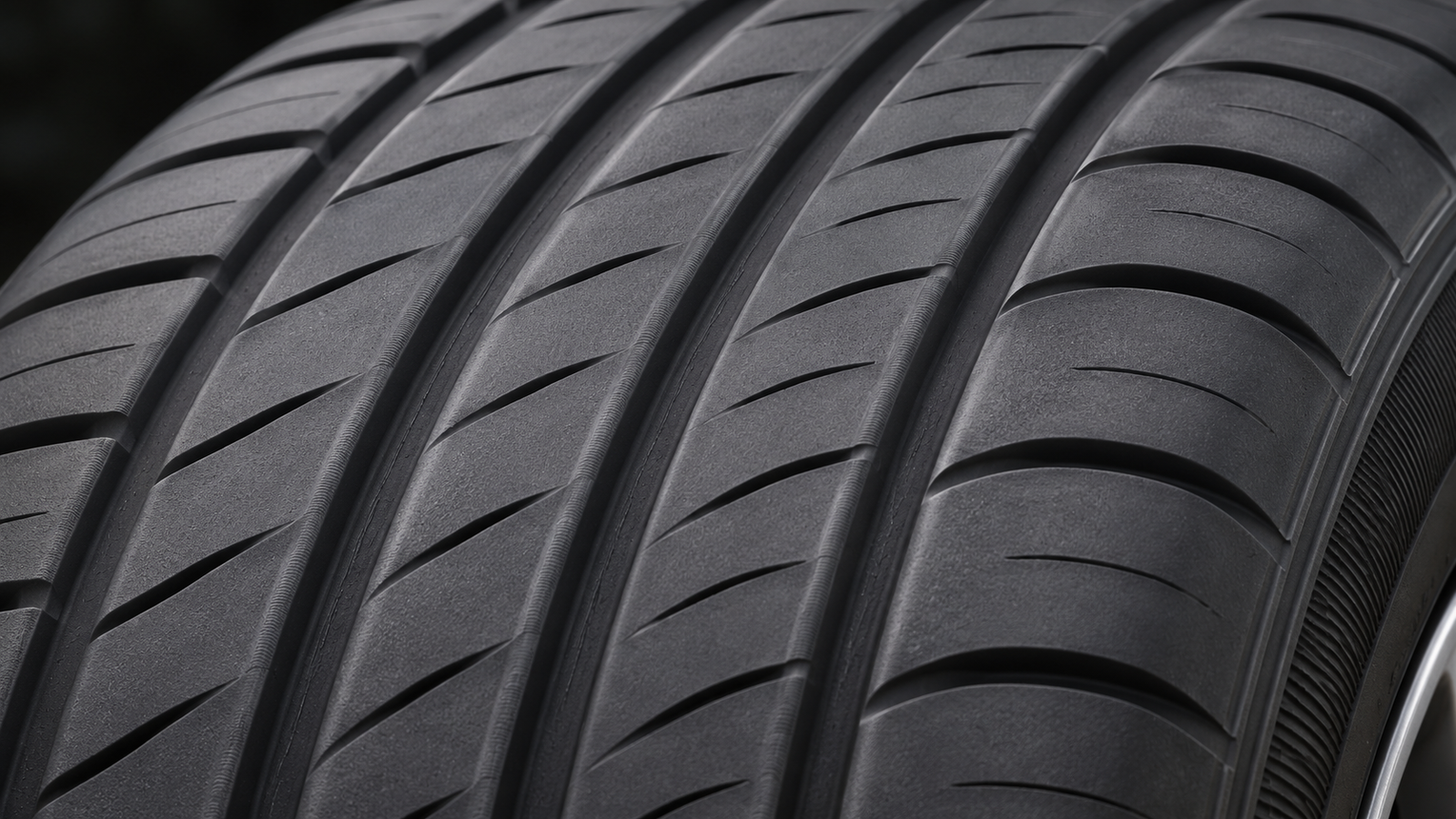
Look for a repeated step across the tread. A tread rib is a raised strip of rubber that runs around the tire. If its edges differ in height, the pattern may look like a row of small saw teeth. Light feathering can be hard to see in a dim garage, so use a flashlight and compare several ribs.
On an intact tread surface, you may feel more resistance when you pass gently across the tread in one direction. It may feel smoother going back. That side-to-side difference is a clue. The way the edges feel can help you spot the pattern, but measuring the alignment is how a shop checks the toe angle.
| Wear pattern | What you may see or feel | What to ask the shop to check |
|---|---|---|
| Feathering | Several ribs have one raised edge and one smoother edge across the tread. | Toe alignment and play in steering or suspension parts. |
| One-edge wear | The inner or outer shoulder is worn lower than the rest of the tread. | Camber, toe, and parts that can let the wheel shift. |
| Cupping or scalloping | Low spots repeat around the tire with higher areas between them. | Suspension, shocks or struts, and wheel balance as needed. |
| Heel-and-toe wear on tread blocks | Individual blocks have a high and low edge in the direction the tire rolls. | Tread design, tire position, rotation history, and whether any other wear is present. |
| Wear on both shoulders or in the center | Both outer areas wear down first, or the center wears faster than the edges. | Cold tire pressures, vehicle load, and any other causes of uneven wear. |
More than one pattern can show up on a tire. For instance, the inner edge may be worn low while several nearby ribs also have sharp edges. Show the technician both. It gives them more to work with than a note that says “inside wear.” Bridgestone’s guide to alignment and tire wear patterns.
How to Check for Feathering at Home
Set the parking brake and shut the vehicle off. Use a light to look at as much tread as you can reach safely. Check for cracks, cuts, bulges, or cords before touching the tread. A shop can inspect the inner edges that are hard to see from outside. Keep clear of the underside of the car.
On tread that looks intact and is clear of debris, gently feel across the surface in both directions. Check whether the same smooth-to-raised pattern repeats on several ribs. Skip this step if you see wires, sharp debris, or other damage.
Use a tread depth gauge in the main grooves near the inside, middle, and outside. Take more than one set of readings around the tire if you can do so safely. Look for the shallowest area as well as the pattern across the tread. A good reading in the center can hide a worn inner edge.
Use the pressure on the driver’s door placard or in the owner’s manual. The front and rear targets may differ. The pressure marked on the tire sidewall is a tire limit. Your vehicle’s placard gives you the target for normal use.
Take a photo and note the wheel position. Tell the shop if the steering wheel sits off-center, the car pulls, or the tires got louder. Include any recent rotation, curb strike, pothole hit, or suspension work.
NHTSA recommends checking tires cold, after the vehicle has sat for at least three hours. It also recommends replacing tires when the tread reaches 2/32 inch. Visible damage or a safety issue can call for replacement sooner. NHTSA tire pressure and tread safety guidance.
How a Shop Fixes the Cause of Feathered Tires

The shop should start by looking at the tires and checking for worn or damaged parts. Once the wheels are held in place as designed, the technician can measure the angles against the specs for your vehicle. Ask whether the shop will check the rear angles too. Rear tires can also feather, and front wheel readings alone may miss part of the problem.
If a part is bent or loose, the shop can explain what needs to be fixed before alignment. If the suspension checks out and toe is outside the maker’s range, the shop can adjust it where the vehicle allows. Ask for the before-and-after readings. They show which angles changed and help if the wear starts to get worse again.
| What the shop finds | Typical next step | What to confirm |
|---|---|---|
| Toe is out of range and the parts are sound | Set the alignment to the vehicle maker’s specs. | Ask for the before-and-after readings. |
| A loose tie rod or worn bushing lets the wheel shift | Address the worn part, then check the alignment. | Ask which part has play and how it affects the wheel. |
| Alignment reads within range but the wear seems active | Check for movement under load, review rotation history, and inspect for other wear causes. | Share earlier photos or tread readings so the shop can judge whether the pattern is getting worse. |
| Tire is lightly feathered and passes inspection | Keep it in service if the shop confirms it is suitable. Rotate only as the vehicle allows. | Ask when to recheck the wear and what symptoms to watch for. |
| The tire has exposed cords, a bulge, or worn-out tread | Replace the tire and address the cause of the wear. | Ask the shop to check fit and whether the other tires also need service. |
Save the alignment printout with a clear photo of the tread. At your next pressure check, take another photo of the same spot. The old feathered edges may still be there. What you want to see is whether the wear has stopped getting worse.
Can You Keep Driving on Feathered Tires?
That depends on the condition of the tire and how the car handles. Light feathering can be a reason to schedule an inspection soon, even if the tire still has usable tread. Severe uneven wear, a worn inner edge, or visible structural damage changes the decision. If you can’t tell how worn the tire is on the inside, have a shop look at it.
An alignment can fix the angles, but it can’t put rubber back. A tire may still hum after the angles are corrected because the existing tread shape is still there. If the noise changes quickly or comes with a new shake or pull, ask the shop to check it again. Noise alone can’t tell you whether the tire, a wheel, or another part is at fault.
Three Examples of What to Check First
Both front tires feel sharp across several rows
Say the front tires feel rough when you sweep across them, while the rears feel even. I’d ask for a toe measurement and a check for play in the front steering and suspension. The pattern gives the shop a starting point. It still needs to see what is moving and measure the angles before choosing a fix.
One rear tire looks bald on the inner shoulder
Say the middle grooves have plenty of tread, but the inside edge is nearly smooth. That points to an edge-wear problem even if the tire also has some feathering. I’d ask for a close look at the full tread width and a rear alignment check. If the tire’s condition calls for replacement, address the cause before it wears the new tire the same way.
The car tracks straight, but the tires got louder after rotation
Say a hum starts after the rear tires move to the front. The rotation may have moved a worn tire to a position where you can hear it more clearly. Tell the shop when the sound began and ask it to inspect the tread and rule out other causes. A car can track straight and still have toe outside its specified range.
Common Mistakes That Let Feathering Get Worse
- Checking only the tread you can see from the curb. Take readings across the tire or ask the shop to show you the inner edge.
- Paying for a rotation and assuming that fixes the cause. Rotation changes where each tire runs. The shop still needs to check for alignment or suspension issues if it finds active feathering.
- Skipping the inspection because the car drives straight. Get the angles measured when the tread shows a repeated sawtooth pattern.
- Setting pressure from the sidewall number. Use the vehicle’s cold pressure on the placard or in the manual.
- Replacing tires before finding out why they wore unevenly. Ask the shop to look for the cause while the old tread is still available to inspect.
Key Takeaways
- Incorrect toe is the most common cause of a sawtooth feel across the tread.
- Loose steering or suspension parts can let the alignment change as you drive.
- Check the inside, center, and outside of all four tires. Record what you see and measure.
- Ask the shop to inspect the parts before correcting the alignment.
- Correcting the cause can prevent more uneven wear. A technician should judge whether the worn tires can stay in service.
Frequently Asked Questions
Is tire feathering caused by toe-in or toe-out?
Either can cause feathering if the toe angle is outside the range for your vehicle. An alignment measurement shows which direction the wheels point.
Can low tire pressure cause tire feathering?
Low pressure can add uneven wear, often near both shoulders. A repeating sharp edge across several tread ribs is a reason to check toe. Use the vehicle placard to set cold pressure.
Will an alignment make feathered tread smooth again?
No. An alignment can correct the angle that caused the wear. It cannot restore rubber that has already worn away.
Can rotating feathered tires fix the problem?
Rotation moves the tires to different positions. Have the alignment and steering or suspension checked if feathering is getting worse. Follow the rotation pattern approved for your vehicle and tires.
Can only one tire show feathering?
Yes. Check all four tires and tell the shop which one shows the pattern. Ask it to check for alignment problems and loose or damaged parts at that corner.
Do feathered tires always need to be replaced?
No. A lightly feathered tire may stay in service if it passes inspection and has enough tread. A worn-out tire or one with exposed cords or a bulge needs replacement.
Ask for an Alignment and a Check for Loose Parts
If you find the same sharp edge across several tread ribs, I’d take a photo, check the cold pressure, and book an inspection. Ask the shop to measure toe, check for loose or bent parts, and tell you whether the tires can stay in service. If you spot cords, a bulge, or loose tread, arrange roadside help instead of driving to the appointment.