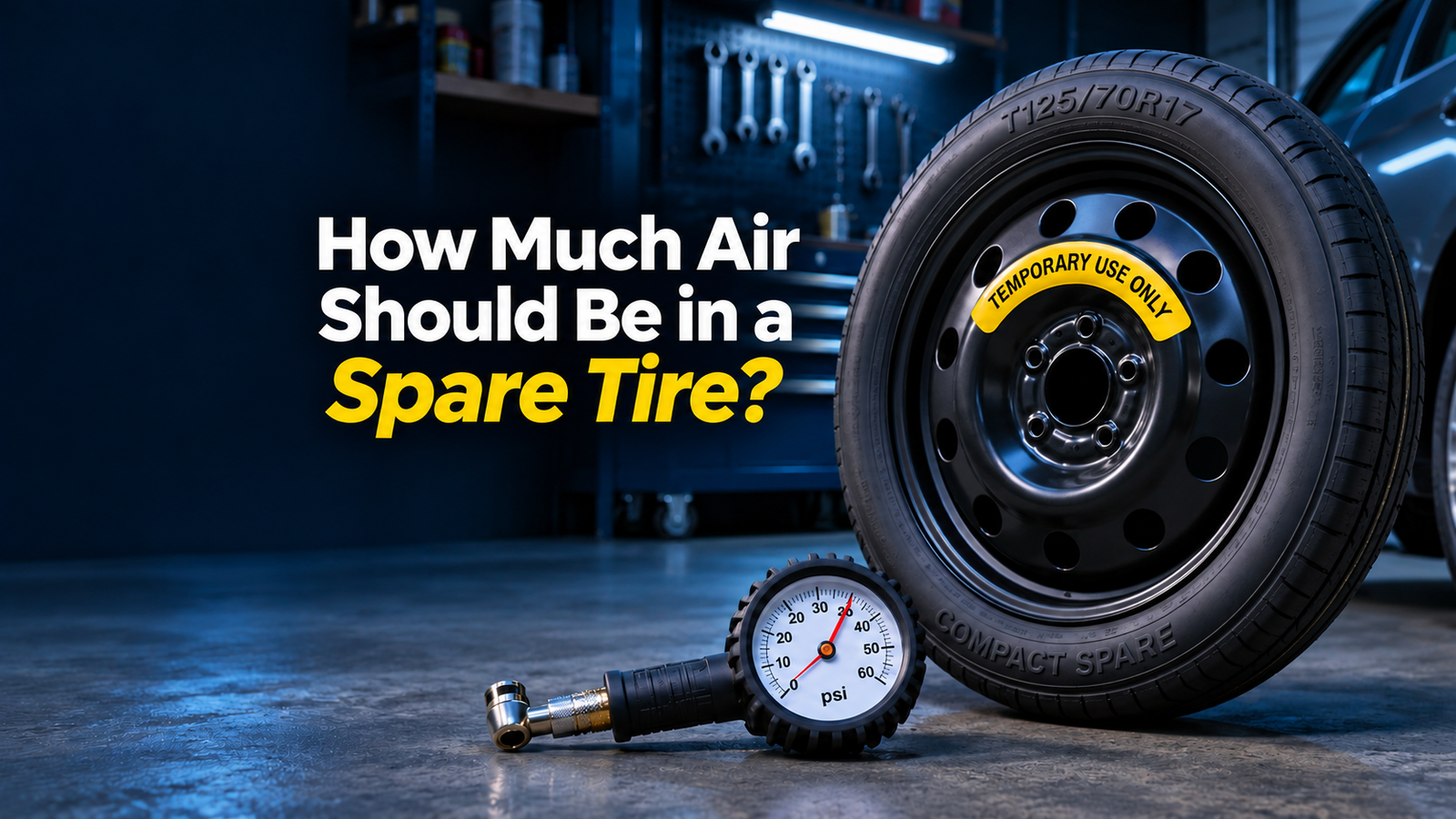
How Much Air Should Be in a Spare Tire?
Many compact spare tires, also called donuts, need 60 PSI when cold. Use the pressure listed for your vehicle and spare. Full-size spares can have a different target, even when they look like the tires already on the car. Check the driver’s door tire label or owner’s manual before adding air.
Look for a line marked Spare on the tire label inside the driver’s door. If you can’t find a spare pressure there, check the owner’s manual. Use a gauge that can read the target PSI, and check the spare while it’s cold. If a spare is damaged or won’t hold air, arrange roadside help.
How much air should be in a spare tire? I’d check the label before reaching for the pump. The number you use for your four road tires can be much lower than the one for a donut. And a spare can sit in the trunk for months losing air without looking much different.
Here’s how I’d find the right PSI, check a spare while it’s still stored, and decide what to do if the reading is lower than expected.
If you’re stopped near traffic, move to a safe location if you can do so safely. Call roadside assistance if you can’t change the tire safely or your spare has a bulge, exposed cords, a deep cut, or a fast leak. Adding air does not fix damage.
How Much Air Should Be in a Spare Tire?
A compact spare often needs 60 PSI cold. PSI stands for pounds per square inch. For example, the 2025 Hyundai Palisade owner’s manual specifies 60 PSI for its compact spare. Check your vehicle’s own instructions, especially if you bought the car used or replaced the spare.
A full-size spare may use the same pressure as a road tire or have a separate specification. I’d look up the spare’s target for storage and check the manual again before fitting it. If the manual gives different front and rear pressures or tells you how to adjust the spare once mounted, follow those directions.
| Spare type | Pressure to look for | Where to confirm it |
|---|---|---|
| Compact or donut spare | Often 60 PSI cold. Use the value for your setup. | The spare entry on the vehicle’s tire label or the flat-tire section of the manual. |
| Matching full-size spare | May use a road-tire target or a separate spare target. | The vehicle label and manual. Check for instructions tied to wheel position. |
| Full-size temporary or non-matching spare | Use the specific value for that spare and vehicle. | The manual and any temporary-use label on the tire or wheel. |
| Aftermarket spare or one with an unknown history | Confirm fit and pressure before relying on it. | The spare maker’s instructions and the vehicle maker’s requirements. Ask a qualified shop if you can’t confirm both. |
Why a donut may need more air than a road tire
A donut is a small tire designed to carry the vehicle for temporary use. Its size and design differ from the tires you use every day. Its higher pressure is part of how that specific tire is designed to carry its permitted load.
Putting a compact spare at the same PSI as your road tires can leave it well below its target. Even at the correct pressure, a temporary spare still has its own speed, distance, and use limits. Michelin’s guide to driving on a spare tire explains how temporary spares differ from matching full-size spares.
Where to Find the Right Spare Tire PSI
Start with the driver’s door label
Open the driver’s door and look for the tire and loading information label. Check the door jamb or the edge of the door. The label may list values for the front tires, the rear tires, and the spare. Read across the spare’s own row so you don’t copy a nearby number by mistake.
Check the flat-tire section of the owner’s manual
If the door label is hard to read or doesn’t list a spare pressure, open the manual. Search for “spare tire,” “compact spare,” “tire inflation,” or “if you have a flat tire.” Use the manual for your exact model year and check which wheel and tire package it describes. Some versions of a vehicle come with a spare, while others have a sealant and inflator kit.
Read what the sidewall number actually says
A temporary spare may carry a specific inflation instruction. A regular tire’s maximum pressure marking serves a different purpose from the vehicle’s recommended cold pressure. Read the words around the number and compare them with the vehicle instructions. If the markings conflict or you aren’t sure the spare belongs to the car, have a tire shop confirm the fit and pressure.
Door labels often show both PSI and kPa. Those are two units for the same pressure. If your gauge is set to PSI, use the PSI number. If the gauge has a mode button, check the units on the display before adding air.
How to Check and Inflate a Spare Tire
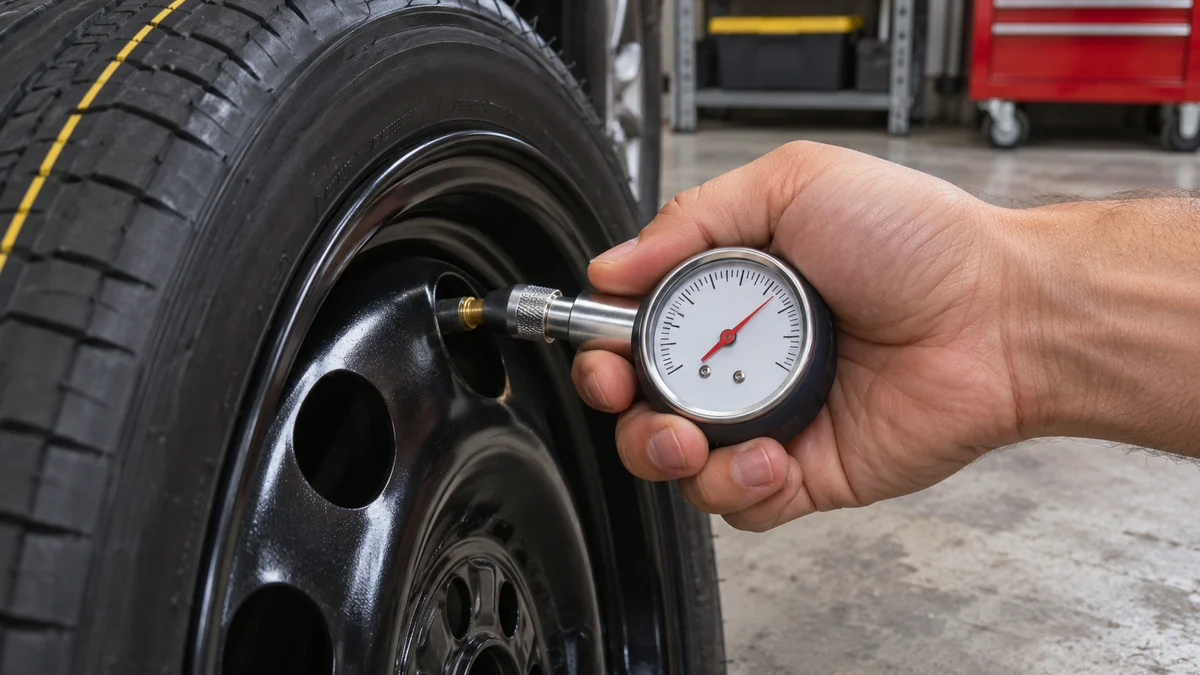
I’d check the spare at home when the car is parked on level ground and there’s room to work. If the spare sits under the vehicle, follow the manual for safe access. Leave it to a shop if you can’t reach it without putting yourself under an unsupported vehicle.
For a routine check, do it before driving or after the car has been parked for at least three hours. Cold means the tire hasn’t warmed up from driving. Take the reading before a trip so you have time to deal with a low or damaged spare.
Lift the cargo floor or follow the manual to reach the spare. Check the valve, tread, and visible sidewalls. Look for damage and make sure the spare is the type your vehicle calls for. If the valve faces down or is blocked by tools, check how the manual says to remove and stow the wheel.
Remove the valve cap and press the gauge straight onto the valve stem. If air keeps hissing around the seal, lift the gauge and try again. Write down the number when you get a steady reading. A gauge that tops out at 50 PSI can’t confirm a 60 PSI spare.
If the tire is sound and safe to inflate, add air in short bursts. Check the pressure with the gauge after each adjustment until it matches the cold target. If a cold, undamaged spare is above its target, release a small amount of air and measure again. Follow the inflator’s instructions and use a pump rated for the needed pressure.
Replace the valve cap and fasten the spare in its storage spot as shown in the manual. Put the jack and tools back where you can find them. If the spare was low, note the date and reading so you can tell if it keeps losing pressure.
The National Highway Traffic Safety Administration’s tire safety guide recommends checking all tires, including the spare, at least once a month while cold. It also gives the three-hour parked period as a guide for taking a cold reading.
What to Do if the Spare Tire Is Low
Start with how low it is and whether it holds air. A spare that’s a little below target after months in storage calls for a different response from one that’s flat, visibly damaged, or losing air as fast as you add it. If it’s badly deflated and you don’t know why, have it inspected before relying on it.
| What you find | What to check | What I’d do next |
|---|---|---|
| Slightly below its cold target after storage | Confirm the recommended PSI and check for signs of damage. | Bring a sound spare to its target. Record the reading and recheck it cold. |
| Pressure drops again after a top-up | The valve, the seal where the tire meets the wheel, and the tire itself. | Have a tire shop find the leak. Get the spare sorted before relying on it for a trip. |
| The gauge gives different readings each time | Gauge range, display units, and the seal at the valve. | Try again with a suitable gauge or get a shop to confirm the reading. |
| The spare is flat, visibly damaged, or won’t hold air | Whether the spare and wheel need service or replacement. | Leave the spare out of use. Call roadside help if you’re stranded. |
| The spare has the right PSI but has been stored for years | The tire’s age and condition, along with the maker’s guidance. | Check those details before relying on the spare. Pressure is one part of the inspection. |
Example: Your compact spare is at 48 PSI
Say your manual calls for 60 PSI cold and you read 48 PSI in the driveway. If the spare is sound and safe to inflate, I’d bring it to 60 PSI before putting it back. I’d also write down the date and recheck it cold. If it drops again, have the spare checked for a leak.
Example: The full-size spare has its own label entry
Say your spare looks just like the tires on the car, but there’s a separate pressure listed for it. I’d use the spare’s specified storage pressure and check for any instructions that apply once it’s installed. Taking a photo of the label makes it easier to find both numbers later.
Example: You have a flat and the pump won’t reach the spare’s target
Say the gauge shows the donut is low and your pump stops short of the listed PSI. I’d check the pump’s range and look for a suitable air source only if I could do so safely. If you’re stranded and can’t get the spare ready where you are, arrange roadside help.
How Often Should You Check Spare Tire Pressure?
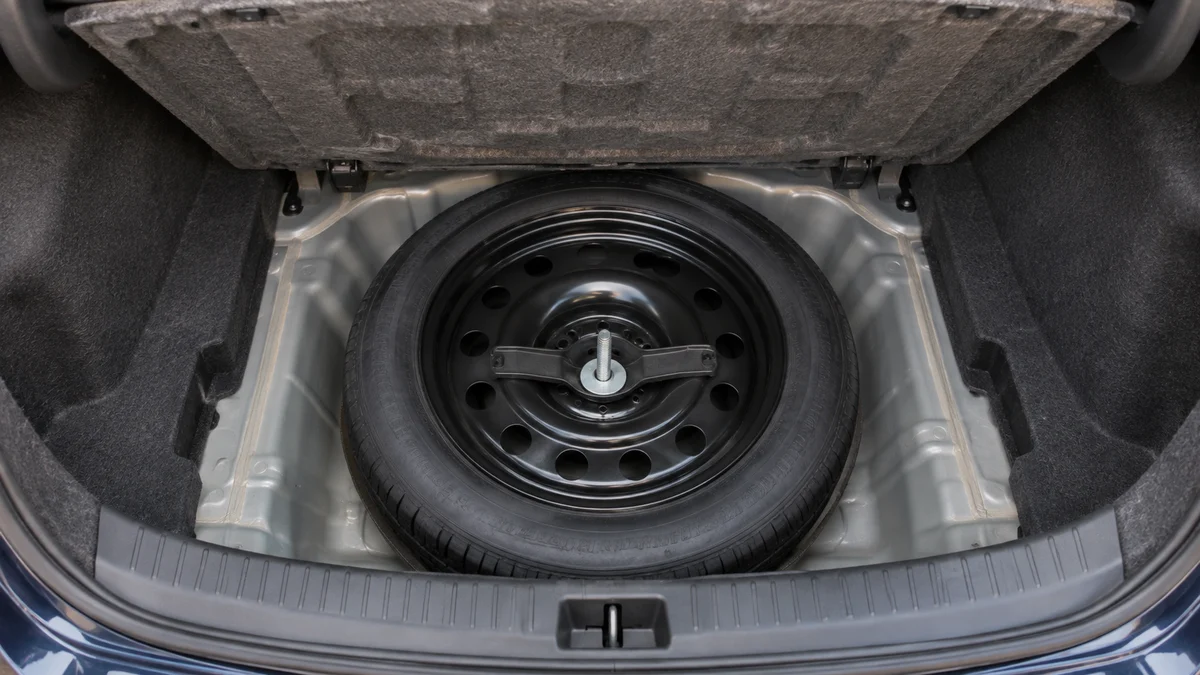
Check it at least once a month and before long trips. I’d do it the same day I check the other four tires. A spare under the cargo floor is easy to forget, so make it the last wheel on your list. Our guide to how often to check tire pressure helps you build that routine.
Check again after tire service if the shop used the spare. If you have a truck or SUV with a spare stored underneath, make sure you know how to reach it before you leave. You can use a monthly check to confirm the tools are still there and the spare is easy to reach.
Save a photo of your spare’s pressure specification on your phone. Keep your gauge where you can get to it with the trunk full. If you carry an inflator, confirm it can reach the spare’s target before a road trip.
Common Spare Tire Pressure Mistakes
- Using the road-tire PSI for a donut. Read the spare’s own specification before adding air.
- Using a gauge that can’t reach the target. Check its range and display units.
- Judging pressure by how the tire looks. Use a gauge, even if the tire looks round and feels firm.
- Waiting for the dashboard light. Some vehicles don’t monitor the spare. Use a gauge and check what your manual says about the spare and TPMS.
- Checking pressure and skipping the rest of the tire. Look for wear and damage. Use our guide on how to read a tire date code if you need to check its age.
- Treating correct pressure as permission for a long drive. Check the spare’s speed and distance limits before you leave. See our guide on how long you can drive on a spare tire for help planning the trip to a shop.
Key Takeaways
- Many compact spares need 60 PSI cold. Check the figure for your vehicle and spare.
- Full-size spares can have their own pressure target and use limits.
- Check the spare cold each month and before a long trip with a gauge that covers its PSI range.
- Arrange service for a spare that has damage or keeps losing air.
Frequently Asked Questions
How much air should be in a spare tire?
Many compact spares take 60 PSI cold. Use the pressure listed for your vehicle and spare. A full-size spare may have a different target.
Is 60 PSI too high for a donut spare?
It is correct if your vehicle and compact spare specify 60 PSI cold. Check your owner’s manual or the vehicle tire label before using that number.
Should a full-size spare have the same PSI as the other tires?
It depends on the vehicle and spare. Follow the spare’s listed pressure and check the manual for any adjustments needed when you install it.
Why does a spare lose air when it sits in the trunk?
Tires can lose air over time in storage. If the spare drops again soon after you bring it to the correct pressure, have the tire, valve, and wheel checked for a leak.
Can I use a portable inflator to fill a spare tire?
Yes, if the spare is safe to inflate and the pump can reach the specified pressure. Check the pump’s instructions and confirm the final PSI with a gauge.
Will the tire pressure light tell me if my spare is low?
Some vehicles monitor the spare, while others don’t. Check your owner’s manual and measure the spare with a gauge during your monthly tire check.
Check the Spare Before You Need It
I’d find the spare’s cold PSI today and take a reading before the next drive. If it’s low and safe to inflate, set it to the listed pressure and check whether it holds. That quick check gives you time to deal with a leak, replace a damaged spare, or get a gauge that reads high enough before a flat puts you on the roadside.