What Size Tire Chains Do I Need? 4 Fitment Checks
What size tire chains do I need? To find the right size, read the full size code on the tire, check which traction devices your vehicle allows, and match that code to a specific chain model in the maker’s fit chart. A chain can fit the tire and still be too thick for the space behind the wheel.
Start with the size on the tire you’ll put chains on, such as 225/65R17. Check your owner’s manual for the allowed axle, device type, and clearance limits. Then look up the full tire size in the chain maker’s chart. Buy the listed part number only if it also meets your vehicle’s rules.
What size tire chains do I need? I’d start with a photo of the tire sidewall and the snow chain section of the owner’s manual. With those two things, you can rule out a lot of chains before you look at prices. The last step is making sure the exact set fits before you need it in the snow.
Follow any chain limits in your owner’s manual. If the manual bars chains for your wheel and tire setup, do not try a set just because the box lists your tire size. A device that rubs can damage parts around the wheel. Check whether the manual allows an alternative before you buy one.
What Size Tire Chains Do I Need?
The right size is the chain part number listed for your full tire size in the maker’s chart, provided that device also meets the limits for your vehicle. Chain makers use their own part numbers. A size label from one brand won’t necessarily mean the same thing in another brand’s catalog.
Start with the tires on the car today. The sticker inside the driver’s door can tell you what size came with the car. If you have a winter wheel set, replacement tires in a different size, or tires that differ from front to rear, read the codes on the mounted tires. Then check whether your vehicle allows chains with that setup.
How to read the tire size on the sidewall
Look for a code such as 225/65R17 on the sidewall, the outer face of the tire. Read the whole code. The first number gives the width, the second describes the sidewall height as a share of the width, and the last gives the wheel diameter.
| Part of the tire code | What it tells you | Why it matters for chain fit |
|---|---|---|
| 225 | Nominal tire width in millimeters | A wider tire may need a different chain size to cover the tread and reach around its edges. |
| 65 | The sidewall height is nominally 65% of the tire width. | A different sidewall height can change the tire’s outside diameter and the length of chain it takes. |
| R | Radial tire construction | Keep it in the code when searching. It’s part of how the tire size appears in fit charts. |
| 17 | Wheel diameter in inches | Two tires can mount on 17-inch wheels and still need different chain sizes. |
Copy any prefix you see, such as LT on a light-truck tire. If your tire uses a code such as 31×10.50R15, look up that code as shown. If the maker’s chart uses a different format and you can’t confirm the match, ask before you order.
Check Vehicle Clearance Before You Buy
Clearance is the space between the tire and nearby parts. A chain adds bulk over the tread and around the sides. You need enough room near the wheel well and the parts behind the tire. What looks like enough space with the car parked can change as the wheel turns or the suspension moves.
Some manuals call for an SAE Class S device, which is designed for limited clearance. A manual may also list a maximum device thickness, specific tire sizes, or an axle rule. Those details still apply if the package says Class S. This Ford owner’s manual shows how chain rules can depend on the drivetrain and tire size.
Check compatibility before buying
- Vehicle setup
- Use the manual for your make, model, and year. Check any rules tied to your drivetrain or wheel and tire package.
- Allowed wheel position
- Find out whether the device goes on the front axle, rear axle, or another setup listed by the maker.
- Allowed traction device
- Confirm whether your vehicle allows link chains, cables, or another device. Check any class or thickness limit.
- Exact tire and chain match
- Match the full code on the mounted tire to the part number for the product line you plan to buy.
If your car has different front and rear tire sizes, look up the tires on the axle the manual allows you to chain. This matters on some AWD vehicles, where the manual may name one axle or limit use to certain wheel and tire setups.
How to Choose and Test-Fit Tire Chains
Find the manual section on snow chains or traction devices. Write down the allowed axle, tire sizes, and device limits. If your current wheel setup isn’t covered, check with the vehicle maker or a qualified tire shop before you buy.
Photograph the size code on each tire on the approved axle. If you switch between summer and winter wheels, read the code on the set you’ll use on the trip.
Use a maker’s fit chart, such as the Peerless Tire Chain Finder. Match the full tire code, then check that the product listed meets your manual’s rules. If several options come up, compare their clearance requirements.
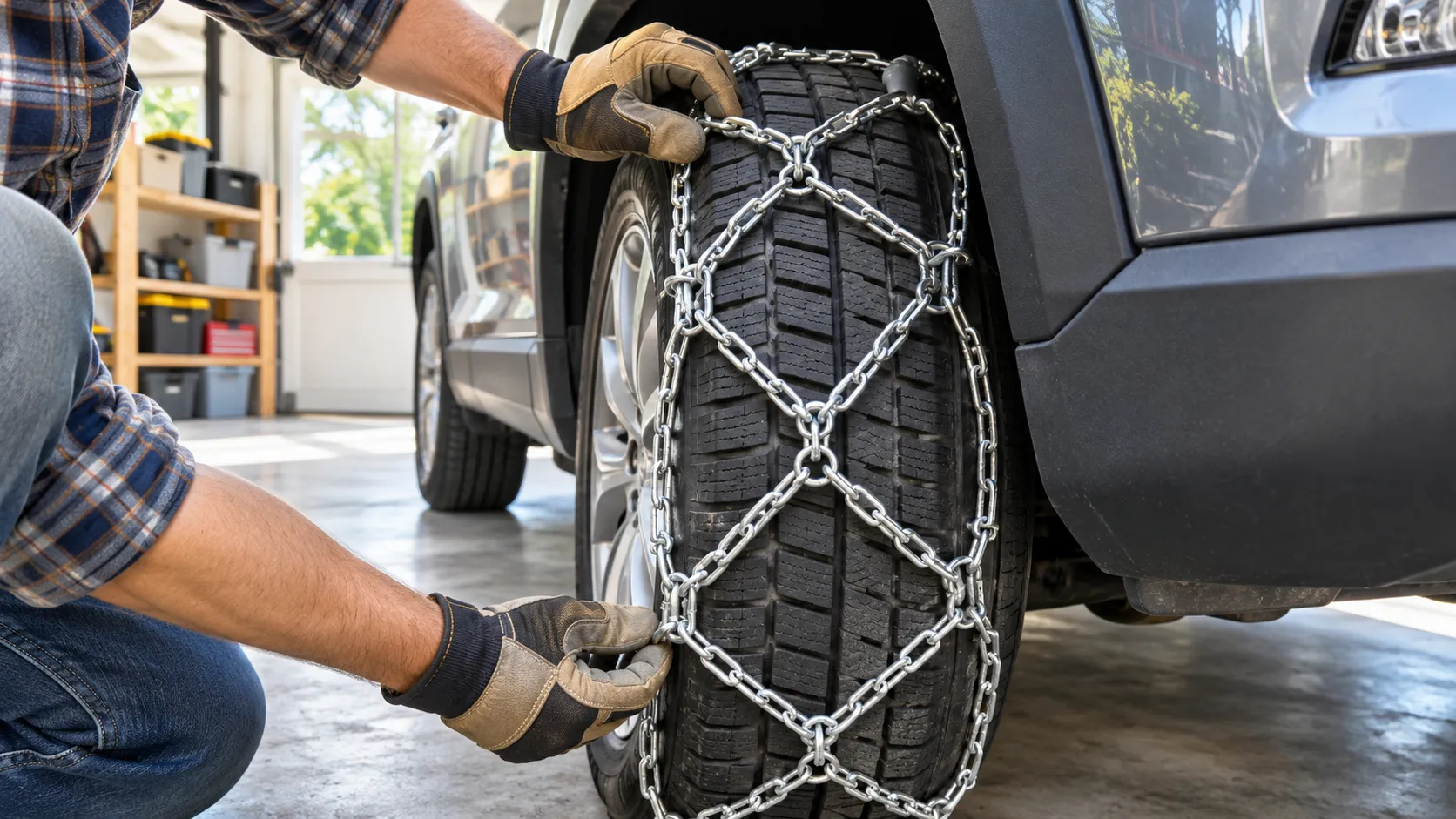
Follow the device instructions in a level spot away from traffic. Check that the fasteners close, the chains sit evenly on the tread, and the tension matches the instructions. Remove the set after the practice fit. If anything rubs or won’t tighten as shown, resolve the fit before you use it on the road.
Save the manual page, the chain part number, and the installation instructions on your phone. If you need to put on chains where cell service is poor, you’ll have the right axle and fitting steps on hand.
What to Do When Tire Chains Don’t Fit
| What you notice | What to check | What to do |
|---|---|---|
| The inside fastener won’t close. | The chain may be twisted, off center, or sized for a different tire. | Lay it out again and check the instructions and part number. Stop if it still won’t close. |
| The chains stay loose after you tighten them. | Check the size, the tensioning steps, and whether the kit needs a specific tensioner. | Use the parts called for by the maker. Keep the vehicle parked until the fit is correct. |
| The box lists your size, but the chain sits close to a part behind the tire. | Check the vehicle’s limits for chain class, thickness, and wheel position. | Keep the set off the car until you confirm clearance and approval for that setup. |
| You hear slapping or scraping while driving. | A chain may have shifted, come loose, or broken. | Pull over as soon as you can safely do so. Inspect the device and follow the maker’s guidance before you continue. |
| Your new winter tires have a different size code. | The old chain part number may or may not cover the new size. | Look up the new size in the chart, check the vehicle’s rules, and test-fit again. |
On the road, follow the speed limit for the device, the vehicle maker’s guidance, and posted restrictions. Drive slower when conditions call for it. If the chain maker calls for a fit or tension check after a short drive, make the check in a safe place away from traffic.
Two Common Fitment Examples
Both tires fit a 17-inch wheel
Say you have 225/65R17 tires and find a used set that fit your friend’s 235/65R17 tires. I’d check the part number against both sizes in the chart. Some sets fit several sizes, but the shared wheel diameter alone tells you very little. If your size is listed, check the vehicle limits and try the set before the trip.
Your AWD vehicle has different sizes front and rear
Say the shop asks for your rear tire size, but your owner’s manual calls for a traction device on the front axle. Give the shop the front tire code and the manual’s device limits. A perfect fit on the rear tire won’t solve the placement issue.
Check Chain Rules for Your Route
Vehicle fit and road rules are two separate checks. Before a mountain trip, look up chain controls for the roads you’ll use. An AWD vehicle may still have to carry chains or install them under certain conditions. If you plan to use cables or another device, check that the road authority accepts it for the current restriction.
In California, start with Caltrans’ chain requirements guide and check current controls before you leave. If a route requires a device you can’t use on your vehicle, pick another route or wait for restrictions to change.
Key Takeaways
- Read the full size code on the tires you’ll put chains on.
- Use the owner’s manual to check axle placement, device type, and clearance.
- Match the tire code to the chain maker’s exact part number.
- Test-fit the set before your trip and check chain controls for your route.
Frequently Asked Questions
What size tire chains do I need?
Use the chain maker’s fit chart to match the full size on your tire to a chain part number. Then confirm the device type, clearance, and axle placement in your vehicle’s owner’s manual.
Can one set of tire chains fit several tire sizes?
Yes. Some chain models fit several sizes. Check that the maker lists your exact tire size for that part number and that the device meets your vehicle’s limits.
Do I buy snow chains by tire size or wheel size?
Use the full tire size. The wheel diameter is only one part of the code. Tire width and sidewall height also affect how a chain fits.
Do I put tire chains on the front or back?
Use the axle specified in your owner’s manual. Check the rule for your drivetrain and tire setup, especially if you have AWD or different tire sizes front and rear.
Are Class S tire chains safe for every car?
Check your manual before buying. A Class S device is designed for limited clearance, but your vehicle may have a tighter limit or may restrict chain use for your tire size.
Can I use my old chains on new tires?
Use them only if the chain maker lists the new tire size for that part number and the device still meets your vehicle’s rules. Inspect and test-fit the chains before your trip.
Check the Fit Before You Head Into Snow
I’d take a photo of the tire code, open the chain section of the owner’s manual, and check the maker’s fit chart before ordering. Once the set arrives, try it in a safe spot while you have time to exchange it. That way, the first time you fit your chains won’t be on a cold roadside.

One Comment