Snow Tires vs Studded Tires: Which Should You Choose?
Choose studless snow tires if your winter roads are usually plowed, wet, slushy, or covered in loose snow. Consider studded winter tires if you often drive on hard ice or slick, packed snow and studs are legal on your route. Compare specific tire models before you buy, since ice grip varies within both groups.
For a mix of clear roads and winter storms, I’d start with four studless winter tires. If you must drive on icy hills or untreated roads most days, compare studded and ice-focused studless models. Check state rules and your vehicle’s tire fit before you order.
When people ask me about snow tires vs. studded tires, I start with the road they drive most. A plowed city commute calls for a different choice than a steep road that stays glazed with ice. Here’s how I’d weigh the grip, noise, cost, and rules before buying a set.
Snow Tires vs. Studded Tires at a Glance
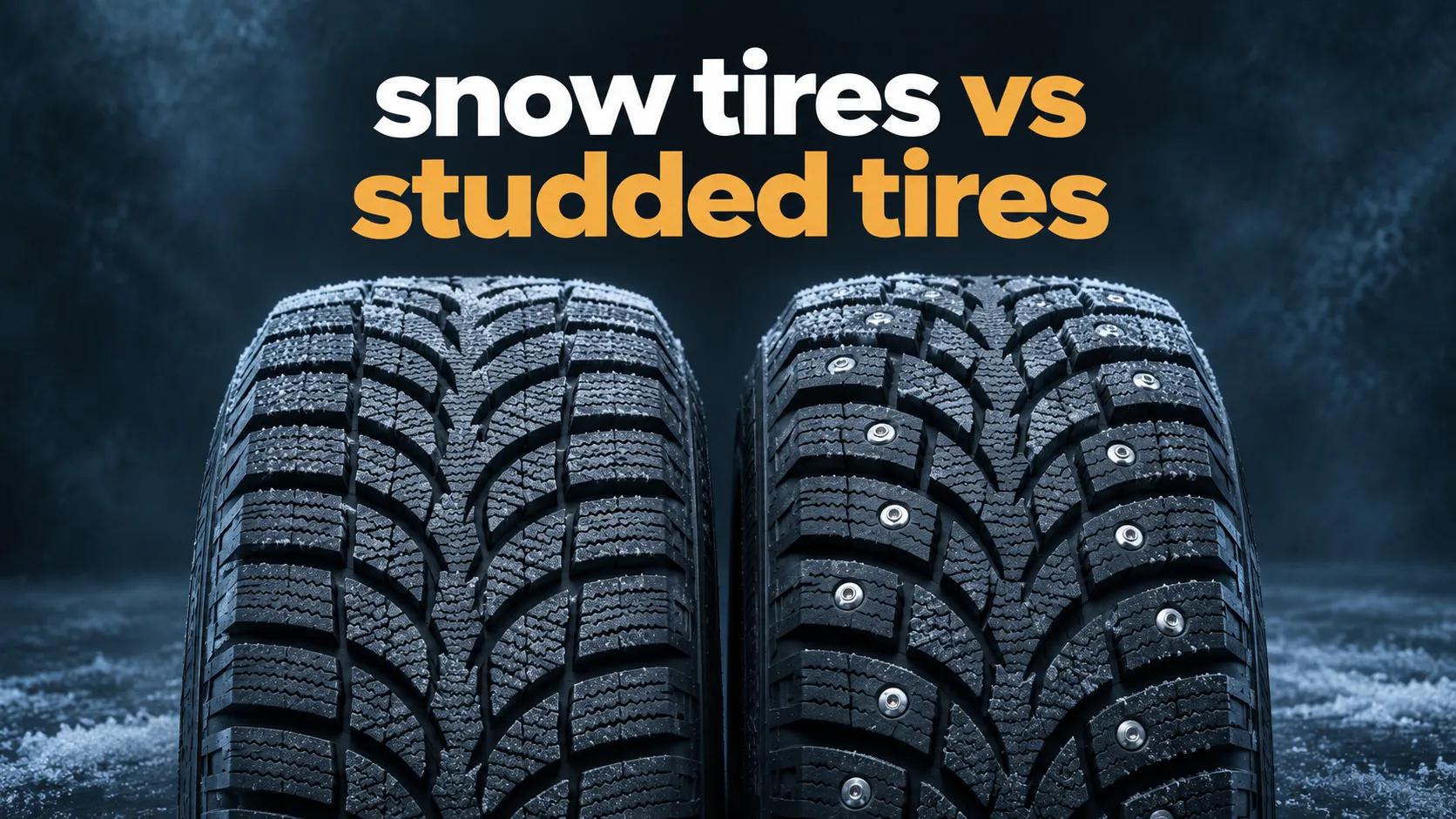
Studded tires are a type of snow tire. The choice most drivers are making is between studless winter tires and studded winter tires. Both are made for winter use. Studded tires add small metal studs that can bite into hard ice.
| What to compare | Studless winter tires | Studded winter tires |
|---|---|---|
| Best reason to buy | You drive on a mix of plowed roads, snow, and slush. | You face hard ice often and studs are allowed where you drive. |
| Ice grip | Cold-weather rubber and small tread cuts help grip ice. Performance varies by model. | Metal studs can add grip on hard ice. Compare test results for the tires on your list. |
| Loose snow and slush | Tread shape, grooves, and depth do much of the work. | The tire still depends on its tread to handle loose snow and slush. |
| Clear pavement | Usually quieter. A good starting point for trips that include lots of clear road. | Studs add noise and wear the road surface. Check wet and dry braking results for the model you’re considering. |
| Seasonal rules | Check any winter tire or chain rules for your route. | Check when and where studs are allowed, plus any chain rules for the route. |
How Studless and Studded Winter Tires Get Grip
Studless tires use rubber and tread to grip the road
Winter tire rubber is made to stay flexible in the cold. The tread has small cuts called sipes. These add edges that help the tire grip snow and ice. Larger grooves help move slush away from the part of the tire that touches the road.
Studless models can feel quite different. A tire made with ice grip in mind can be a good choice for a driver who often sees slick roads but can’t use studs. A driver who spends more time on cleared highways may care more about wet braking and road noise. Michelin’s winter tire buying guide explains what to look for in a winter tire.
Studded tires add metal points that can bite into ice
Studs can help on hard ice and slick, packed snow. Think of a shaded hill that stays icy for days. If that’s part of your daily drive, the extra bite may be worth the noise and seasonal limits. If that hill is the only icy spot you see all winter, I’d start by comparing studless models.
On bare roads, metal studs make contact with the pavement. They can add a steady tapping sound and wear the road surface. I’d look at braking tests for the surfaces I drive most and check how the tires performed on ice, snow, and wet pavement. A strong result on ice tells you little about wet braking.
The mountain snowflake tells you about snow grip
The three-peak mountain snowflake, or 3PMSF, is a mark on the sidewall. It shows the tire meets a snow traction standard. The U.S. Tire Manufacturers Association’s snow traction bulletin describes the test on packed snow. Use separate ice and braking test results to compare those traits.
A tire labeled studdable can accept the specified studs. Ask the seller whether the price includes the studs and their installation. Check the exact tire model and size on the quote so you know what will arrive.
Which Winter Tire Fits Your Roads?
Think about the trips you have to make when the weather is bad. If you can wait for a plow, the road you’ll drive may look quite different from the road a night-shift worker has to use. The surface you face on those trips matters more than the total snow your town gets each year.
| Your usual winter drive | Where I’d start | What I’d check |
|---|---|---|
| Plowed city roads with salt and slush | Studless winter tires | Wet braking, slush grip, and road noise. |
| Rural roads that stay icy or slick between plow visits | Compare legal studded models with ice-focused studless tires. | Ice braking tests and stud rules in each state you drive through. |
| Regular snow with long stretches of clear highway | Studless winter tires | Snow traction, wet and dry braking, and noise at highway speeds. |
| Steep grades or mountain passes with chain controls | Choose a winter tire for your usual roads and check the rules for traction devices. | Current pass restrictions, the vehicle manual, and what chains or other devices fit. |
Example: A plowed commute with a few slick turns
Say you drive 25 miles to work. Most of the route is a treated highway, with two shady turns near home. I’d look for studless tires with good wet braking and ice test results. Those turns matter, but so do the many miles you spend on clear or wet pavement.
Example: A steep road that stays icy
Say your route starts with a steep hill that often freezes overnight, and you leave before the road crew arrives. I’d check whether studs are legal on the whole route, then compare results for ice braking and traction. If I often drove into a state that restricted studs, I’d give extra weight to an ice-focused studless set.
How to Choose a Set Before You Buy
Write down where you see hard ice, packed snow, slush, and clear pavement. Pay close attention to steep grades and roads that freeze again at night. That list tells you which test results to look for.
Use the state transportation agency’s current guidance for the roads you travel. In Washington, for example, WSDOT lists November 1 through March 31 as the legal season for studded tires. It also says studs don’t satisfy the state’s chain requirements. Check WSDOT’s tire and chain guidance if your route crosses a Washington pass.
Start with the driver’s door tire placard and owner’s manual. Ask the shop to verify the size, load rating, speed rating, and wheel fit, especially if you want a separate set of winter wheels. Plan on winter tires at all four positions so the front and rear have similar grip. USTMA’s winter tire replacement guidance explains why grip at both ends matters.
Look for tests of the models you can buy. Compare tires tested under the same conditions where possible. Get a quote that includes mounting, balancing, any stud installation, and wheels if you need them. If the shop will store the other set, include that fee in your total.
If you plan to keep a second set of wheels for winter, ask whether the quote includes any tire pressure sensors your vehicle needs. Check the cold tire pressure after each seasonal swap and use the vehicle maker’s recommendation for that setup.
Common Mistakes When Choosing Winter Tires
- Buying for the worst day of the year alone. Think about your normal route and the days you have to drive through a storm. Choose for the mix of roads you’ll use.
- Putting winter tires only on the drive wheels. Grip at the front and rear affects how the car turns and stops. Plan on a full set.
- Counting on AWD to solve a stopping problem. All-wheel drive can help you get moving. Your tires still need grip to brake and turn.
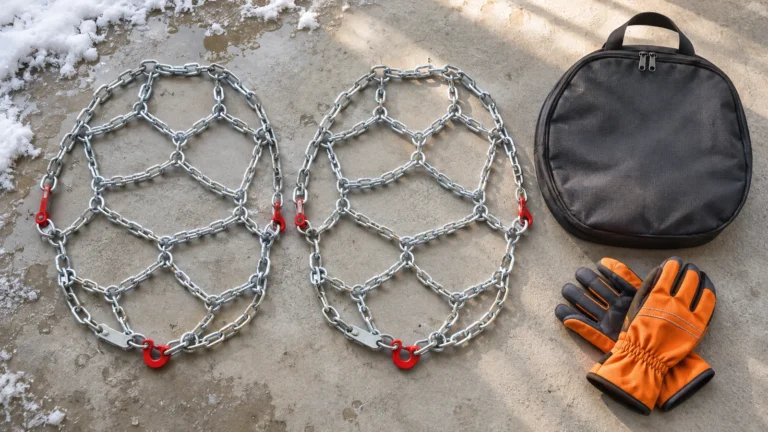
- Assuming studs satisfy chain controls. Check the rules for the pass you’ll cross and carry the devices the road authority calls for.
- Using a tire test from the wrong surface. Read the results for the surface you care about. A packed-snow test and an ice braking test answer different questions.
Leave extra room to stop on ice and packed snow, even with winter tires. Check road closures and chain controls before a trip. If you can’t meet the restrictions with equipment your vehicle allows, wait or choose another route.
Key Takeaways
- Start with studless winter tires for a mix of plowed roads, snow, and slush.
- Consider studs if hard ice is a regular problem and studs are legal on your route.
- Compare braking results for your usual road surfaces and get a quote for four tires.
- Check state stud dates and current chain controls before a winter trip.
Frequently Asked Questions
Are studded tires better than studless winter tires on ice?
Studs can add grip on hard ice. Grip still varies by tire model and ice conditions, so compare ice braking tests for the sets you’re considering.
Do I need studded tires if my roads are usually plowed?
Studless winter tires are a good starting point for plowed roads, slush, and loose snow. Consider studs if hard ice is a regular part of your route and local rules allow them.
Can I put studded tires on just two wheels?
Use winter tires on all four wheels so the front and rear have similar grip. If you choose studded tires, ask the shop to fit a compatible set of four.
Can I drive on studded tires year-round?
Check your state’s rules and any states you visit. Some allow studs only during set dates, and some restrict or ban them. Plan to swap them when the legal season ends.
Do I still need tire chains if I have studded tires?
You may. Follow the current rules for the road you’re on. A chain requirement can apply even if you have studded tires or all-wheel drive.
Does the mountain snowflake symbol mean a tire is rated for ice?
The three-peak mountain snowflake shows that a tire meets a snow traction standard. Look for separate ice test results to compare grip or braking on ice.
Choose for the Winter Roads You Actually Drive
I’d buy four studless winter tires for a route that’s mostly plowed and often wet or slushy. If hard ice is a part of your daily drive, compare legal studded options with ice-focused studless models. Before you order, confirm the fit and check the rules for every state or mountain pass you’ll drive through.